Policy suggestion from conservative think tank stirs religious liberty worries among Seventh-day Adventists, but gains little national traction
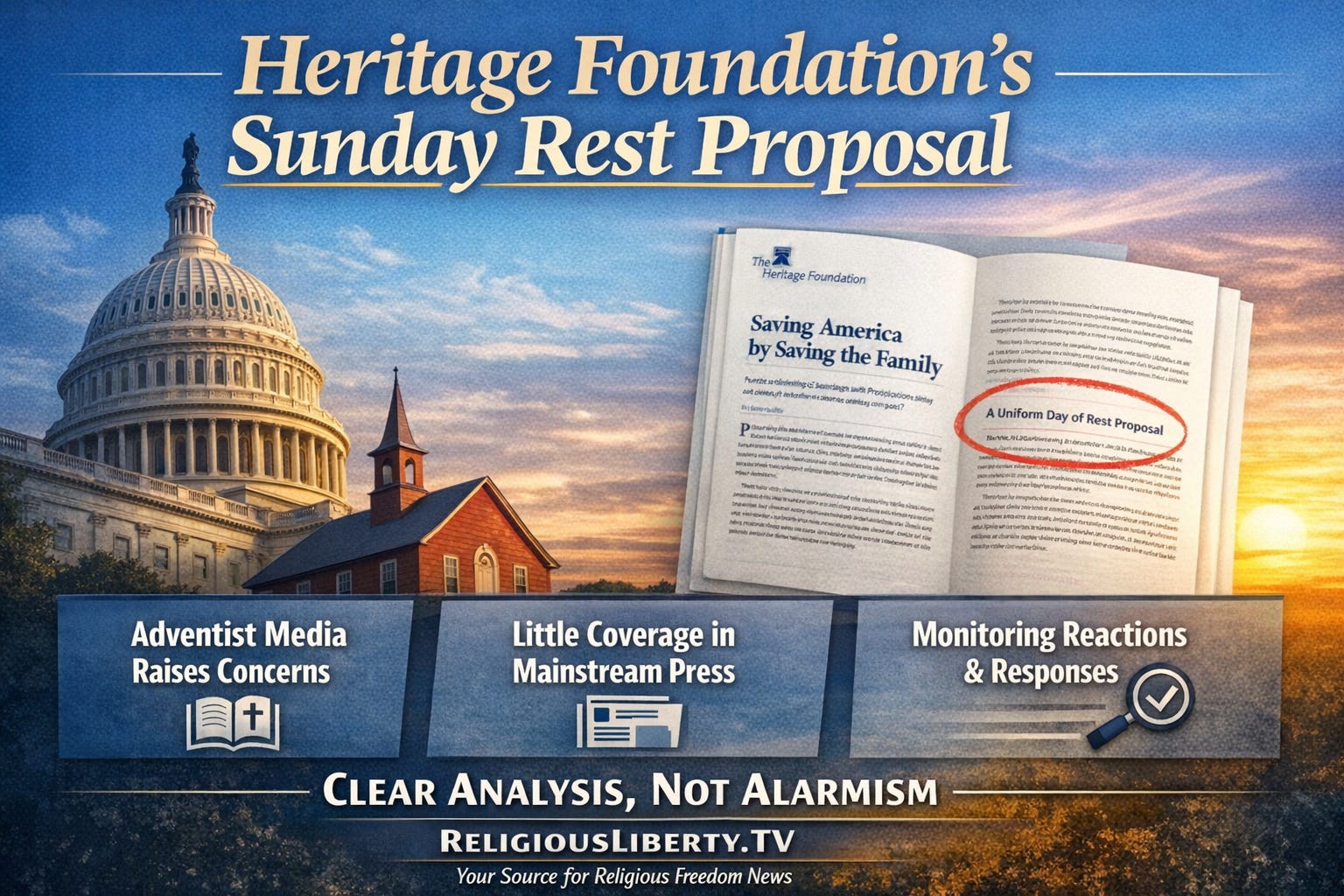
On January 8, 2026, the Heritage Foundation released a broad policy report titled “Saving America by Saving the Family.” Tucked among proposals on marriage, media, and education was a single line recommending a “uniform day of rest.” The suggestion, widely interpreted as advocating for Sunday closures, raised concerns in Seventh-day Adventist circles but has not prompted broader response.
Adventist media outlets including Spectrum Magazine, Adventist Review, and Adventist Today highlighted the issue within days. The North American Division of Seventh-day Adventists issued a formal statement warning that mandating Sunday rest could conflict with the First Amendment. The statement reminded readers that freedom of religion includes the right not to align with government-imposed religious observance. These reactions focused on the historical legacy of Sunday laws and their impact on religious minorities who observe Saturday as the Sabbath.
The Heritage Foundation did not present the rest-day proposal as legislation or attach a detailed plan for implementation. It was one suggestion among dozens, written in general terms. Still, the reference stood out because of its potential constitutional implications. The phrase “reestablishing a common day of rest” echoed language used historically to justify Sunday laws. That history brought added weight to what might otherwise be seen as a minor cultural reference in a lengthy think tank report.
Yet in evaluating proposals like this, the public response is as important as the proposal itself. In this case, reaction outside Adventist and religious liberty spaces has been muted. No national media outlet has covered the rest-day suggestion as a standalone issue. No elected official has expressed support or concern. There are no bills in Congress or state legislatures tied to it, and it has not appeared in public policy debates. It is not a campaign issue, and it has not been referenced in presidential platforms.
That lack of response is part of the story. Understanding how society, lawmakers, and institutions react—or don’t react—helps gauge the real-world weight of a proposal. Some ideas gather momentum quickly. Others remain within policy documents without public traction. This proposal, at least for now, falls in the latter category.
At ReligiousLiberty.TV, our role is to observe and explain, not to alarm. We aim to provide readers with timely, fact-based reporting on how proposals may affect their freedom of belief and conscience. This story is not about a new law or an imminent policy shift. It’s about a sentence in a report and the conversation it started among people who care about religious freedom.
That conversation matters. But so does the lack of wider engagement. A complete picture includes both. Tracking responses over time helps show which proposals remain dormant and which begin to influence legal or cultural change.
For now, this is not a developing legal issue. It’s a point of interest that bears watching. If future legislation emerges based on this report, we will cover it. If political figures begin promoting Sunday rest laws, we’ll provide legal analysis and historical context.
We encourage you to stay informed by subscribing to ReligiousLiberty.TV, where we act as an early warning system—not a source of unnecessary alarm. You’ll receive clear reporting on issues before they reach the headlines, with careful attention to what’s actually happening and how it could affect your rights.
TLDR (Too Long / Didn’t Read Summary)
The Heritage Foundation included a Sunday “uniform day of rest” proposal in its January 2026 family policy report. Adventist media quickly flagged it as a potential religious liberty concern, but the idea has not gained national attention or legislative interest. No bills have been introduced. No lawmakers have acted on it. ReligiousLiberty.TV is monitoring the situation but emphasizes this is not a current policy issue. Responses to the proposal—especially the absence of broad support—are as important to watch as the idea itself.
Legal Analysis Commentary
The Heritage Foundation’s suggestion for a Sunday rest day does not have legal force. It appears in a think tank report as a general cultural recommendation. It does not propose legal penalties or enforcement and does not resemble current legislation.
Still, the wording invites comparison to historical Sunday laws, which were often challenged under the First Amendment. In McGowan v. Maryland (1961), the Supreme Court upheld Sunday laws on secular grounds, while acknowledging their religious origins. The line between secular rest and religious observance remains constitutionally sensitive.
Even so, courts have not overturned these laws outright, especially when states justify them as labor protections. If this proposal ever reaches the legislative level, its legal fate would depend on whether it can be justified in secular terms and whether it respects minority religious practices.
Until then, this remains a policy suggestion without legal status. Future political endorsements or legislative drafts would trigger more serious legal review.
Case Citation
Not applicable. No court case is associated with this issue.
Support ReligiousLiberty.TV
If you appreciate clear, calm, and factual coverage of religious liberty topics, please like, share, and subscribe to ReligiousLiberty.TV. We provide early insight into policies and legal developments—without sensationalism. Subscribers receive access to breaking news alerts, detailed analysis, and legal updates before stories reach national attention.
Legal Disclaimer
This report is for informational purposes only and does not constitute legal advice. Please consult a licensed attorney for legal guidance on your specific situation.
SEO Tags
Sunday laws, Heritage Foundation, religious liberty, Seventh-day Adventist, rest day proposal
