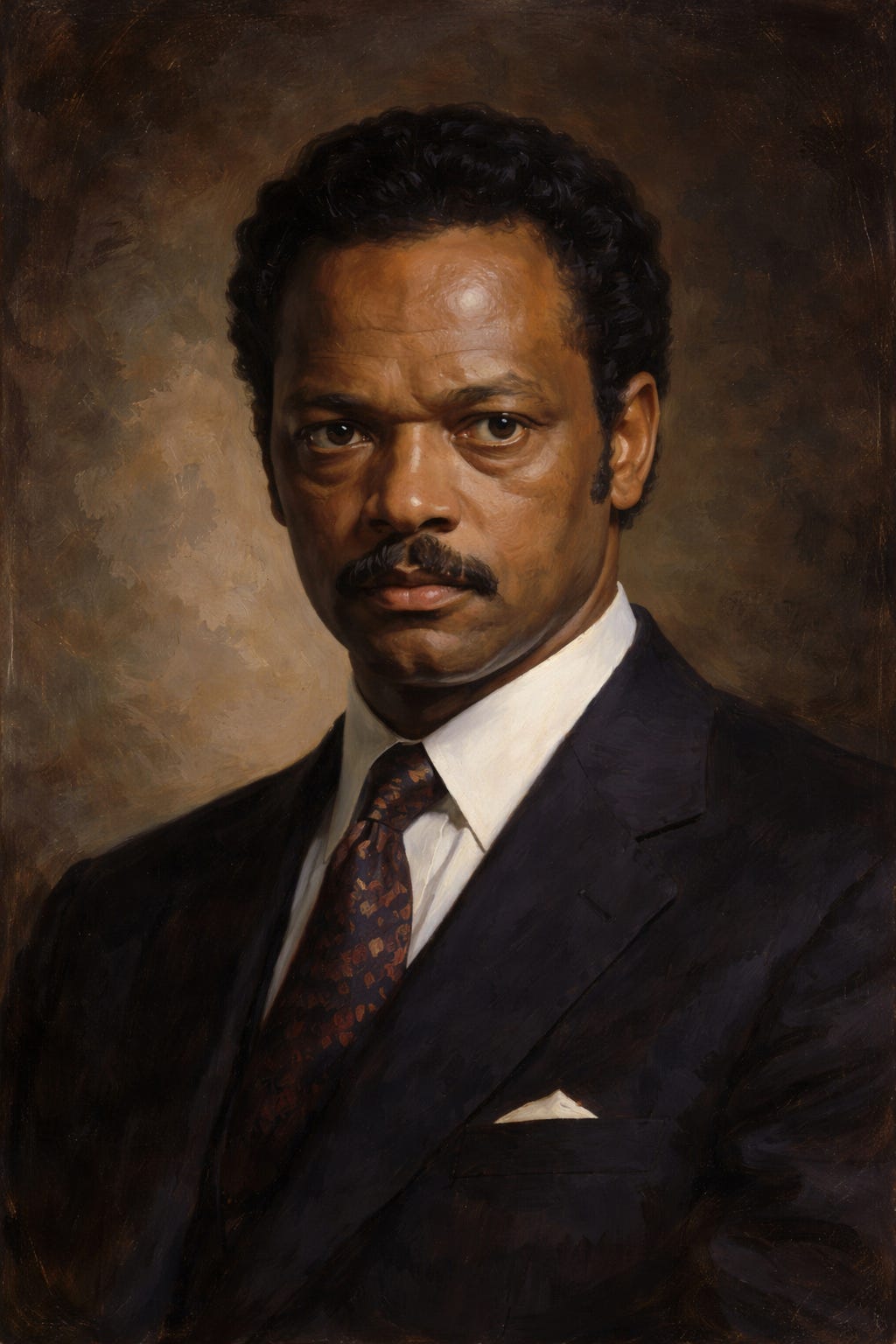
In May 1973, four months after the Supreme Court decided Roe v. Wade on January 22, 1973, civil rights leader Jesse Jackson spoke to JET magazine about abortion in the Black community. His remarks were direct and extensive.
“Abortion is genocide. If people use preventive measures to stop the life process from originating, I can buy that. But if they get carried enough away to set the baby in process, they must get carried enough away to accept the responsibility of the baby. And I don’t want to hear this bit about babies not really living until the baby has a face and the doctor smacks it and it cries. Anything growing is living. If you got the thrill to set the baby in motion and you don’t have the will to protect it, you’re dishonest. But you don’t try to stop reproducing and procreating human life at its best. For who knows the cure for cancer won’t come out of some mind of some Black child?”
Jackson, Jesse. Interview. JET, 6 Sept. 1973, p. 16.
These words were spoken while Jackson led Operation PUSH and more than a decade before his 1984 presidential campaign. They place him within a documented early wave of organized pro life advocacy that began before the presidency of Ronald Reagan.
Claims that the modern pro life movement arose primarily during the Reagan years do not align with the historical timeline. The National Right to Life Committee began in 1968 as a state level effort of the United States Catholic Conference and became independent in 1973. The first March for Life occurred on January 22, 1974, the first anniversary of Roe. Legal advocacy groups formed almost immediately after the decision.
Jackson’s 1973 remarks also reflect a strand of civil rights era concern that abortion could disproportionately affect Black communities. In that period, opposition to abortion included Catholic leaders, evangelical Protestants, and some Black clergy. The language Jackson used drew on themes of human dignity and communal survival that were common in post civil rights discourse.
By the time Jackson sought the Democratic presidential nomination in 1984, his position had changed. The New York Times reported on July 8, 1984 that Jackson had earlier called abortion “genocide” but now supported abortion rights within the constitutional framework.
Raines, Howell. “Jackson’s Stand on Abortion: A Shift.” The New York Times, 8 July 1984, https://www.nytimes.com/1984/07/08/us/jackson-s-stand-on-abortion-a-shift.html.
The Washington Post reported on July 1, 1 that he had modified his stance and aligned himself with Roe as settled precedent.
Broder, David S. “Jackson’s Reversal on Abortion.” The Washington Post, Colman McCarthy, 20 May 1988.
The historical record therefore shows two distinct phases. In 1973, Jackson publicly opposed abortion in moral terms. In 1984, as a candidate within the Democratic Party, he supported abortion rights under existing Supreme Court doctrine.
The broader point is chronological. Organized pro life activism began before Reagan’s presidency. It expanded in influence during the 1980s, but its institutional roots date to the late 1960s and the immediate aftermath of Roe. Jackson’s 1973 JET interview stands as part of that early documentary record.
Following the Supreme Court’s 2022 decision in Dobbs v. Jackson Women’s Health Organization, debates over the history of the pro life movement have renewed attention to archival sources from the early 1970s. The 1973 JET interview remains accessible through digital archives and continues to be cited in discussions about the movement’s origins and evolution.
TLDR (Too Long / Didn’t Read Summary)
In a May 3, 1973 interview with JET magazine, Jesse Jackson stated, “Abortion is genocide,” and argued that “Anything growing is living,” framing abortion as a moral issue in the Black community shortly after Roe v. Wade. His remarks came during the early phase of organized pro life activism, which began in the late 1960s and expanded immediately after Roe in 1973. The National Right to Life Committee became independent in 1973, and the first March for Life was held in 1974. By 1984, during his Democratic presidential campaign, Jackson supported abortion rights within the constitutional framework, a shift documented by major national newspapers. The archival record shows that pro life organizing predated the Reagan presidency.
Legal Disclaimer: This content is provided for informational purposes only and does not constitute legal advice. You should consult a licensed attorney regarding your specific legal questions or circumstances.
If you benefit from information like this about faith, law, and public policy, like this article, share it with others and subscribe to the ReligiousLiberty.TV blog at https://religiouslibertytv.substack.com. When you subscribe, you receive breaking news, case updates, and detailed reporting delivered directly to you.
Tags: Jesse Jackson abortion history, 1973 Jet magazine quote, early pro life movement history, Roe v Wade aftermath 1973, Jackson 1984 position shift
Holding: The Constitution protects a woman's liberty to obtain an abortion prior to viability subject to state regulation.
