Fidel Castro’s Revolution Had Little Room for Religious Freedom
Castro remains an icon to parts of the political left. His own speeches reveal how the Cuban government justified punishing religious dissent.
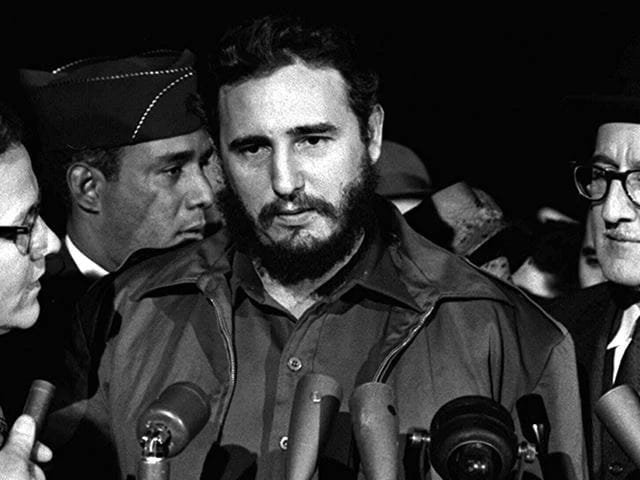
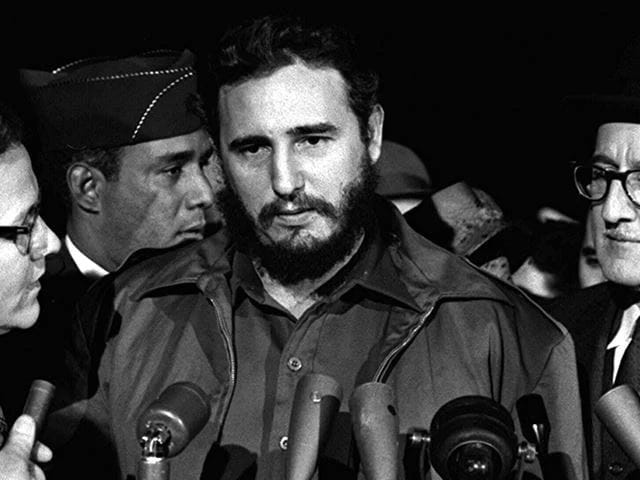
“Within the revolution, everything; outside of it, nothing.”
Fidel Castro – Words to the Intellectuals speech delivered on June 30, 1961. This speech is worth reading in its entirety as it established the state’s absolute control over creative expression, declaring that only art that supported the the communist (Castro called it socialist) revolution was acceptable. Since then, this speech was used to justify censorship and repression against dissenting artists and intellectuals.
Fidel Castro promised to liberate Cuba from oppression. He then presided over a government that confiscated religious schools, expelled clergy, discriminated against believers and sent some of them to forced-labor camps. He defended these policies by portraying religious opposition as a threat to the revolution. Yet Castro remains a celebrated figure among portions of the political left. His admirers frequently cite his achievements in education, healthcare and resistance to American influence. His treatment of religious believers receives considerably less attention.
The historical record is particularly revealing. We need not rely exclusively on Castro’s critics. His own speeches and the laws enacted by his government tell much of the story.
Castro came to prominence in 1959 after overthrowing Fulgencio Batista, whose authoritarian government had enjoyed American support. The revolution initially attracted supporters from across Cuban society, including Catholics who opposed Batista.[1]
That relationship deteriorated as Castro embraced Marxism-Leninism and the Catholic hierarchy condemned communism. Castro increasingly characterized the clergy as defenders of wealthy interests and agents of American imperialism.
In a December 16, 1960, speech responding to criticism from Catholic bishops, Castro made his position unmistakable:
“We certainly do believe that to be an anti-Communist is to be a counterrevolutionary.”
He insisted that citizens retained the right to worship. Yet his definition of permissible religious activity excluded political challenges to the government. He declared that the revolution had forbidden “only those activities and sermons which are against the revolution.”[2]
This was the central distinction in Castro’s approach to religion. Believers could practice their faith, provided they did not challenge the political order.
The problem was that religious convictions could require precisely such opposition.
On May 1, 1961, Castro announced that the government would nationalize private schools. Many were Catholic institutions, although secular schools and schools operated by other religious denominations were affected.
He accused Catholic schools of instilling what he called the “poison of counterrevolution” into their students.
Castro anticipated the objection that his government was attacking religious education. He denied it, explaining that religious instruction could continue inside churches, conducted by priests who did not engage in counterrevolutionary campaigns.[3]
That was his justification. The government was defending the revolution from political subversion, he maintained, rather than attacking religion itself.
The distinction offered little protection to religious institutions accused of disloyalty.
The Cuban Council of Ministers adopted the Law of General and Free Nationalization of Education on June 6, 1961. Its preamble expressly accused private schools, particularly Catholic-run institutions, of conducting “an active campaign of counterrevolutionary propaganda.” It claimed that private education reinforced class privilege and undermined the ideological development of children.
The government transferred private schools and their property to the state. Article 4 permitted compensation to be withheld from owners or administrators considered to have acted against revolutionary interests.[4]
Here was the official rationale in legal form: religious schools could lose their property if the government concluded that their activities threatened the revolution.
The consequences extended well beyond education. More than 130 Catholic religious workers, including priests, were expelled during the early years of Castro’s government. Religious believers faced professional and educational discrimination. Membership in the Communist Party was closed to those who openly professed religious faith.[5]
The repression was particularly severe between 1965 and 1968, when Cuba operated the Military Units to Aid Production, known as UMAP. These agricultural forced-labor camps confined people considered socially or politically undesirable.
According to research published by Oxford University Press, historians estimate that 25,000 to 35,000 people passed through the camps. They included Catholics, Jehovah’s Witnesses, members of Afro-Cuban religious traditions, gay men and others subjected to varying degrees of coercion and ideological reeducation.[6]
The government presented such programs in the language of military service, labor and social discipline. The effect was to punish people whose convictions, identities or conduct conflicted with the state’s expectations.
By 1976, the government’s position had been written directly into the Cuban Constitution.
Article 54 recognized freedom of conscience and religious worship, subject to law. It then declared:
“It is illegal and punishable to oppose faith or religious belief to the Revolution.”
The provision extended to religious opposition to education and specified civic duties. The same article described the socialist state as educating the population according to a scientific materialist conception of the universe.[7]
There was no ambiguity about the legal principle. Religious belief was permitted. Religious opposition to the revolution could be punished.
Castro eventually acknowledged that aspects of his government’s treatment of believers had been discriminatory.
Speaking to the Pastors for Peace delegation in New York on October 25, 1995, Castro discussed the Communist Party’s former exclusion of religious believers. He acknowledged, in translation, that atheism had become almost a religion within the Marxist-Leninist system.
He then conceded that the exclusion amounted to discrimination and described the internal struggle to admit religious believers to party membership.[8]
The policy had changed in 1991. Constitutional amendments in 1992 removed the explicitly materialist formulation and strengthened legal protections against religious discrimination.
Castro’s admission was significant. Yet he continued to defend his government’s historical conflict with the Catholic hierarchy, portraying it principally as a struggle against wealthy classes and political conspiracies.
Pope John Paul II’s 1998 visit marked a further opening. Public religious activity became more visible. Christmas, which had lost its status as a regular public holiday, was restored.
Still, religious institutions remained subject to significant restrictions. A 2000 U.S. State Department report documented surveillance, government interference and continuing restrictions on religious education, publishing and association.[9]
So why does Castro remain an admired figure on the political left?
His defenders cite accomplishments that deserve separate historical examination. Cuba’s 1961 literacy campaign taught hundreds of thousands of people to read and write. Healthcare and education became internationally prominent features of the revolutionary government’s social policy. Castro’s opposition to American influence attracted supporters across Latin America, and Cuba’s involvement in Angola strengthened its reputation among some anti-apartheid activists.[10]
These achievements figure prominently in the statements of Western political figures.
Following Castro’s death in 2016, British Labour leader Jeremy Corbyn described him as an “internationalist and a champion of social justice.” Corbyn acknowledged his flaws.[11]
Canadian Prime Minister Justin Trudeau praised improvements in Cuban healthcare and education and described Castro as a “legendary revolutionary and orator.”[12]
In 2020, Senator Bernie Sanders defended recognizing Cuba’s literacy campaign, asking whether teaching people to read was a bad thing. Sanders condemned the Cuban government’s authoritarianism and imprisonment of political dissidents. His comments illustrated an argument made by some on the left: a government’s specific achievements can be recognized without endorsing its entire record.[13]
That is a legitimate distinction. It does not resolve the question of religious freedom.
Teaching people to read does not justify denying religious families the right to establish schools. Providing medical care does not excuse imprisoning dissidents. Opposing foreign intervention does not establish a right to silence religious critics.
The treatment of religion under Castro reveals a recurring problem for governments that identify the interests of the state with a single political ideology. Independent religious institutions possess moral authority outside government control. Their teachings may conflict with official policy. Their members may reject the prevailing political program.
For Castro, that independence became suspect whenever it threatened the revolution.
Religious liberty demands something more than permission to worship under conditions established by the government. It protects the freedom to teach, organize, publish, evangelize and criticize political authority. It protects people whose religious convictions lead them to disagree with those governing them.
Cuba’s revolutionary government allowed churches to survive, then restricted their institutional independence and punished forms of dissent.
Castro’s admirers may reasonably recognize the achievements of his literacy campaign, oppose American sanctions or praise his involvement in struggles against colonial domination. None of those positions requires ignoring the historical record of religious repression.
The most revealing feature of that record is Castro’s own justification. He presented opposition to his political program as counterrevolutionary and insisted that religion should remain outside that opposition.
For religious believers, the distinction was impossible to maintain whenever faith demanded resistance to government policy.
The question Castro’s record poses is straightforward: What meaning does freedom of religion have if the government reserves the right to punish religious opposition?
For thousands of Cubans, the answer was determined by the state.
Footnotes
[1] U.S. Department of State, Foreign Relations of the United States, 1958-1960, Cuba, Volume VI, Document 2, January 10, 1958. Contemporary American diplomatic reporting documents Catholic opposition to Batista and support for revolutionary activity associated with Castro.
[2] Fidel Castro, speech to the Cuban Workers’ Confederation, December 16, 1960, published in Revolución, December 17, 1960. English-language transcription drawn from the University of Texas Latin American Network Information Center’s Castro speech collection. The speech connects anticommunism with counterrevolution and identifies sermons opposing the revolution as prohibited activity.
[3] Fidel Castro, May Day speech, May 1, 1961, Plaza Cívica, Havana. Spanish transcript attributed to the Revolutionary Government’s stenographic department. Castro explicitly announced school nationalization, accused Catholic educators of spreading counterrevolutionary ideas and limited acceptable religious teaching to clergy who refrained from political opposition. English excerpts in the article are translations from the Spanish.
[4] Cuban Council of Ministers, Law of General and Free Nationalization of Education, June 6, 1961, published June 7, 1961, Gaceta Oficial. Original Spanish text preserved by UNESCO’s International Institute for Educational Planning. See the preamble and Articles 2 and 4 for the government’s accusations, nationalization provisions and political conditions governing compensation. English excerpts are translations.
[5] U.S. Department of State, 2000 Annual Report on International Religious Freedom: Cuba, September 5, 2000. Documents expulsions, professional restrictions, exclusion of believers from political membership and discrimination in education.
[6] Andy Alfonso, “A Short Introduction to the Military Units to Aid Production (UMAP), Cuba, 1965-1968,” Oxford Research Encyclopedia of Latin American History, November 20, 2024. Reviews the population, coercive practices and historical evidence concerning Cuba’s UMAP camps. The total number detained is an estimate, not a verified roster.
[7] Constitution of the Republic of Cuba (1976), Article 54. Original Spanish constitutional text. The English quotation is a translation of the article’s prohibition against opposing religious faith or belief to the revolution.
[8] Fidel Castro, speech to Pastors for Peace, October 25, 1995, Cuban Mission to the United Nations, New York. Transcript attributed to the Council of State’s stenographic service. Castro discussed Catholic opposition, Marxist atheism and the Communist Party’s earlier exclusion of religious believers.
[9] U.S. Department of State, 2000 Annual Report on International Religious Freedom: Cuba. Records the 1991 and 1992 reforms, restoration of Christmas observance, continued government surveillance and restrictions on independent religious activity.
[10] Jon Greenberg, “Fact-checking Bernie Sanders’ claim on Cuba literacy under Castro,” PolitiFact, February 24, 2020. Examines documented literacy gains and the political content of educational materials. For international support, see Jamie Doward’s historical discussion of Castro’s reputation in The Guardian, November 26, 2016.
[11] Jamie Doward, “Castro Was ‘Champion of Social Justice’ Despite Flaws, Says Corbyn,” The Guardian, November 26, 2016. Includes criticism of Castro’s human rights record from other figures on the British left.
[12] Office of the Prime Minister of Canada, statement on the death of Fidel Castro, November 25, 2016. Official statement by Justin Trudeau.
[13] CBS News, “Highlights from Bernie Sanders’ 60 Minutes Interview,” February 25, 2020. See additional reporting on Sanders’ condemnation of the Cuban dictatorship.