Untangling the “Christian Nation” Debate and the Challenge of Pluralism
How believers and secular citizens alike bring inherited moral traditions into the public square without establishing a theocracy.
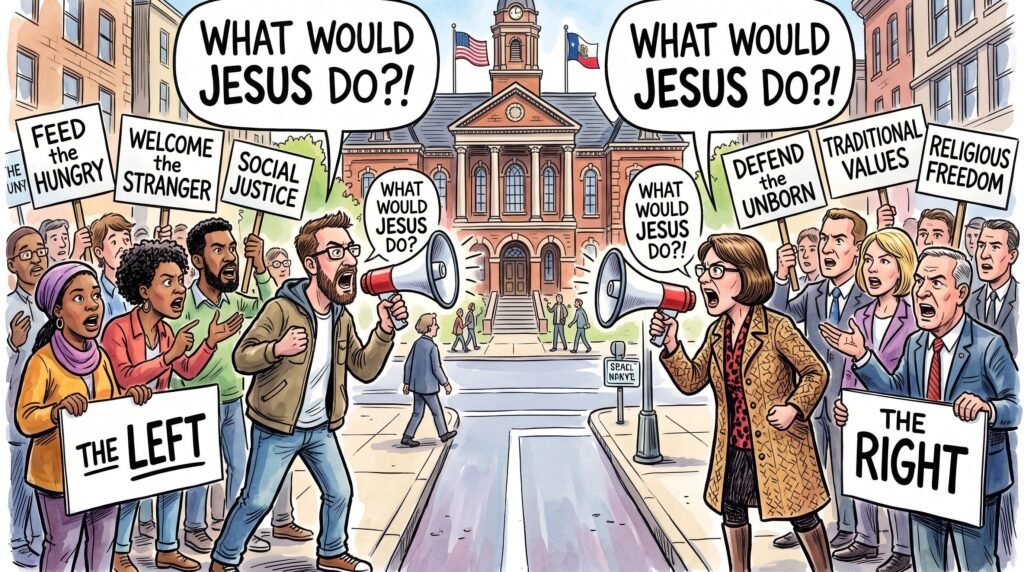
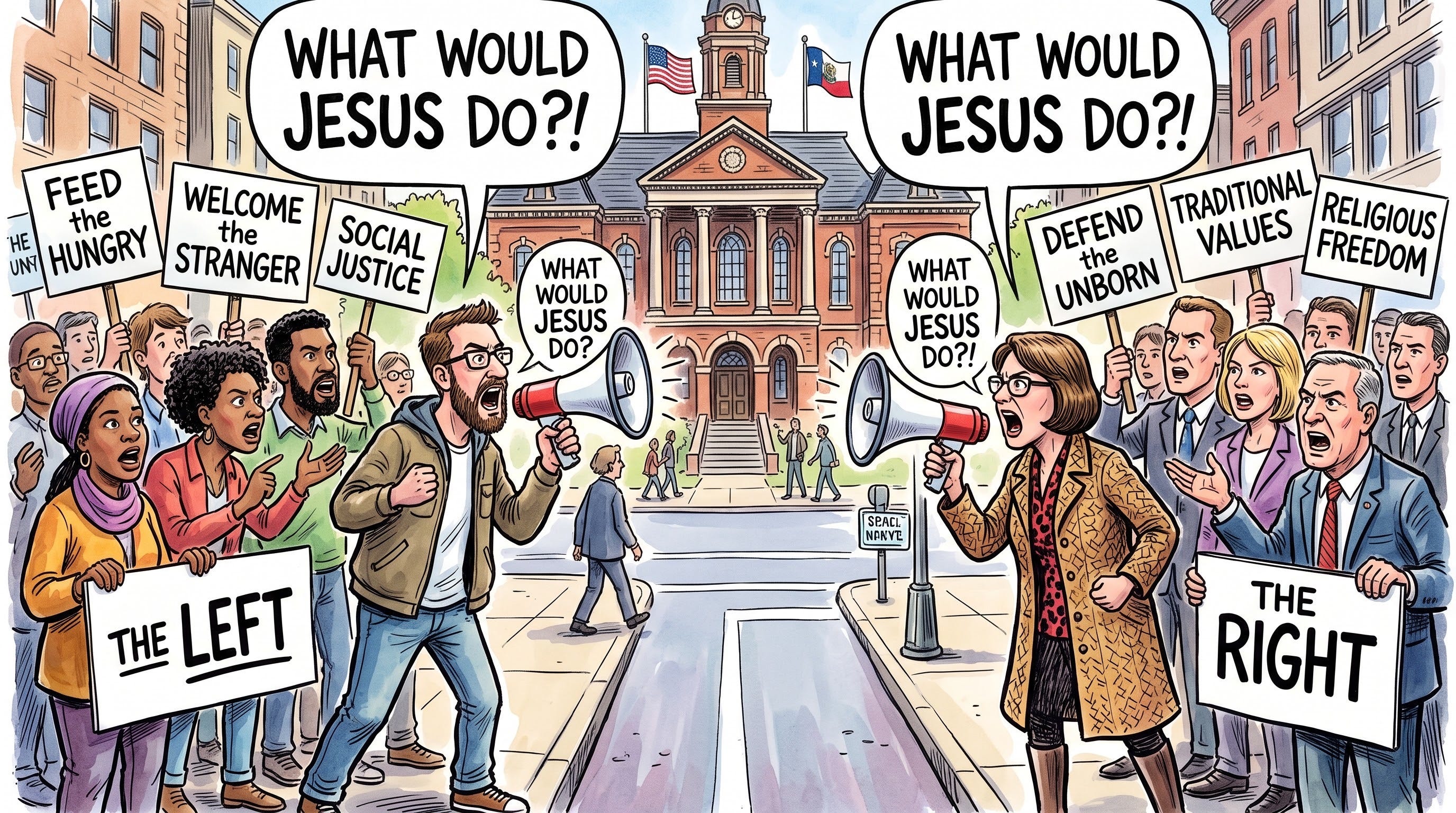
Advocates on both sides of American politics routinely ask what Jesus would do when addressing major public policy questions. The resulting clash often leads each camp to accuse the other of imposing religion on the country, even though both sides draw deeply from religious convictions.
At the center of this recurring argument lies a persistent misunderstanding about law and faith. While the U.S. Constitution creates a secular framework that forbids an established church and protects free exercise, the laws passed within that framework never emerge from a moral or philosophical vacuum.
Competing Visions of “What Would Jesus Do?”
Religious language is not the exclusive property of any single political faction. For decades, Christians across the ideological spectrum have appealed directly to the teachings of Jesus to justify conflicting policy goals:
-
Social and Economic Justice: The Christian left points to the Sermon on the Mount, Matthew 25, and prophetic demands to defend the vulnerable, care for the sick, welcome the stranger, and protect the poor. These scriptural imperatives animate advocacy for universal healthcare, racial equality, criminal justice reform, and expansive immigrant protections.
-
Traditional Morality and Sanctity of Life: The Christian right emphasizes biblical mandates regarding the sacredness of unborn life, traditional family structures, and religious liberty for faith-based institutions. These convictions drive legislative fights over abortion restrictions, parental rights in education, and conscience exemptions for religious employers.
When these visions collide, a predictable rhetorical pattern emerges. Opponents often accuse conservative Christians of trying to build a theocracy. In turn, conservative critics often dismiss progressive Christian stances on welfare or migration as partisan ideology masquerading as faith. In reality, both sides are operating from genuine, deeply held religious premises.
No One Operates in a Moral Vacuum
The accusation that a policy proposal is “too religious” often rests on the false premise that secular law can exist in total isolation from religious history. No citizen, including the committed atheist or secular humanist, approaches the law from a blank slate.
Western legal traditions ”including concepts of universal human rights, inherent human dignity, checks on state power, and equal justice under the law” were profoundly shaped by Judeo-Christian thought, alongside Greek philosophy, Roman jurisprudence, and the European Enlightenment. The conviction that all people possess fundamental worth that governments cannot revoke did not develop in an ethical void; it evolved directly out of the belief that individuals bear an inviolable identity.
Even when modern citizens reject theological claims, they inherit, navigate, and apply ethical principles forged in religious cultures. A secular criminal code that prohibits murder, theft, and fraud reflects moral determinations that overlap heavily with the Ten Commandments, even if codified in strictly secular statutory language.
Practice vs. Morality in the Constitutional Design
This dynamic underscores why distinguishing between religious practice and religious morality is essential:
-
Religious Practice Cannot Be Coerced: The First Amendment prohibits the government from establishing a creed, prescribing liturgies, or compelling religious observance. The state has no constitutional business enforcing theological orthodoxy or requiring citizens to attend worship.
-
Religious Motivation Cannot Be Disqualified: The Constitution does not require citizens or legislators to strip their deepest moral convictions from public debate before entering the halls of government. To disqualify an argument simply because its moral roots lie in Scripture would disenfranchise millions of citizens and ignore American history, from the abolitionist movement to the civil rights marches led by the Rev. Dr. Martin Luther King Jr.
The Real Challenge in a Pluralistic Republic
The fundamental challenge in a diverse democracy is not banishing religious motivation, but learning how to translate moral convictions into accessible civic terms.
When citizens invoke Jesus to justify public policy, they are participating in a long American tradition of bringing moral conviction into the political arena. But in a pluralistic society governed by a secular Constitution, a religious claim alone cannot serve as legal justification. Laws must ultimately be defended through arguments that appeal to common goods, shared constitutional principles, and the equal protection of all citizens, regardless of whether their moral compass is guided by the Gospel, another faith tradition, or secular reason.