Federal lawsuit challenges overnight school trip rooming rules based on gender identity, raising questions beyond religion
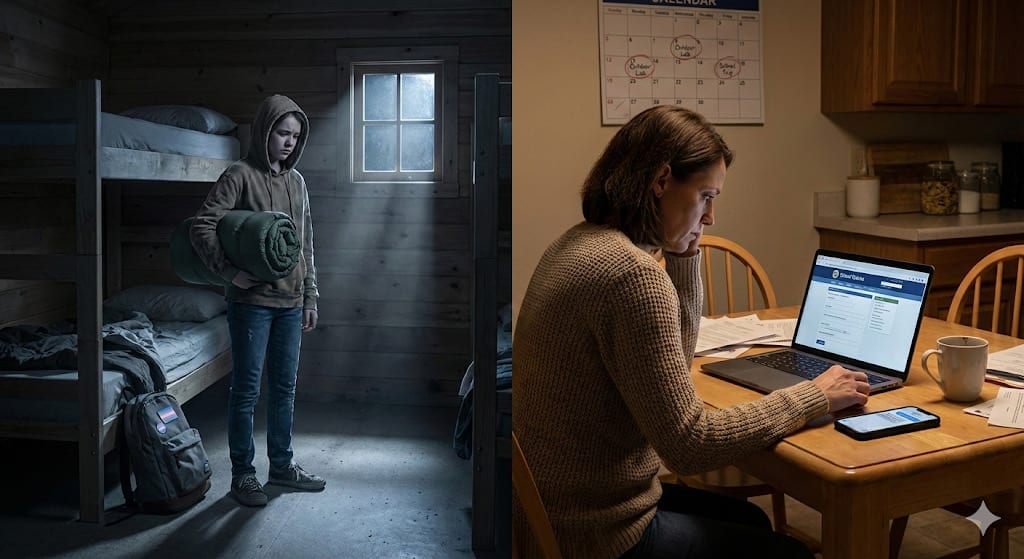
Four families are asking the U.S. Court of Appeals for the Tenth Circuit to reverse a federal judge’s dismissal of their lawsuit against Jefferson County Public Schools. The appeal, filed November 19, 2025, contests the district’s policy of assigning students to overnight accommodations based on gender identity rather than biological sex, without informing parents or offering opt-outs for families with religious or privacy concerns.
The case is framed around claims under the First and Fourteenth Amendments, but the families argue that the implications go beyond religious liberty. In addition to free exercise claims, they assert broader constitutional violations, including parental rights and student bodily privacy.
According to the appeal, the school district had previously told parents that boys and girls would be housed separately on overnight school trips. However, the families discovered after the fact that their children had been placed in sleeping or bathing arrangements with members of the opposite biological sex. In one instance, a fifth-grade girl was assigned to share a bed with a biologically male student identifying as female. On another trip, a biologically female 18-year-old counselor supervised boys’ showers in a shared cabin.
Other families who refused to consent to such arrangements were not given alternatives. One student was excluded from staying overnight during a school-sponsored Outdoor Lab program, and her parents were required to transport her back and forth each day to ensure she would not be housed with the opposite sex. The school district did not offer advance notice about rooming assignments and refused to make any exceptions.
In their appeal, the families invoke Mahmoud v. Taylor, 606 U.S. 522 (2025), a recent U.S. Supreme Court decision reaffirming that public schools cannot impose policies that substantially interfere with a parent’s ability to direct the religious upbringing of their children. They argue that Jefferson County’s policy imposes just such a burden by forcing students to either violate their family’s religious teachings about sex and modesty or forgo participation in educational programs.
However, the families do not rely solely on religion. The appeal points to long-established constitutional protections for bodily privacy and parental authority. Even without religious objections, they argue, parents should have the right to decide whether their child shares a room or bathroom with students of the opposite biological sex—especially when the children involved are as young as 11 or 12.
This raises a broader legal question: does a public school have the authority to make these rooming decisions without consulting parents, even when doing so may affect a child’s physical privacy or a family’s deeply held views about development and consent?
Courts have recognized that minors have a heightened expectation of privacy in intimate settings. The appeal argues that this expectation is undermined by a policy that offers case-by-case accommodations only for students who identify as transgender, while refusing any process for others seeking accommodations based on religious or privacy concerns.
The families cite Fulton v. City of Philadelphia, 593 U.S. 522 (2021), which held that when a government program includes discretion or exemptions, it cannot deny religious accommodations unless it meets the highest constitutional standard. By allowing some students to room based on self-identified gender but refusing similar flexibility for others, the district may have created a system that fails both neutrality and general applicability tests.
The outcome of this appeal could shape how public schools handle overnight accommodations in the future. If the court accepts that constitutional rights to bodily privacy and parental control apply in this context, schools may be required to create broader accommodation processes that are not limited to students who identify as transgender.
The families are not asking the court to block transgender students from participating in school trips or to change their accommodations. Instead, they want the ability to opt out and ensure that their children are housed only with members of the same biological sex. They argue that the district could do so confidentially, without disclosing anyone’s identity or beliefs.
The district court rejected those claims and dismissed the case in August 2025, concluding that the policy was neutral and generally applicable. The court also declined to apply Mahmoud, which had been issued just weeks earlier. The families have asked the Tenth Circuit to reverse that decision and issue a preliminary injunction while the case proceeds.
No oral argument has been scheduled. The court’s ruling will determine whether public schools must offer rooming accommodations for families who object on either religious or general constitutional grounds.
TLDR (Too Long / Didn’t Read Summary)
Four families are appealing a court decision that dismissed their challenge to Jefferson County Public Schools’ overnight rooming policy. The district assigns rooms based on gender identity, not biological sex, and does not notify parents. The families say this violates religious freedom, bodily privacy, and parental rights. They cite the U.S. Supreme Court’s ruling in Mahmoud v. Taylor and ask the Tenth Circuit to block the policy unless accommodations are made. The case could set national precedent for how schools handle shared sleeping arrangements.
Case Information
Case caption: Wailes v. Jefferson County Public Schools, No. 25-1341
Court: U.S. Court of Appeals for the Tenth Circuit
Date filed: November 19, 2025
Original judgment: U.S. District Court for the District of Colorado, August 7, 2025
Document: Opening Brief of Appellants
Link to original filing (which includes lower court opinion and finding): https://adflegal.org/wp-content/uploads/2025/11/wailes-v-jefferson-county-public-schools-2025-11-19-opening-brief.pdf
Read more and subscribe to stay updated
Stay informed on this case and other developments in religious liberty and education law by subscribing to the ReligiousLiberty.TV blog at religiouslibertytv.substack.com. Subscribers receive full case documents, legal commentary, and timely updates on First Amendment litigation and court rulings.
Found this article useful? Share it and encourage others to subscribe.
AI Disclaimer
This article was generated with the assistance of AI based on court documents. It is not legal advice. Readers should consult a licensed attorney to discuss their specific legal questions or concerns.
SEO Tags
student privacy rights, Jefferson County overnight policy, parental rights in public schools, Mahmoud v. Taylor, religious accommodations in education
Source: ReligiousLibertyTV on Substack