The U.S. Supreme Court made the Right Decision When It Upheld the Ministerial Exception

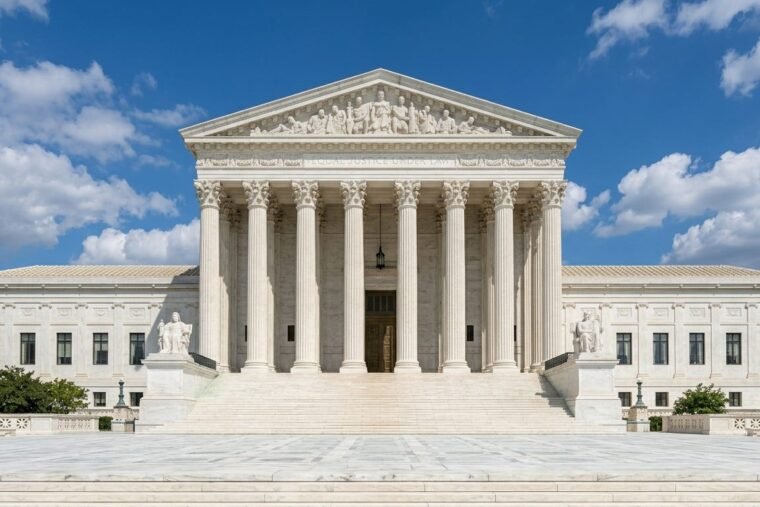
Since the U.S. Supreme Court issued its unanimous decision in Hosanna-Tabor v. EEOC on January 11, 2012, there has been a lot of discussion regarding whether the court did the right thing when it upheld the ministerial exception and denied jurisdiction in a case involving the termination of a ministerial employee. For reasons outlined below, I believe the Court made the right, albeit difficult, decision.

This was the case of the parochial school teacher who in addition to teaching on secular subjects also performed religious functions, Chery Perich, who was fired for threatening to file a lawsuit under the Americans with Disaiblities Act when she was not given her job back after returning from medical leave.  The religious employer argued that it was against its religious beliefs for a minister to sue the church, and that these things had to be handled within the church structure.

The issue presented before the Court was whether the anti-retaliation prohibition of the Americans with Disabilities Act (ADA) could be constitutionally applied to a religious association’s retaliatory firing of a parochial school teacher who taught secular subjects and also performed religious functions and was designated a commissioned minister.

The Supreme Court found that the Establishment and Free Exercise Clauses of the First Amendment bar ministers from bringing lawsuits against their churches in which the ministers claim violation of employment discrimination laws. In this case, the Court found that Perich was a minister within the meaning of the ministerial exception, and therefore the First Amendment required dismissal of her employment discrimination suit against her religious employer.

The ministerial exception gives religious institutions certain rights to control employment matters without interference from the secular courts. It does not, as the Court decision points out, affect criminal, tort, or contract law. So churches cannot use it to shield themselves from liability for criminal acts, negligent behavior leading to accidents, or breach of contract.  But it does protect churches from being hauled into court for religious decisions that have been made.

Some have tried to advance the theory that Perich had not fully pursued the administrative remedies available to her in the parochial system, but that would not have changed the outcome which hinged on the threshold issue of whether the ministerial exception applied to her. If the exception applied, the Court lacked jurisdiction.

Another misconception is that the Hosanna-Tabor decision somehow establishes the ministerial exception and adds something new. In reality, Congress specifically built an exception for religious organizations into Title VII of the Civil Rights Act of 1964. Title VII was enacted by Congress to prohibit employment discrimination on the basis of race, color, religion, sex, or national origin. (42 U.S. C. §§ 2000e-2(a)). Under the statutory exception, religious employers could prefer members of their own faith in making their hiring decisions.

The actual ministerial exception was born in 1972, when, in McClure v. Salvation Army, the U.S. Court of Appeals for the Fifth Circuit refused to hear a female minister’s gender discrimination claim. The court found that applying the provisions of Title VII to the employment relationship existing between a church and its ministers would therefore “cause the State to intrude upon matters of church administration and government” which would “result in an encroachment by the State into an area of religious freedom.”

The way it works is that courts in most Circuits rely upon a role-based or “primary duties test” to determine whether an employee is a minister within the exception, and whether or he she can bring suit under Title VII. Several circuits have adopted an approach that religious institutions should be able to choose who will perform certain spiritual functions. The first approach focuses on the employment relationship, while the second focuses on the right of churches to exercise their beliefs more freely.

Perich was, in many ways, the perfect “poster child” to challenge the ministerial exception. The case clearly involved a non-religious issue and for all the world, it looked like the church was looking for a way to fire her in a way that would be against public policy as applied to secular organizations and still avoid being hauled into court for violating the Americans with Disabilities Act.

In fact, the EEOC, the ACLU, and Americans United for Separation of Church and State (“AU”) rallied to Perich’s side. In its brief, AU argued that the ministerial exception did not entitle religious entities to discriminate or retaliate for reasons unrelated to religion, and that courts should determine whether an asserted religious justification for an action is pretextual.

In short, a church would therefore need to pass a two-prong test – first, it would have to demonstrate that its discriminatory rule was related to its religious beliefs; second, it would need to demonstrate that its action was not “pretextual.”

The AU brief gave some examples of what it meant to litigate on issues of discrimination that were not particularly related to a church’s doctrine. For instance, a Catholic Church could not be forced to hire a female priest, but an otherwise egalitarian church would not be permitted to fire a Sunday-school teacher when the pastor had a purely personal belief that “women should not work outside the home.”  The examples continued for several pages, permitting organizations to make discriminatory doctrinal rulings but not permitting local churches from acting in contrast to non-discriminatory denominational policies or practice.

Applying an Employment Division v. Smith style argument, AU argued that generally applicable employment laws should apply to churches unless there is a need to safeguard a constitutional right. Why they would appeal to this analysis is particularly curious. The Smith decision created a major problem for free exercise of religion by subjecting religious minorities to the rule of the majority even if it goes against the minority’s religious beliefs. (One can hope that the Court, in the near future, might see the wisdom of applying the Hosanna-Tabor analysis to individual religious liberty rights and re-establishing the Free Exercise Clause that was compromised in Smith.)

The AU brief is helpful in that it provides a concrete example of the depth to which the government and courts would need evaluate in order to determine whether church employment decisions were permissible or not.

Under the approach proposed by AU, church decisions would be open to scrutiny as to whether they were doctrinal or not, and the investigators would then need to go into the minds of the decision makers to see whether such decisions were made in good faith and not merely to achieve a favorable outcome for the institution.

As people often say, bad cases often make bad law and the Supreme Court had just such an opportunity to throw away the ministerial exception in this highly sympathetic case and effectively destroy the wall of separation of church and state by allowing the state entry into the inner workings of the church. Fortunately the Court saw the bigger issues involved and made the right decision.

However by ruling the way it did, the Supreme Court protected the right of a religious organization to select its clergy without government interference and avoided placing church doctrine under government interpretation. Civil magistrates will not be in a position where they are forced to determine which religious view, that of the clergy member or the church, is correct.

Church leaders are free to choose ministers who they believe will carry their message forward.

While most religious organizations sincerely strive to provide fair and equitable treatment to all employees, this does not mean that some religious organizations will not abuse the “ministerial exception” to make poor personnel decisions that could lead to costly litigation if they were secular organizations. But organizational decision makes should realize that they will ultimately answer to a Higher Power even if these cases may not be pursued in the civil courts.

—-

For more information on the ministerial exception and its history, I would recommend the Charleston Law Review article by Todd Cole, “The Ministerial Exception:  Resolving the Conflict between Title VII and the First Amendment.” The article is available online at http://www.charlestonlawreview.org/archive/vol4num4/Cole.pdf


Campaigning for Candidates from the Pulpit is a Bad Idea


The “Johnson Amendment” prohibits most church pastors from making declarations “in support of or in opposition to candidates for public office.” Is this limitation on freedom of speech constitutional?

One thing is clear – the electioneering ban is not rooted in Jeffersonian views of separation of church and state or the First Amendment which are silent on issues involving the interplay between tax-exempt organizations, including churches and charities, and the Internal Revenue Code. Under section 501(c)(3) of that code, churches and other charitable organizations are exempt from income tax and entitled to receive tax-deductible contributions from donors.

Instead, it is based on an agreement that non-profits make with the IRS. In order to obtain 501(c)(3) status, applying organizations must represent that they will not participate in any political campaign on behalf of, or against, any candidate for political office. A contributor to a church that does not sign up for 501(c)(3) status can still deduct those contributions from his or her income but if that contributor is audited, he or she has the burden of establishing that the church meets the qualifications of a section 501(c)(3) organization.

On October 2, 2011, as part of “Freedom Sunday” which is promoted by the Alliance Defense Fund, 539 ministers throughout the United States defied the IRS rule and identified where candidates stood on the issues and “where followers of Jesus Christ should stand.” ADF claims that before 1954 when the Johnson Amendment was passed, preachers could promote candidates from the pulpit and that the effect since then has been to “silence and chill the pastors.”

So far, it does not appear that the IRS has taken action to revoke the 501(c)(3) status of these churches. In fact, such cases are exceedingly rare. The U.S. Supreme Court has yet to address this issue head-on although a lower court, the District Court for the District of Columbia in Branch Ministries v. Rossotti (http://www.irs.gov/pub/irs-utl/branch_ministries.pdf) did find that the IRS could revoke the tax-exempt status of a religious organization that bought and published a newspaper ad in the New York Times and the Washington Post that specifically and clearly argued against a political candidate. The ad said, “Bill Clinton is promoting policies that are in rebellion to God’s laws.” The ad concluded, “How then can we vote for Bill Clinton?” At the bottom, the church was named along with an invitation for readers to make a “tax-deductible donation” to pay for the advertisement.

A church that loses its tax exempt status will operate like any other corporation for purposes of tax liability. They would be able to speak out freely but some contributors may be less inclined to donate if they cannot take the tax deduction.

If 501(c)(3) organizations were suddenly able to engage in partisan politicking, and donors were able to give on a tax-deductible basis, donors could ostensibly deduct currently non-deductible political donations simply by funneling these monies through churches. Churches would not only pass the collection plate for their religious mission, but churches would also be able to use these tax-deductible donations on behalf of particular candidates.

Large churches could bankroll entire political campaigns and receive favorable treatment from those who support them. Politicians could visit with church pastors and lobby them for their campaign support. The lines of mutual respect between church and state could be erased as churches become nothing more than overt political mouthpieces during campaign season.

Because of the tax advantages, it is not inconceivable that churches would become a primary venue for gathering votes as political goals were interwoven with spiritual teachings. A politician who ignored this new reality would be at a distinct disadvantage.

In response, many congregations might, as a matter of policy, refuse to allow the politicking from their pulpits but may perceive that they lose the favor of politicians who receive their support elsewhere.  In churches that permitted politicking, congregants of different political persuasions than their clergy might feel alienated and leave.

As it now stands, churches and charities are welcome to speak truth to power on the issues that matter – from opposing human trafficking, to lobbying for workplace accommodation for religious employees, to pursuing morality and justice. Religious organizations just cannot support or oppose particular candidates or political parties. This is a good thing.

GOP to Consider Accommodating Saturday Sabbath Observers in Nevada Primaries

In the Republican primaries this year, there is a bright spot for religious freedom and diversity.

Amy Tarkanian, the state GOP chairwoman told The Associate Press that she has asked the Republican National Committee to weigh in on whether the religious voters should be accommodated by moving their voting to Saturday night, or moved forward to February 2.

Casino titan and Republican party supporter Sheldon Adelson has raised concerns about the scheduling of the February 4, 2012 caucus, which falls on Saturday, or the Sabbath as celebrated by orthodox Jews, Seventh-day Adventists, and members of a few other religious groups.

The proposed changes would allow religious voters who observe the seventh day as a holy day to vote on an alternate date while most Nevada Republicans would be requested to caucus from 9 a.m. to 3 p.m. on February 4.

If you support religious accomodation for Nevada GOP voters who observe the Sabbath on Saturday, contact the GOP with a message of thanks and support for the decision at http://www.nvgopcaucus.com/contact

Here is a sample message:  ”Just wanted to thank you for considering accommodating members of the GOP whose religious beliefs require that they rest on Saturday.”

10th Circuit Rules Oklahoma Amendment Barring Islamic Law was Unnecessary and Discriminatory

OKLAHOMA –The 10th U.S. Circuit Court of Appeals has upheld a lower court’s ruling that blocked the implementation of the “Save Our State” amendment. The amendment, approved by 70 percent of Oklahoma voters in 2010, barred “Islamic law” in the state, even though there was no movement to impose sharia law in Oklahoma.

Judge Scott M. Matheson wrote on behalf of the unanimous court, “Appellants do not identify any actual problem the challenged amendment seeks to solve. Indeed, they admitted at the preliminary injunction hearing that they did not know of even a single instance where an Oklahoma court had applied Sharia law or used the legal precepts of other nations or cultures, let alone that such applications or uses has resulted in concrete problems in Okalahoma.” (Awad v. Ziriax).

Larson test a Gateway to Addressing Laws that Discriminate Between Religions

The 10th Circuit also applied the Larson test as a gateway to the Lemon test. While the Lemon test Lemon v. Kurtzman, 403 U.S. 602 (1971) applied to “laws affording uniform benefit to all religions, and not to provisions…that discriminate among religions,”  in Larson v. Valente, 456 U.S. 228, 255 (1982), the Supreme Court ruled that if a law discriminated between religions, it could survive only if it is “closely fitted to the furtherance of any compelling interest asserted.”

In the case of California Christian Univ. v. Weaver, 534 F.3d 1245 (10th Cir. 2008), the 10th Circuit had described Larson, “The First Amendment mandates governmental neutrality between religion and religion …. The State may not adopt programs or practices…which aid or oppose any religion….. This prohibition is absolute.” Larson, 456 U.S. at 246.

Proponents of the Oklahoma amendment had argued that Larson was no longer good law because it is used infrequently, but the 10th Circuit ruled that the Supreme Court had never overturned it, and stated that this rarity “likely reflects that legislatures seldom pass laws that make ‘explicit and deliberate distinctions between different religious organizations’ as contemplated in Larson.”

In fact, the Supreme Court had referenced the rarity of this type of case in Church of the Lukimi Babalu Aye, Inc., v. City of Hileah, 508 U.S. 520 (1993)(“The principle that government may not enact laws that suppress religious belief or practice is so well understood that few violations are recorded in our opinions.”)

The Larson case facts were mild compared to the facts of  Oklahoma amendment case. In the Larson case, a Minnesota statute imposed certain registration and reporting requirements on religious organizations that solicited more than 50 percent of their funds from non-members. No specific religious group was identified. But the Oklahoma statute specifically targeted Islam, and was defined in these terms: “Sharia Law is Islamic Law. It is based on two principle sources, the Koran and the teachings of Mohammed.” (SQ 755).

The Oklahoma amendment further instructed the courts to “uphold and adhere to … if necessary the law of another state of the United States provided the law of the other state does not include Sharia Law, in making judicial decisions.” The law did not prohibit Oklahoma courts from upholding laws of any other religion. The Oklahoma amendment also included language that Oklahoma “courts shall not look to the legal precepts of other nations or cultures. Specifically, the courts shall not consider international law or Sharia law.”

Because of the lack of Sharia law in Oklahoma, the Court ruled that the harm that the amendment would remedy was “speculative at best and cannot support a compelling interest.” Further, the court said that there was no way to tell whether the amendment would solve any Sharia law problem since “one cannot try on a glove to see if it fits when the glove is missing.”

The Court further found that Muneer Awad, a Muslim who had filed the case, would suffer irreparable injury without the injunction. The court applied on the principle that “[w]hen an alleged constitutional right is involved, most courts hold that no further showing of irreparable injury is necessary.” Kikumara v. Hurley, 242 F.3d 950. The 10th Circuit also noted that although states can legislate in certain areas (including ballot initiatives), “these granted powers are always subject to the limitation that they may not be exercised in a way that violates other specific provisions of the Constitution.”

The full decision is available here: http://www.ca10.uscourts.gov/opinions/10/10-6273.pdf

CONCLUSION: Certainly, if Islamic law had been imposed, it would be a violation of the Establishment Clause. But without that even being at issue, the Amendment became an excuse to marginalize a religious group.

New York City ‘Workplace Religious Freedom Act’ Clarifies Religious Accommodation Requirements for Employers

On August 30, 2011, New York City Mayor Michael Bloomberg signed the “Workplace Religious Freedom Act”  (Int. 632-A) into law clarifying what requirements employers are required to meet to demonstrate that they have done all that is necessary to make a reasonable attempt to accommodate the bona fide religious needs of employees.

Under pre-existing law, employers were required to provide accommodation so long as it did not cause an “undue hardship” for the employer. However, since “undue hardship” was not clearly defined, it was generally viewed as a requirement that the “de minimis cost or burden” standard be applied.

The new City law amends sections 8-102 and 8-107 of the New York City Human Rights Law (“NYCHRL”) to defines what “undue hardship” means:

“Undue hardship” shall mean “an accommodation requiring significant expense or difficulty (including a significant interference with the safe or efficient operation of the workplace or a violation of a bona fide seniority system).” Factors to be considered in determining whether the accommodation constitutes an undue economic hardship shall include, but not be limited to:

  • The identifiable cost of the accommodation, including the costs of loss of productivity and the cost of retaining or hiring of employees or transferring of employees from one facility to another, in relation to the size and operating cost of the employer.
  • The number of individuals who will need the particular accommodation to a sincerely held religious observance or practice, and
  • For an employer with multiple facilities, the degree to which the geographic separateness or administrative or fiscal relationship of the facilities will make the accommodation more difficult or expensive.

The Act also provides that employers in New York City can establish that a religious accommodation will result in an “undue hardship” by showing that it will result in the employee’s inability to perform the essential functions of his or her position.

Potential remedies for violating the law include reinstatement, back pay, compensatory damages, attorney’s fees, and employers could be subject to a civil penalty of $125,000.

From a practical standpoint, employers should consult with human resources experts to ensure compliance by making sure that anti-discrimination policies are up to date, and job descriptions should be tailored to accurately describe portions of the job duties that involve attendance, availability, and dress / grooming requirements.

This law is of particular significance to Muslims and Sikhs who have faced an increase in discrimination since the events of 9/11, and will apply to both public and private sector employers.

###


Should Congress Continue to Fund the United States Commission on International Religious Freedom?

(This article was written as a contribution to a Liberty Magazine Round Table discussion. Read the other responses and contribute your thoughts at http://www.libertymagazine.org/index.php?id=1665 )

By Michael D. Peabody -

In August 2011, the Pew Research Institute released a study, Rising Restrictions on Religion, which found that more than a third of the population of the world lives in nations where government restrictions or social hostilities involving religion are increasing. Only 1% live in countries where things are getting better.

In 1998 when Congress, as part of the International Religious Freedom Act (IRFA), approved the creation of the United States Commission on International Religious Freedom (USCIRF), Congress believed that it was important that the USCIRF operate as an independent governmental body to monitor executive branch activities related to religious freedom and to make recommendations for Presidential action when it found abuses.

Under the IRFA, the Commission has communicated with embassies around the world to find out the state of freedom, and has produced reports outlining the state of freedom around the world. This includes identifying “countries of particular concern” (CPC) that have engaged in torture, prolonged imprisonment, or “other flagrant denial[s] of the right to life, liberty, or the security of persons.” Once a country is tagged as a CPC, per the IRFA, the government must, subject to the right to waiver, engage anything from bilateral agreements to sanctions in order to encourage improvements. There are eight CPCs at the present time.

The Secretary of State can then make recommendations as to how to address these issues. The White House has yet to issue any new actions or sanctions against a CPC solely for violations of religious freedom, and instead has placed religious freedom issues, if they are mentioned at all, under the umbrella of existing sanctions. The result is that religious freedom issues have gotten lost in the shuffle. In short, under the IRFA, the United States is supposed to indicate that a portion of, or the entirety of sanctions being imposed depending on the situation, is due to religious freedom violations.

In the past, the United States was relatively isolationist when dealing with religious freedom issues in other countries, leaving those issues to non-governmental organizations (NGOs). The U.S. instead worked to preserve its own interests around the world. As an indirect result, many otherwise restrictive nations were forced into situations of regime change resulting in increased religious freedom within their borders. For instance, after an extended Cold War essentially bankrupted the repressive Soviet Union, its citizens enjoyed a period of unparalleled religious freedom. Today, the State Department has to tackle a wide range of pressing issues involving direct threats to the United States including terrorism, threats of a nuclear Iran, chaos in the Middle East, warfare on multiple fronts, and many other issues.

As a result, the government is not always in a diplomatic position to address religious freedom issues separately. As I write this, the United States is experiencing unprecedented tension with Pakistan regarding the War on Terror and the possibility of significant armed conflict seems nearly imminent. Pakistan is also a CPC, and in the midst of this if USCIRF were to operate “properly” the President should also be levying sanctions against Pakistan for the way it treats its own citizens when in reality the flow of U.S. dollars to Pakistan may be the only thing preventing all-out war.

The USCIRF should be continued – it has an important function as a monitor of international religious freedom, but as long as the State Department is also engaged in its fundamental duty of protecting the interests of the United States above those of any other nation, it will not be able to fulfill its complete charter of recommending direct action against hostile countries without facing a great deal of suspicion of either diplomatic or religious mission. While many hostile nations promote a particular religious worldview with impunity, and act under color of that faith as they carry out persecution, the USCIRF must be careful in contrast not to be seen as fulfilling a mission designed to extend American Christianity. If it is perceived across borders and language barriers as a low key Medieval Crusade, it will lose its effectiveness and be a hindrance to international diplomacy.

Religions cross borders, cultures, and languages, and thus the promotion of freedom of religion is generally perceived as a mission of peace, not a mission of war. Because the parameters of religion differ from national borders, unless a hostile nation changes its internal character, religious freedom abuses will continue either officially or unofficially.

In a perfect world, the tasks of the USCIRF would probably be best handled by the United Nations, but that body seems unlikely to move in a productive direction along these lines anytime soon. The reality is, as uncomfortable as it might seem, aside from the Holy See, there is no independent recognized country in the world that can carry an olive branch of religious peace without an overt direct threat of violence or sanctions. It would therefore appear incumbent on non-governmental organizations (NGOs) and religious organizations to assert religious freedom using whatever peaceful and cooperative methods that are available.

This does not mean that USCIRF should be allowed to wither on the vine – its role as a monitor of religious freedom is invaluable and it establishes this sense in the minds of Americans and shows the global community that this nation holds onto and respects these inalienable values regardless of whether they can be imposed on other nations. The USCIRF is one mechanism by which the United States can remain at the forefront of promoting the ideals of freedoms of speech, conscience, religion, and belief.

ANALYSIS: Bishops Claim Religious Liberty Under Assault

This week, at its annual conference in Baltimore, the US Conference of Catholic Bishops asserted that “religious liberty” is under assault.

The conference pulled together issues from the federal level and various states. For instance, in Illinois, after 40 years of cooperation, government officials stopped working with Catholic Charities on adoptions and foster-care placements because the agency refused to recognize a new civil union law. Bishops are suing the state, claiming that denying funds because of the religious beliefs of the church is impermissible. In New York, the Catholic church has complained that the religious exemption to gay-marriage laws is too weak.

On health care, the Catholic Church has argued that there should be a broader exemption to the federal mandate that private insurers pay for contraception. The church is also fighting the Health and Human Services Department’s recent denial of renewal of financial aid for their anti-human trafficking work. The ACLU had filed suit opposing government funds to anti-human trafficking groups that “impose religiously based restrictions on reproductive health services,” claiming that many of the women who are victims of rape and forced prostitution are in need of reproductive health services.

This is coming on the heels of recent attempts by the church to pressure Catholic politicians to vote in line with church teachings.
Each year, Catholic charities across the nation receive hundreds of millions of dollars in federal funding, which have increased over the years, and the battle for “religious liberty” is about who gets to control the way that the tax dollars are spent.

In the past, Catholic public policy discussion covered a broad range of issues ranging from immigration and workers’ rights to nuclear proliferation. Today, the focus has narrowed to the issues of abortion and gay rights.

The conference has formed a new “religious liberty” committee, the Ad Hoc Committee for Religious Liberty and is hiring another attorney and lobbyist to address “religious liberty and marriage issues” on Capitol Hill. The Committee is also planning to lobby against a Congressional repeal of the Defense of Marriage Act and the military’s repeal of “Don’t Ask, Don’t Tell.”

Sadly, as part of this change in focus, the term “religious liberty” is being redefined away from protecting the rights to speak, believe, and practice religion. Instead, “religious liberty” is apparently the right to receive government money without restrictions.

And we cannot ignore the fact that other Americans have sincere religious disagreement with the positions being promoted by the bishops. Are the rights of conscience of those who take a different stance on the disputed issues to be dismissed as illegitimate?

To be sure, these are not easy questions to answer. Certainly institutions should not be compelled to act against their religious mission. Yet, the state does not have an implicit obligation to fund them. The Church can assert its right speak in the the public square, but it should not assume power it does not have in order to force the rest of society to follow its lead.

In 1773, a Baptist minister in New England observed that where “church and state are separate, the effects are happy, and they do not at all interfere with each other: but where they have been confounded together, no tongue nor pen can fully describe the mischiefs that have ensued.”

That separation should not be torn down in the name of religious liberty. I hope that the US Conference of Catholic Bishops will keep this in mind as it begins its new chapter of advocacy in Congress, and recognize that they are not the arbiters of morality in the nation, but rather are one of many organizations representing the broad spectrum of belief and non-belief in the United States.

(Click here to read Archbishop William T. Lori’s speech at the US Conference of Catholic Bishops.)

###

State and Federal Legislators Introduce Bill to Outlaw Local Criminalization of Circumcision

ReligiousLiberty.TV Bill Tracker – In November, San Francisco voters will decide whether to criminalize male circumcision within city limits. Doctors or others who perform the procedure could face misdemeanor charges and up to a $1,000 fine and/or 1 year of incarceration.  (Note:  A proposal of a similar measure in Santa Monica was dropped last week.)

While informal polls projecting that the ballot measure will lose by a large margin (see SF Gate – May 28, 2011), the response to the bill has attracted national attention.  In a lawsuit filed by the Jewish Community Relations Council and Muslim individuals against the San Francisco Department of Elections and the bill’s primary promoter Lloyd Schofield, attorneys argue that current state law already prohibits local jurisdictions from preventing the practices of  ”healing arts professionals,” which they say includes Jewish mohels.

California Assembly Speaker Pro Tempore Fiona Ma (D-San Francisco) and Assembly member Mike Gatto (D-Los Angeles)  have introduced a bill that would directly ban local bans on circumcision. In a press conference held in Los Angeles yesterday, July 21, 2011, Ma and Gatto said that the bill would render the San Francisco ballot measure moot.

The first hearing on the bill (AB 768)  is scheduled for August 15 when the Legislature reconvenes.

Congresman Brad Sherman (D-Sherman Oaks) has introduced a similar bill, “The Religious and Parental Rights Defense Act of 2011,” (H.R. 2400) on a Federal Level.

Click here to read the latest versions of California AB 768 and learn the current status.

The following is the latest information on the Federal bill:

Speak Now – A Response to the European Sunday Alliance

The proposal of the European Sunday Alliance presents several problems – instead of recognizing liberty of conscience in these issues, it would rely on the majority opinion that Sunday is the appropriate day of rest to shut down Sunday commerce and in the process would ignore and marginalize the rights of those who observe a different day.

I am a huge supporter of a weekly day of rest. I personally observe a weekly day of rest, and, like many others who write for Liberty, have advocated for the rights of those who have been denied rest day accommodation through the legislative and legal process. I have advocated for the Workplace Religious Freedom Act, which would make it harder for employers to force employees to choose between their religious rest day beliefs and their jobs. Employees need to be treated with respect, and given appropriate breaks by their employers.

However, the proposal of the European Sunday Alliance presents several problems – instead of recognizing liberty of conscience in these issues, it would rely on the majority opinion that Sunday is the appropriate day of rest to shut down Sunday commerce and in the process would ignore and marginalize the rights of those who observe a different day.

The language of proposed Sunday rest laws is nothing new, in fact, it was one of the first pieces of legislation passed when the Emperor Constantine converted to Christianity. In March of 321 A.D., Constantine declared, “Let all judges, the people of cities, and thoseemployed in all trades, remain quiet on the Holy Day of Sunday. (Code of Justinian, Book III, Title XII, III. THE JUSTINIAN CODE FROM THE CORPUS JURIS CIVILIS. Translated from the original Latin by Samuel P. Scott. Central Trust Company, Cincinnati, 1932).

Following the passage of the law, the Council of Nicea met in 325 A.D. and decided that Sunday was to be not only the day of rest, but the day of worship, and that Passover was to be observed on Sunday as well. Following that, those who insisted on keeping the seventh day as the day of rest and worship were severely persecuted for both civil and religious reasons.

In more contemporary history, the formation of the European Sunday Alliance last month parallels a similar development that took place in the aftermath of the American Civil War. In 1885, a petition was circulated for the U.S. Congress to use its powers to regulate interstate commerce to ban interstate trains, military parades, and mail service on Sundays except for work “of necessity, and mercy and humanity.” A bill was introduced in 1888 by Congressman Henry Blair, and it was soon endorsed by a wide range of religious organizations and labor unions including the Knights of Labor.

Most of the advocates at the time promoted the secular nature of the uniform day of rest, however for many religious advocates it represented a return to the kind of moral values that would reform a society that had so recently been torn apart. They believed that a return to Sunday Sabbath rest was a Biblical imperative, but publicly argued that it was for the good of society.

From a practical, economic standpoint, a uniform cessation of the wheels of commerce aside from certain health and safety exceptions, was required, otherwise it simply would not work. Since the majority believed that Sunday was already the day of rest, the Blair bill called for Sunday observance. Since the majority had thus defined the moral imperative, those who rested on a different day would simply have to adapt. In fact, those who worshipped on the seventh day of the week because of their religious beliefs could be deemed as acting illegally if they did not also rest on Sunday.

While the national bill did not pass, local variations passed across the nation, and some who worked on Sundays were arrested and even jailed.

In its Founding Statement, the European Sunday Alliance argues that, in the interest of synchronicity, Sunday is the appropriate day of rest for all of Europe, and makes no allowance or acknowledgment of what should be done for those whose faith requires them to rest on a day outside of Sunday. In fact, it is not hard to see how those who rest on a different day might be an annoyance or hindrance to Sunday rest, and even in the debate may be portrayed as roadblocks, troublemakers, or even anti-religious. Businesses who open on Sunday could be fined, and those who conduct their own entrepreneurial endeavors on Sunday could also find themselves operating against the law.

Many people are predicting that the European Sunday Alliance does not have the political power or support to actually implement a Sunday closing law across Europe. This could be true, but today, as in ages past, those who value liberty of conscience cannot afford to sit idly by hoping that it goes away. They need to make their voices heard, both legally and theologically. Legal arguments may become moot as laws can change, so those who wish to defend their beliefs must also be able to provide a theological basis to demonstrate the reason for their religious commitment and be able to demonstrate that it is, for them, a moral imperative, not simply a preference.

While one cannot predict the inevitability persecution resulting from what appears on its face to be a well-intentioned, if misguided proposal to relieve economic and political turmoil through rest, European history shows that stranger things have happened. Now, before it passes, is the time to speak up for those minorities who could be adversely affected if this proposal becomes law across Europe. It is a serious proposal and those who treat it as a mere curiosity may ultimately wish that they would have spoken up earlier.

###


This piece also appears with others addressing this issue at the Liberty Magazine Roundtable  at http://www.libertymagazine.org/index.php?id=1760.

Count the Cost – The Hidden Dangers of School Vouchers

This year 42 state legislatures are considering creating or expanding school voucher programs. Private parochial educators face serious pitfalls with some of these programs that could eliminate the effectiveness of their religious mission. 

In an ancient story of twin brothers, Esau, next in line for the patriarchal blessing, returns famished from a hunting trip. When he arrives home, he finds his brother Jacob, cooking stew. Esau tells his brother, “I’m starving! Quick, give me some!”

Jacob, the consummate negotiator, asks for a bargain that will change the course of a nation. “You can have some, but you must first give me your birthright blessing.”

Esau responds, “What good is my birthright if I die of starvation?”

Esau swears an oath to give Jacob the birthright and receives the stew and some bread. In return, he surrenders his position as the next patriarch.

As the U.S. economy continues to falter, many private religious elementary and high schools are feeling quite famished. There is simply less money. Parents have less money to enroll their children, and this has led to layoffs of teachers, inability to upgrade or even maintain buildings, and many schools feel that they are going to have to find funding somewhere or simply shut their doors.

This year alone at least 42 state legislatures have introduced legislation to either create or expand school voucher and scholarship tax credit programs in response to pressures from parents and private schools.

Private education credit programs tend to differ with some simply providing a tax credit to parents. Others impose significant eligibility requirements on the schools that could change the very character of religious private schools. In at least one “choice scholarship” program, there are specific requirements that will require participating schools to allow the government to evaluate the make-up of the school board and employment and admissions policies, review the school curriculum, and would require schools to provide opportunities for parent to opt-out of devotional programs and activities. The schools will also be required to abide by all civil-rights anti-discrimination laws except for religion.

While these requirements might seem unreasonable, or even onerous, some religious elementary and secondary schools facing Hobson’s Choice, are  claiming that they are fully eligible and are clamoring for the opportunity to obtain the state funding. And if the schools are not presently eligible, they may be willing to make whatever changes are necessary to become eligible in the eyes of the state.

If the religious background of a school allows it to segregate its secular life from its sacramental life, then it might be possible to participate in such a program. I am concerned, however, that schools from my own faith tradition be very cautious about getting involved in this funding scheme. Seventh-day Adventist education has taken a holistic approach that does not allow for secular education to be separated from spiritual education. To cite the CIRCLE (Curriculum and Instruction Resource Center Linking Educators) website, located at circle.adventist.org, “Adventists have embraced the philosophy that education should be redemptive in nature, for the purpose of restoring human beings to the image of God, our Creator. Mental, physical, social, and spiritual health, intellectual growth, and service to humanity form a core of values that are essential aspects of the Adventist education philosophy.”

In a reasonably predictable hypothetical situation, let’s assume that an Adventist school accepts vouchers and promises to follow the rules. Because of the excellent education offered, secular students soon swell its ranks. The school is better off financially than it has ever been and even takes out a mortgage for a new science building. Several parents choose to opt-out of religious instruction and file a complaint with the state when the science teacher, who is part of the “secular” part of the campus, teaches creationism. The school is investigated by an accreditation team that determines its science curriculum is too religious. The school must now decide whether it will confine creationism to the chapel or forego eligibility for the scholarship funding that it now relies upon for its survival.

In Adventist Education, October-November 1989, Dr. George Akers who was the World Director of Adventist Education wrote, “Distinct from extant educational philosophy is the idea that earthly study and growth move on to eternity and that, through the grace of God, building character fit for admission to eternity is the big business of life. It is a cooperative effort between home, school, and student. This special dimension of faith-nurture is stressed throughout the Ellen White writings which indicate that teaching and learning should take place in the context of a special sensitivity to the cosmic struggle between good and evil. Accordingly, Ellen White lifted up the Bible as a great source of spiritual enlightenment that should illuminate all subject matter. Conversely, the study of subject matter should illustrate Biblical principles. This integration of faith and learning was to be the ligature of Christian education and the special expertise of a Christian teacher.”

Through this philosophy the Adventist school system has grown to the largest Protestant educational system in the world.  In the North American Division alone, there are over 1,049 elementary and secondary schools in the United States, Canada, and Bermuda with 65,000 students enrolled.  Globally, the church operates approximately 7,548 educational institutions. So, just to be clear, the issue of who controls the curriculum and who gets to choose the teachers is extremely important to the church.

There are Establishment Clause considerations about public money going to finance religion, financial arguments that public school systems will be drained to the benefit of private education, and many other arguments that people are using to dispute these types of voucher programs.

But my concern is for the integrity of the private parochial school system.  Schools could, by operation of their own agreement to accept requirements for scholarships, be regulated to the point that they have nothing unique to offer the world. That one school accepting a local requirement might subject other affiliated schools in the region, or even nationally, to extended liability because of statements they may make in order to obtain this money. For this reason, a national approach to this issue is called for, and each program should be vetted to ensure that it will not involve undue regulations or impose liability on other institutions under the larger umbrella organization.

In the quest for survival, these schools might end up selling their birthright as holistic centers of learning andvoluntarily waive  the very reason for their existence. When it comes to deciding whether to participate in these programs, it is imperative that parochial schools look further ahead and count the cost of surrendering key advantages for the “stew” of government money.

###

Note:  People often wonder why it is possible for religious colleges and universities to receive public funding but not elementary schools and high schools.  In Tilton v. Richardson, 403 U.S. 672(1971), The Supreme Court found several distinctions between colleges and universities to uphold the statutory scheme, including the fact that colleges do not have as their primary goal the indoctrination of students into a particular religion and the that college students are much less impressionable.

The American voucher scholarship programs, where separation of church and state is a clearly defended constitutional principle, are markedly different than programs in other countries, and comparisons between successes and failures internationally may not apply here.

Next Page »