Sikh Group Develops App to Report Airport Profiling (CNN)
EXCERPT: Airline travelers who feel they’ve been harassed at airport check-ins by screeners now have a speedier outlet on which to complain right at their fingertips.
The Sikh Coalition, a civil rights advocacy group, on Monday released a mobile application on iPhones and Android phones giving passengers who feel they’ve been racially or religiously profiled a way to speak out against screeners with the Transportation Security Administration.
The free mobile app, FlyRights, prompts disgruntled passengers with questions and allows them to quickly check the basis on which they feel they’ve been discriminated, then name the airport where the incident occurred, the airline and the flight number.
Apple Bids Adieu to ‘Jew or not Jew?’ iPhone App in France (CNN)
EXCERPT: “Jew or not Jew?”: That is just part of the question. An iPhone app bearing this name has been yanked from Apple’s App Store in France amid threats of a lawsuit and demands for its removal.
The app, still available elsewhere, pulls together a database of thousands of famous Jews – including movie stars, musicians, Nobel Prize winners and more – and offers insights into their backgrounds. Jewish mother? Jewish father? A convert? For $1.99 in the United States, app owners can know.
“I’m not a spokesman for all Jews, but, being Jewish myself, I know that in our community we ask ourselves often if this or that celebrity is Jewish or not,” he told the French newspaper. “For me, there’s nothing pejorative in saying publicly that this person or that person is Jewish. Instead, it’s something to be proud of.”
But no matter Lévy’s personal background or motivation, compiling details about peoples’ identities without their consent is against the law in France. And that was all Apple needed to know to swipe “Jew or not Jew?” from France’s App Store shelf.
Religious Groups Object to Covering Birth Control (Fox News)
EXCERPT: They defied the bishops to support President Barack Obama’s health care overhaul. Now Catholic hospitals are dismayed the law may force them to cover birth control free of charge to their employees.
A provision in the law expanded preventive health-care benefits for women, and the administration said last week that must include birth control with no copays. The Catholic Health Association says a proposed conscience exemption is so narrowly written it would apply only to houses of worship. Some other religious-based organizations agree.
Analysis: Obama Administration Declines to Defend Part of the Defense of Marriage Act
By Jason Hines – Today Attorney General Eric Holder and the Obama Administration announced that the Justice Department will no longer attempt to defend Section 3 of the Defense of Marriage Act (DOMA) (which defines “marriage” as between one man and one woman and “spouse” as a member of the opposite sex) from challenges in states that recognize gay marriage. This is a decided victory for those who support the cause of civil same-sex marriage. Previously, the federal government has defended DOMA, so this seeming reversal of position came as somewhat of a surprise. It is important at this juncture to wade through the legal arguments and determine the circumstances and legal reasons that led to the Executive Branch’s current position and what this means going forward.
Currently there are two cases in the 2nd Circuit which are challenging the constitutionality of Section 3 of DOMA. One case is from New York (Windsor v. U.S.) and the other is from Connecticut (Pederson v. OPM). It is important to note that gay marriage is legal in Connecticut and is recognized, but not performed, in New York. The DOJ has defended DOMA in jurisdictions where the courts have decided that government only needs to have a rational basis justification in order to enact laws that discriminate against homosexuals. In short, a rational basis justification means that the government only needs to formulate a plausibly reasonable justification for a particular. Most laws are held constitutional under this standard. These cases are different, however, because the 2nd Circuit has made no decision on whether homosexuals are a protected group, which would require some heightened scrutiny on the part of the Court in judging whether discriminatory laws are permissible against gays. These cases would require the DOJ to formulate their own beliefs about what standard that should be used when it is found that a law discriminates against homosexuals, whether to use rational basis, as some jurisdictions have, or to use heightened scrutiny. Heightened scrutiny has been defined by the Court as “a tenable justification describ[ing] actual state purposes, not rationalizations for actions in fact differently grounded.” United States v. Virginia , 518 U.S. 515, 535-36 (1996). “The justification must be genuine, not hypothesized or invented post hoc in response to litigation.” Id. at 533. Based on its analysis, the DOJ believes that laws that discriminate against homosexuals should receive heightened scrutiny.
The DOJ came to this conclusion after its own analysis of the question, based on the standard for heightened scrutiny provided by the Supreme Court. While the Supreme Court has made no definitively ruling on what level of scrutiny should be accorded laws pertaining to homosexuals, the DOJ believes that heightened scrutiny is the right answer. There are four questions that must be considered for heightened scrutiny to apply: (1) whether the group in question has suffered a history of discrimination; (2) whether individuals “exhibit obvious, immutable, or distinguishing characteristics that define them as a discrete group”; (3) whether the group is a minority or is politically powerless; and (4) whether the characteristics distinguishing the group have little relation to legitimate policy objectives or to an individual’s “ability to perform or contribute to society.” See Bowen v. Gilliard, 483 U.S. 587, 602-03 (1987); City of Cleburne v. Cleburne Living Ctr., 473 U.S. 432, 441-42 (1985) (quoted from Attorney General Eric Holder’s letter to Speaker of the House John Boehner). The DOJ believes that homosexuals fit all these criteria. First, homosexuals certainly have suffered a history of discrimination. Second, the DOJ admits that there are no visible characteristics, but it cites social science research that supports the finding that homosexuality is immutable and cites to the recent debate on Don’t Ask Don’t Tell to support the proposition that the Executive Branch believes that people should not have to hide their sexual orientation. Third, the Executive Branch believes that homosexuals are more or less politically powerless despite some of the gains that gay rights activists have made lately. As a comparable example, the DOJ cites to the fact that women were deemed politically powerless after the passing of the 19th Amendment and Title VII. Finally, the government supports the proposition that being gay does inhibit anyone’s ability to contribute to society.
In light of these factors, the DOJ feels that they can no longer defend DOMA as it applies to the states that legally recognize gay marriage. The DOJ will continue to defend DOMA in cases that apply to the Federal government. It is clear that the Obama administration is construing this as a federalism issue, where the states have the right to determine what a marriage is without the interference of the federal government. However, this is a victory for gay rights activists, as the Executive Branch has essentially said that it will stay out of the fray at the state level for now. Despite all this, there are still no definitive answers to the question of whether homosexuals have a right to civil secular marriage (or even at what level of scrutiny laws against them should be judged). That answer will probably have to wait until the Supreme Court decides the matter in the future.
Jason Hines is an attorney and doctoral candidate at the J.M. Dawson Institute of Church-State Studies at Baylor University.
UK – Health and safety snoops to enter family homes (TimesOnline)
EXCERPT from TimesOnline
Health and safety inspectors are to be given unprecedented access to family homes to ensure that parents are protecting their children from household accidents.
New guidance drawn up at the request of the Department of Health urges councils and other public sector bodies to “collect data” on properties where children are thought to be at “greatest risk of unintentional injury”.
Council staff will then be tasked with overseeing the installation of safety devices in homes, including smoke alarms, stair gates, hot water temperature restrictors, oven guards and window and door locks.
Bill would give president emergency control of Internet (CNET)
EXCERPT:
Internet companies and civil liberties groups were alarmed this spring when a U.S. Senate bill proposed handing the White House the power to disconnect private-sector computers from the Internet.
They’re not much happier about a revised version that aides to Sen. Jay Rockefeller, a West Virginia Democrat, have spent months drafting behind closed doors. CNET News has obtained a copy of the 55-page draft (excerpt), which still appears to permit the president to seize temporary control of private-sector networks during a so-called cybersecurity emergency.
The new version would allow the president to “declare a cybersecurity emergency” relating to “non-governmental” computer networks and do what’s necessary to respond to the threat. Other sections of the proposal include a federal certification program for “cybersecurity professionals,” and a requirement that certain computer systems and networks in the private sector be managed by people who have been awarded that license.
“I think the redraft, while improved, remains troubling due to its vagueness,” said Larry Clinton, president of the Internet Security Alliance, which counts representatives of Verizon, Verisign, Nortel, and Carnegie Mellon University on its board. “It is unclear what authority Sen. Rockefeller thinks is necessary over the private sector. Unless this is clarified, we cannot properly analyze, let alone support the bill.”
Read the full article at: http://news.cnet.com/8301-13578_3-10320096-38.html
The dangers of relinquishing liberty for a quiet and “safe” life
In recent months, it has become increasingly clear that religious freedom, or any individual liberties for that matter, are best respected in lands where private property and financial resources are respected by the state. Mark Steyn explores the themes of private property and financial responsibility in this speech describing the dangers other nations are facing when they fail to respect these boundaries. I would encourage you to read the speech in its entirety. Editor
The following excerpts are from a speech Mark Steyn gave at Hillsdale College on March 9, 2009. You can read the full article here.
“In most of the developed world, the state has gradually annexed all the responsibilities of adulthood—health care, child care, care of the elderly—to the point where it’s effectively severed its citizens from humanity’s primal instincts, not least the survival instinct.”
…
“And now the last holdout, the United States, is embarking on the same grim path: After the President unveiled his budget, I heard Americans complain, oh, it’s another Jimmy Carter, or LBJ’s Great Society, or the new New Deal. You should be so lucky. Those nickel-and-dime comparisons barely begin to encompass the wholesale Europeanization that’s underway. The 44th president’s multi-trillion-dollar budget, the first of many, adds more to the national debt than all the previous 43 presidents combined, from George Washington to George Dubya. The President wants Europeanized health care, Europeanized daycare, Europeanized education, and, as the Europeans have discovered, even with Europeanized tax rates you can’t make that math add up. In Sweden, state spending accounts for 54% of GDP. In America, it was 34%—ten years ago. Today, it’s about 40%. In four years’ time, that number will be trending very Swede-like.”
…
“That’s Stage Two of societal enervation—when the state as guarantor of all your basic needs becomes increasingly comfortable with regulating your behavior. Free peoples who were once willing to give their lives for liberty can be persuaded very quickly to relinquish their liberties for a quiet life. When President Bush talked about promoting democracy in the Middle East, there was a phrase he liked to use: “Freedom is the desire of every human heart.” Really? It’s unclear whether that’s really the case in Gaza and the Pakistani tribal lands. But it’s absolutely certain that it’s not the case in Berlin and Paris, Stockholm and London, New Orleans and Buffalo. The story of the Western world since 1945 is that, invited to choose between freedom and government “security,” large numbers of people vote to dump freedom every time—the freedom to make your own decisions about health care, education, property rights, and a ton of other stuff. It’s ridiculous for grown men and women to say: I want to be able to choose from hundreds of cereals at the supermarket, thousands of movies from Netflix, millions of songs to play on my iPod—but I want the government to choose for me when it comes to my health care. A nation that demands the government take care of all the grown-up stuff is a nation turning into the world’s wrinkliest adolescent, free only to choose its record collection.
“And don’t be too sure you’ll get to choose your record collection in the end. That’s Stage Three: When the populace has agreed to become wards of the state, it’s a mere difference of degree to start regulating their thoughts. When my anglophone friends in the Province of Quebec used to complain about the lack of English signs in Quebec hospitals, my response was that, if you allow the government to be the sole provider of health care, why be surprised that they’re allowed to decide the language they’ll give it in? But, as I’ve learned during my year in the hellhole of Canadian “human rights” law, that’s true in a broader sense. In the interests of “cultural protection,” the Canadian state keeps foreign newspaper owners, foreign TV operators, and foreign bookstore owners out of Canada. Why shouldn’t it, in return, assume the right to police the ideas disseminated through those newspapers, bookstores and TV networks it graciously agrees to permit?
“When Maclean’s magazine and I were hauled up in 2007 for the crime of “flagrant Islamophobia,” it quickly became very clear that, for members of a profession that brags about its “courage” incessantly (far more than, say, firemen do), an awful lot of journalists are quite content to be the eunuchs in the politically correct harem. A distressing number of Western journalists see no conflict between attending lunches for World Press Freedom Day every month and agreeing to be micro-regulated by the state. The big problem for those of us arguing for classical liberalism is that in modern Canada there’s hardly anything left that isn’t on the state dripfeed to one degree or another: Too many of the institutions healthy societies traditionally look to as outposts of independent thought—churches, private schools, literature, the arts, the media—either have an ambiguous relationship with government or are downright dependent on it. Up north, “intellectual freedom” means the relevant film-funding agency—Cinedole Canada or whatever it’s called—gives you a check to enable you to continue making so-called “bold, brave, transgressive” films that discombobulate state power not a whit.
“And then comes Stage Four, in which dissenting ideas and even words are labeled as “hatred.” In effect, the language itself becomes a means of control. Despite the smiley-face banalities, the tyranny becomes more naked: In Britain, a land with rampant property crime, undercover constables nevertheless find time to dine at curry restaurants on Friday nights to monitor adjoining tables lest someone in private conversation should make a racist remark. An author interviewed on BBC Radio expressed, very mildly and politely, some concerns about gay adoption and was investigated by Scotland Yard’s Community Safety Unit for Homophobic, Racist and Domestic Incidents. A Daily Telegraph columnist is arrested and detained in a jail cell over a joke in a speech. A Dutch legislator is invited to speak at the Palace of Westminster by a member of the House of Lords, but is banned by the government, arrested on arrival at Heathrow and deported.”
MARK STEYN’S column appears in several newspapers, including the Washington Times, Philadelphia’s Evening Bulletin, and the Orange County Register. In addition, he writes for The New Criterion, Maclean’s in Canada, the Jerusalem Post, The Australian, and Hawke’s Bay Today in New Zealand.
Read the full article at http://www.hillsdale.edu/images/userImages/mvanderwei/Page_4221/ImprimisApril09.pdf
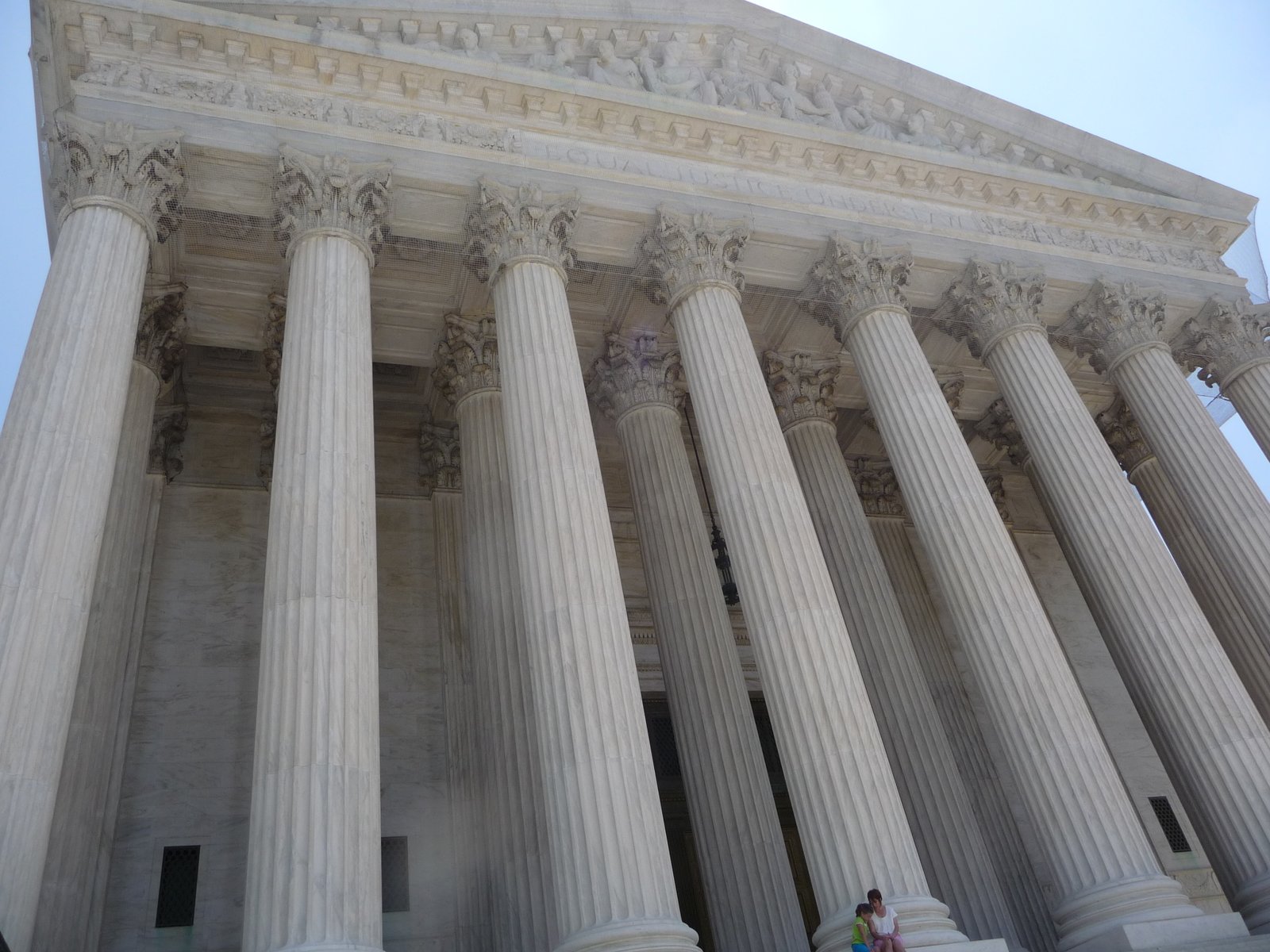
RITSEMA: Supreme Court deals death blow to the 4th Amendment (Civics News)
Scott Ritsema
CIVICS NEWS.com
January 15, 2008

The “conservatives” on the Supreme Court have again voted in favor of big government and against liberty. They have ruled against the Fourth Amendment and in favor of the police state. (See AP report and USA Today report, “Supreme Court OKs Use of Evidence from Illegal Search.”)
For years, the courts have rightly refused to convict somebody based upon evidence that was obtained through an illegal, unconstitutional search. A legal search obeys the Fourth Amendment, which requires the search to be based upon probable cause and backed up by a warrant. The courts have gotten this one right over the years, refusing to accept evidence in court that failed to meet the criteria for a legitimate search. This way, law enforcement had an incentive to obey the Constitution, and do proper searches, rather than illegal searches.
But no more. The Fourth Amendment has been effectively repealed. Now, any the time that law enforcement makes a “mistake” that prevents them from doing a proper search, they will get away with it, and the evidence can be admitted into the court proceedings. The incentive to do the search in a legal fashion has now been removed; instead, and an incentive to do illegal searches and then say “oops” has now been introduced.
What is particularly astounding is that the reasoning of the majority had nothing to do with fidelity to the Constitution. As USA Today reports, “The Roberts majority focused on the societal costs of excluding drugs and other evidence seized.” Where did the Supreme Court derive the authority to rule based upon the perceived social costs and benefits of their decision? Aren’t these judges? …And aren’t judges supposed to interpret the law and rule based upon the Constitution? Or are they legislators now?
Conservatives rightly gripe about liberals who legislate from the bench. But they need to look in the mirror: “conservatives” have just legislated from the bench, and in doing so, have giving another tool to the police state. They have made it that much easier for the state to act in a lawless manner, further stripping the people of their individual liberties.
U.S. Muslims worry about new federal rules (MSNBC)
DETROIT – Some Arab- and Muslim-Americans say new Justice Department guidelines that boost the FBI’s power to investigate suspected terrorists could target innocent people.
The revised guidelines going into effect Monday will allow agents to use undercover sources to gather information, interview people without identifying themselves and spy on suspects without evidence of wrongdoing.
Critics say the rules will allow for abuses, including more racial and religious profiling.
(Excerpt) Read more at msnbc.msn.com …
Washington Post: 20,000 More U.S. Troops To Be Deployed For “Domestic Security”
The Washington Post reports that federal troops may soon be deployed within the United States:
The U.S. military expects to have 20,000 uniformed troops inside the United States by 2011 trained to help state and local officials respond to a nuclear terrorist attack or other domestic catastrophe, according to Pentagon officials.
The long-planned shift in the Defense Department’s role in homeland security was recently backed with funding and troop commitments after years of prodding by Congress and outside experts, defense analysts said.
There are critics of the change, in the military and among civil liberties groups and libertarians who express concern that the new homeland emphasis threatens to strain the military and possibly undermine the Posse Comitatus Act, a 130-year-old federal law restricting the military’s role in domestic law enforcement.
…
Domestic emergency deployment may be “just the first example of a series of expansions in presidential and military authority,” or even an increase in domestic surveillance, said Anna Christensen of the ACLU’s National Security Project. And Cato Vice President Gene Healy warned of “a creeping militarization” of homeland security.
Read more at http://www.washingtonpost.com/wp-dyn/content/article/2008/11/30/AR2008113002217_pf.html
For more information about the Posse Comitatus Act, see http://en.wikipedia.org/wiki/Posse_Comitatus_Act
On October 1, 2008, the US Army announced that the 3rd Infantry Division’s 1st Brigade Combat Team (BCT) will be under the day-to-day control of U.S. Army North, the Army service component of Northern Command (NORTHCOM), as an on-call federal response force for natural or man-made emergencies and disasters, including terrorist attacks.
This marks the first time an active U.S. Army unit will be given a dedicated assignment to NORTHCOM, where it is stated they may be “called upon to help with civil unrest and crowd control or to deal with potentially horrific scenarios such as massive poisoning and chaos in response to a chemical, biological, radiological, nuclear or high-yield explosive (CBRNE) attack.” These soldiers will also learn how to use non-lethal weapons designed to “subdue unruly or dangerous individuals” without killing them, and also includes equipment to stand up a hasty road block; spike strips for slowing, stopping or controlling traffic; shields and batons; and beanbag bullets.[3] However, the “non-lethal crowd control package [...] is intended for use on deployments to the war zone, not in the U.S. [...]“.[4]
This formalizes a role for the use of federal troops within the United States during major public emergencies and disasters, as was the case in the aftermath of Hurricane Katrina in 2005.[5]This has raised concern about the relationship between Posse Comitatus and the use of the military in domestic disaster support and homeland defense roles.[6].
…
The text of the relevant legislation is as follows:
- . Use of Army and Air Force as posse comitatus
- Whoever, except in cases and under circumstances expressly authorized by the Constitution or Act of Congress, willfully uses any part of the Army or the Air Force as a posse comitatus or otherwise to execute the laws shall be fined under this title or imprisoned not more than two years, or both.
Also notable is the following provision within Title 10 of the United States Code (which concerns generally the organization and regulation of the armed forces and Department of Defense):
- . Restriction on direct participation by military personnel
- The Secretary of Defense shall prescribe such regulations as may be necessary to ensure that any activity (including the provision of any equipment or facility or the assignment or detail of any personnel) under this chapter does not include or permit direct participation by a member of the Army, Navy, Air Force, or Marine Corps in a search, seizure, arrest, or other similar activity unless participation in such activity by such member is otherwise authorized by law.