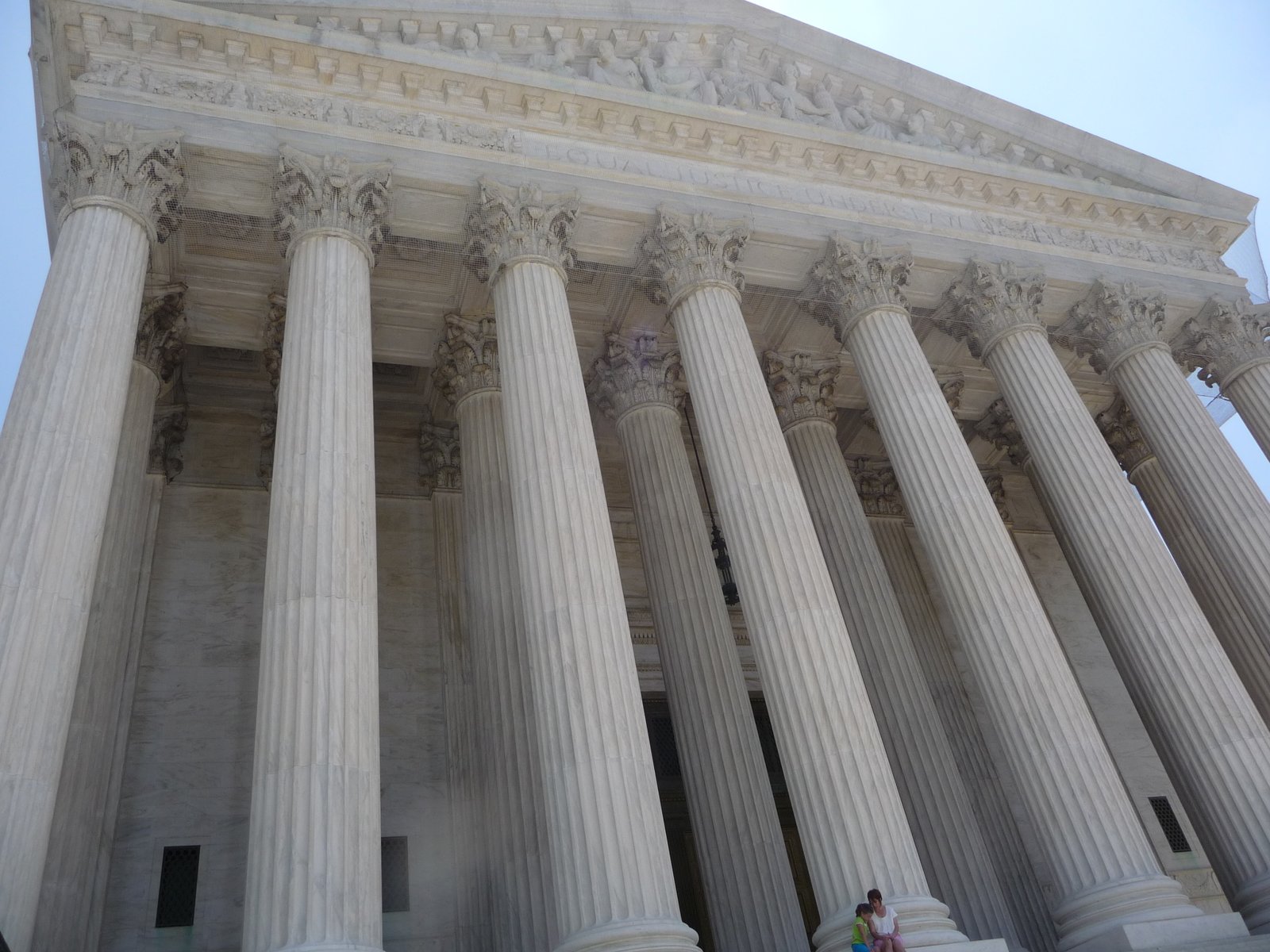
Court unanimously finds RFRA plaintiffs can sue FBI agents for money damages
The Supreme Court ruled unanimously that plaintiffs whose religious rights were violated can sue government employees individually for monetary damages.
Archive
The Supreme Court ruled unanimously that plaintiffs whose religious rights were violated can sue government employees individually for monetary damages.
The language of the new Los Angeles COVID restriction specifically exempts religious gatherings as a matter of constitutional right.
The Satanic Temple is asserting a free exercise right to abortion as a religious ritual in lawsuits against the state of Missouri and against a…
Contempt of court is a quasi-criminal act, and the court cannot punish someone for breaking a regulation if that regulation is not constitutional.
Ginsburg wrote little on the religion clauses, but she frequently joined with those Justices who favored a strong separation of church and state.
The ethical and moral onus is now on religious institutions as they decide whether to fire "ministerial" employees for reasons illegal in the secular world,…
With the death of state Blaine Amendments this week, religious schools that welcome state money might find that they are now subject to regulation that…
The Kentucky Supreme Court has ruled that an organization that sued Hands On Originals ("Hands On"), a t-shirt print company, for discrimination lacked standing as…
The United States (U.S.) Supreme Court agreed to hear a case, Espinoza v. Montana Dept. of Revenue, concerning a Montana state legislative program that allowed individuals…
There's an old adage that bad facts make bad law, and in this case, given political exigencies, there was little to no chance that the…