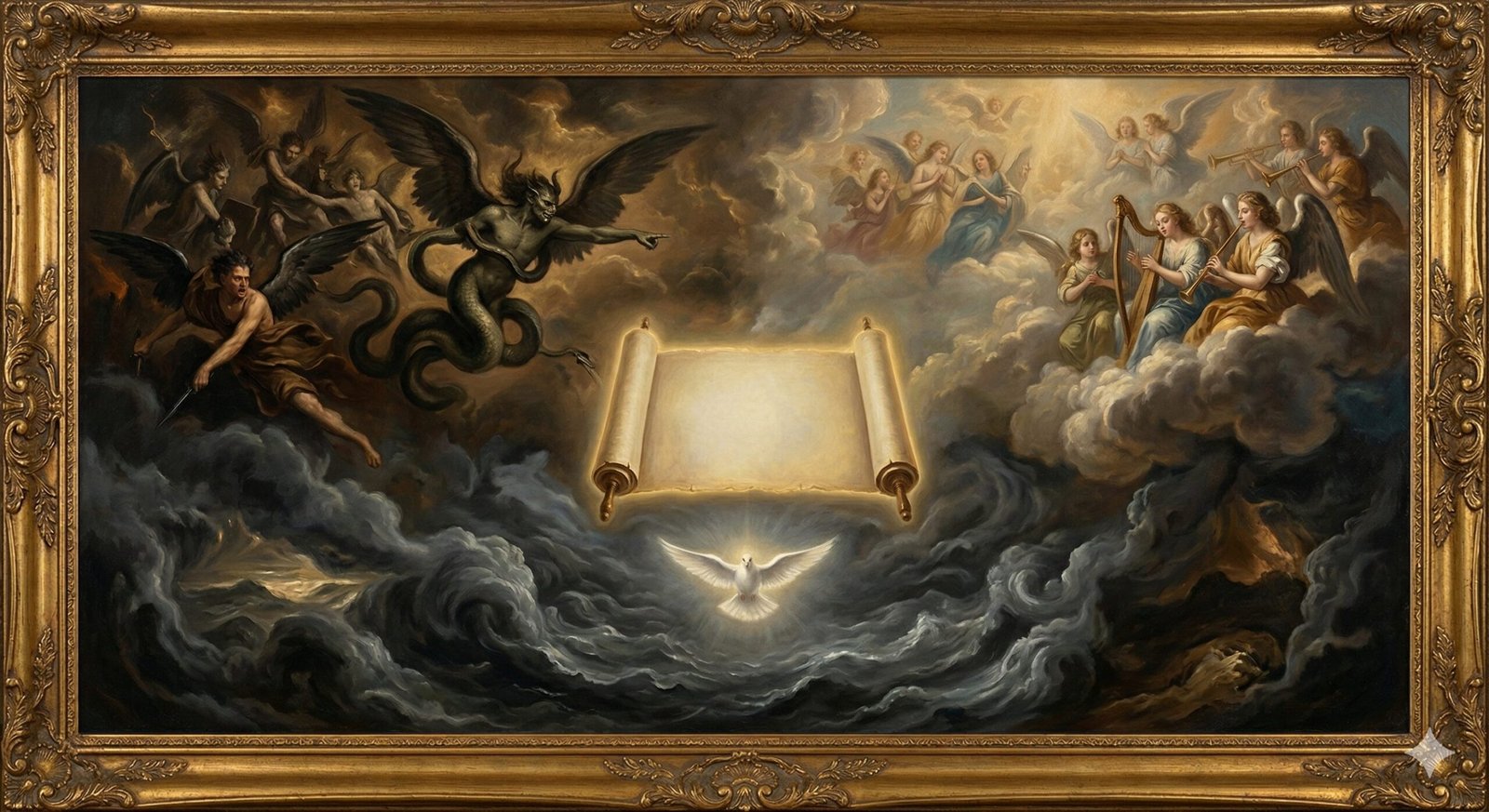
Before the Beginning
A Christian Cosmology of Heaven, Earth, Conflict, and the Architecture of Genesis
Archive
A Christian Cosmology of Heaven, Earth, Conflict, and the Architecture of Genesis
In American courtrooms, justice is a meticulous process—evidence is presented, the accused has a voice, and verdicts can be reviewed. Remarkably, a 19th-century Christian…
In a world often bewildered by unfairness and unanswered questions, this audacious belief in a heavenly investigative judgment offers a vision of ultimate accountability fused…
Narrow prophetic interpretation creates a paradox that threatens to undermine Christianity's ability to address pressing current issues and fulfill its divine mandate.
Debate on displaying the Ten Commandments highlights the contrast between legalism and the gospel. True faith focuses on grace, transformation, and relationship.
The Seventh-day Adventist Church has a long history of advocating for religious freedom, dating back to the mid-19th century. #ReligiousFreedom #SeventhDayAdventistChurch #IRLA #LibertyMagazine
Communism and religion have always clashed. From Soviet Russia to modern China, regimes suppressed faith to ensure state loyalty. Religion’s power to inspire resistance made…
Roger Williams’ framework for religious liberty in Rhode Island was the blueprint for religious liberty in the United States and help fulfill its prophetic destiny…
By Dr. Nicholas P. Miller - Adventists have always valued freedom of conscience. But we also value promoting and protecting life and health.
The United States Supreme Court refused to issue a preliminary injunction to temporarily block a Maine rule requiring certain healthcare workers to take the COVID-19…