Author’s Note: After a long hiatus from model planes since I was a kid and built a balsa plane at our church’s Pathfinder Club in Hinsdale, Illinois (shout out!), I recently joined our local RC flying club. The club requires you to also be a member of the Academy of Model Aeronautics (AMA) which provides insurance and access to their magazine archives. I was surprised to find that one of the greatest aeronautical engineers, whose career I’ve been following since the 1980s when he built the Voyager, the first (only?) plane that flew around the world non-stop, got his start in Pathfinders. So I had to write about it. Hopefully it will be interesting, and more importantly, inspire people to maintain or start their own Pathfinder Clubs at your local church. – Michael Peabody
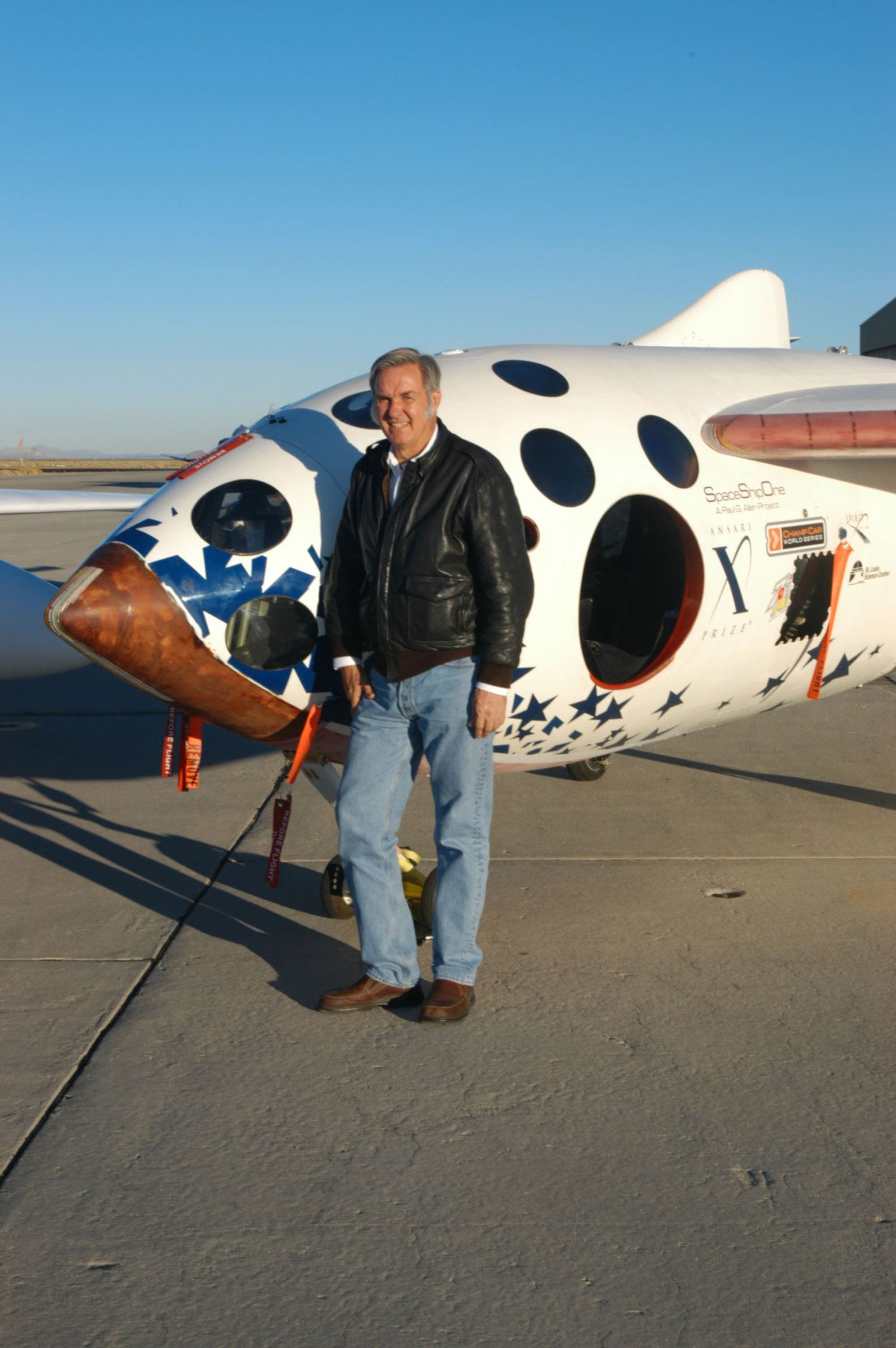
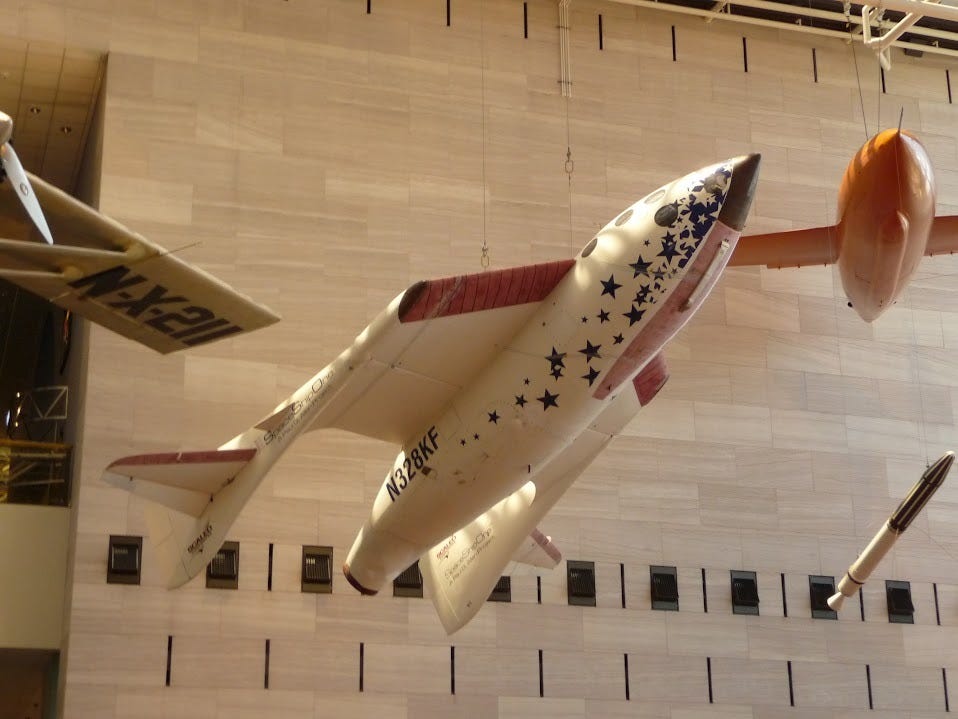
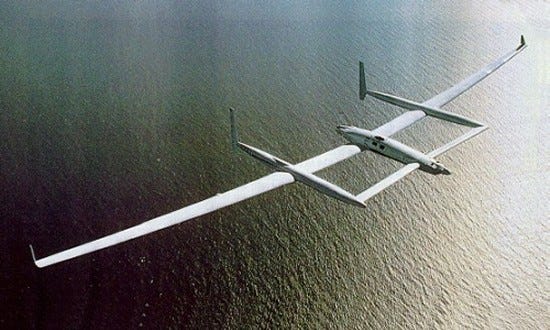
Most people know Burt Rutan through two machines hanging in the Smithsonian National Air and Space Museum: Voyager, which circled the globe non-stop without refueling in December 1986, and SpaceShipOne, which broke the government monopoly on manned spaceflight by capturing the ten-million-dollar Ansari X Prize in 2004. The public remembers him as the desert nonconformist in Mojave who bypassed standard military-industrial bureaucracy, replaced riveted aluminum with lightweight composite fibers, and rewrote aerodynamic conventions with tail-first canards.
The origin of that experimental drive did not begin in a corporate skunkworks or an Air Force design bureau. It began in the San Joaquin Valley of California, in the Seventh-day Adventist Church and its signature youth organization, the Pathfinders. Far from acting as a drag on his ambitions, the church environment provided a practical incubator and institutional push that helped encourage Burt Rutan to become an aerospace revolutionary.
The Dinuba Foundation and the Adventist Ethos
Burt was born Elbert Leander Rutan in 1943. His father, Dr. George Albert “Pop” Rutan Jr., was a devout Adventist who attended La Sierra College and earned his dental degree from the College of Medical Evangelists, now Loma Linda University. Settling the family in Dinuba, California, Pop Rutan ran a dental practice, served in the local church, and educated his sons in the parochial school system.
Burt spent his early childhood within that church network, attending the Dinuba Seventh-day Adventist Elementary School from kindergarten through fourth grade, followed by Fresno Adventist Academy for grades five through nine.
Seventh-day Adventist philosophy carries a distinct pedagogical heritage: the insistence that intellectual education must never be divorced from manual labor. In the foundational educational writings of the church, physical industry, craftsmanship, and practical problem-solving are treated not as extracurricular hobbies, but as moral imperatives. Children were expected to understand tools, materials, and mechanisms. For a boy with an innate mechanical curiosity, this theological respect for physical craft provided immediate legitimacy to hours spent at a workbench.
The Pathfinder Organization as a Technical Launchpad
The definitive catalyst arrived in 1950, when the General Conference of Seventh-day Adventists formally organized and adopted the Pathfinder Club worldwide. Burt was seven years old, the perfect age to enter the program as it established its roots across Central California.
Pathfinders was designed to combine outdoor survival, community service, and rigorous vocational instruction. While secular youth movements often tilted heavily toward civic drills and merit badge checklists, Pathfinders placed extraordinary emphasis on tangible honors in mechanics, craftsmanship, nature observation, and practical construction.
The program gave Rutan three decisive advantages:
-
Structured Validation for Manual Mastery: The Pathfinder honor curriculum demanded that young people take raw materials and fabricate working objects. It taught wood carving, basic structural mechanics, knot craft, and field navigation. For Burt, the program provided a formal framework where an adult mentor looked at a boy’s hand-built project, inspected its structural integrity, and rewarded competence.
-
The Discipline of Self-Sufficiency: Pathfinder camporees and field exercises were designed around total self-reliance, and this ethic went directly into Rutan’s bloodstream. It explains his career-long disdain for excessive technical staffing and bureaucratic oversight.
-
A Purposeful Redirection Toward Creation: The Adventist lifestyle at the time actively steered youth away from passive commercial entertainment. Time was not squandered on movies or idle pastimes. The church, and the general society at the time, directed that adolescent energy into building things.
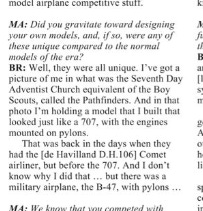
Burt seized that mandate. By age eight, he was not merely assembling store-bought model kits; he was carving raw balsa wood, testing airfoils, and modifying control surfaces. By age twelve, he designed and flew a nine-foot control-line model airplane. By age sixteen, he was competing in the Academy of Model Aeronautics National Championships, winning competitions with original configurations that presaged his adult breakthroughs. The Pathfinder ethic transformed a boy’s curiosity into an engineer’s systematic discipline.
The Airplane in the Family Yard
The push toward aviation was reinforced at home. Pop Rutan purchased a two-place Cessna 140, followed by a 1949 Beechcraft Bonanza.
The Seventh-day Adventist Sabbath, observed strictly from sundown Friday to sundown Saturday, meant that ordinary commercial labor, secular studies, and competitive sports stopped. Yet the day actively encouraged outdoor activity, nature study, and family fellowship. Flying over the Sierra Nevada and the agricultural grids of the Central Valley was an accepted Sabbath activity for his family.
Pop Rutan flew his family across the state, giving both Burt and his older brother Dick an intimate familiarity with three-dimensional space, navigation charts, and throttle control. Burt was not looking at airplanes through a chain-link fence; he was sitting in the right seat of a Bonanza, observing the dials, feeling the trim changes, and asking how the machine could be made more efficient.
From Academy to the Air Force and Cal Poly
By the time Burt finished ninth grade at Fresno Adventist Academy, his technical ambitions had outgrown the curriculum of the small rural school. To gain access to the advanced chemistry, physics, and higher mathematics needed for collegiate engineering, he transferred to Dinuba High School, graduating in 1961.
He moved directly to California Polytechnic State University at San Luis Obispo, earning his degree in Aeronautical Engineering in 1965. Cal Poly’s foundational motto, “Learn by Doing,” was simply an academic restatement of the Pathfinder philosophy Burt had practiced since childhood.
When Burt joined the Air Force as a civilian flight test engineer at Edwards Air Force Base in 1965, he arrived with a distinct pedigree. He had already logged thousands of hours designing, crashing, modifying, and perfecting scaled airframes with his own hands. Where traditionally trained engineers trusted slide rules and theoretical wind tunnel data, Rutan trusted empirical proof in the air.
The Legacy of the Pathfinder Workbench
When you examine the full sweep of Burt Rutan’s career, the imprint of his early church upbringing is impossible to miss. At the Rutan Aircraft Factory and later Scaled Composites, he operated like a Pathfinder club director running an advanced skunkworks.
He kept teams small. He insisted on building prototypes with hand-laid foam and fiberglass rather than waiting years for expensive tooling. He tested concepts by fabricating scale models, strapping them to the top of his station wagon, and driving down the runway to gather real aerodynamic data. When the legacy aerospace firms claimed composite construction was too complex for ordinary civilians, Rutan published plans so thousands of homebuilders could construct their own VariEze and Long-EZ aircraft in two-car garages across the world.
Burt Rutan’s revolution in aerospace did not originate in corporate boardrooms, nor did it depend on federal research grants. It traced directly to the manual discipline forged at a workbench in Dinuba. By treating craftsmanship as an essential virtue, the Seventh-day Adventist educational tradition legitimized his mechanical instincts, while the Pathfinder Club provided the decisive institutional push that converted boyhood curiosity into disciplined empirical engineering. Long before he upended aeronautical orthodoxy with composites and canards, Rutan mastered the primary lesson of his youth: real innovation requires tools in hand, self-reliant execution, and the willingness to test physical reality against accepted consensus.
Footnotes
[^1]: Smithsonian National Air and Space Museum, Rutan Model 76 Voyager, Inventory Object No. A19880001000 (documenting the 26,366-mile circumnavigation completed on December 23, 1986).
[^2]: Ansari X Prize Official Records, SpaceShipOne Flight 17P, October 4, 2004; see also Smithsonian National Air and Space Museum, SpaceShipOne, Inventory Object No. A20050459000.
[^3]: Loma Linda University Heritage Research Center, Historical Alumni Records for George Albert Rutan Jr., D.D.S., Class of 1940; see also Loma Linda University School of Dentistry.
[^4]: Fresno Adventist Academy History and Archives, Central California Conference of Seventh-day Adventists; see also Adventist Education Directory.
[^5]: Ellen G. White, Education (Mountain View, CA: Pacific Press Publishing Association, 1903), Chapter 24, “Manual Training”, pp. 214-222 (articulating the official Adventist doctrine requiring simultaneous intellectual and manual trade development in children).
[^6]: General Conference of Seventh-day Adventists, Youth Ministries Department, Pathfinder Club History and Structure, documenting the formal action of the 46th General Conference Session adopting the youth program in 1950.
[^7]: General Conference Department of Youth Ministries, Pathfinder Honors Curriculum, detailing mandatory standards for woodworking, mechanics, structural crafting, and outdoor navigation.
[^8]: Academy of Model Aeronautics (AMA) National Model Aviation Museum Archives, National Model Airplane Championships Bulletins (1959); see also Dan Linehan, SpaceShipOne: An Illustrated History (Zenith Press, 2008), pp. 18-21.
[^9]: Federal Aviation Administration Civil Aircraft Registry, Historic Aircraft Inquiry for Beechcraft Model 35 Bonanza and Cessna 140 registration records in Central California.
[^10]: California Polytechnic State University Aerospace Engineering Department, Alumni Registry; see also Fifty-Ninth Annual Commencement Program, Cal Poly San Luis Obispo, June 12, 1965.
[^11]: Air Force Test Center History Office, Edwards Air Force Base, California, Civilian Engineering Historical Rosters, Performance Branch, Flight Test Division (1965-1972).
[^12]: Burt Rutan, VariEze Construction Manual and Flight Operations Handbook (Mojave, CA: Rutan Aircraft Factory, 1976); see also Scaled Composites Historical Aircraft Index and Rutan Aircraft Flying Experience Heritage Documentation.
