When “Free” Exercise Costs the State: Supreme Court Grapples With Expanding Free Exercise Clause Jurisprudence
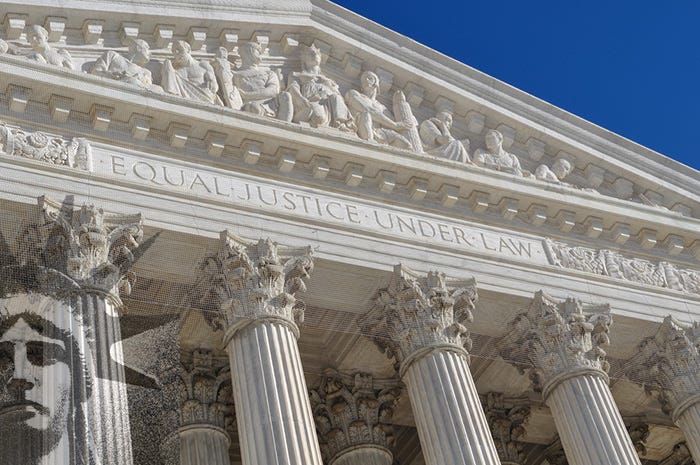
The concept of free exercise increasingly imposes a tangible price on the state, transforming from a shield for individual belief and practice into a mandate for government subsidy for institutions. When religious institutions demand access to public benefit programs while refusing to comply with neutral equal opportunity conditions, they effectively force the state to underwrite practices it actively seeks to eradicate. In Colorado, granting a religious exemption requires the government to spend public funds on entities that deny equal opportunity to families based on characteristics like sexual orientation. This modern interpretation extracts a heavy toll and pushes the doctrine perilously close to an Establishment Clause violation. By compelling taxpayers to finance institutional discrimination, the courts require the state to monetarily support and favor specific religious doctrines over secular civil rights, coming close to blurring the line between accommodating a religion and establishing it. As I’ve argued in this space before, religious institutions should be aware that government money does not come without government strings attached. This case is an attempt to cut those strings. – Michael Peabody, Esq.
The Supreme Court heard oral arguments yesterday in a dispute that pits state antidiscrimination laws against claims that not providing religious preschools with money violates their religious freedom.
In St. Mary Catholic Parish v. Roy, 25-581, argued November 3, 2026 (Transcript), the justices must decide whether the First Amendment forces Colorado to subsidize private religious preschools that refuse to comply with a state equal opportunity mandate. Colorado offers free preschool tuition for all four-year-olds but requires participating schools to accept all families regardless of sexual orientation. St. Mary Catholic Parish argues this condition forces Catholic schools to abandon their religious beliefs, as the Archdiocese of Denver requires enrolled families to affirm church teachings on marriage and sexuality. The forthcoming decision will establish whether states possess the authority to enforce uniform civil rights protections on their public benefit programs or whether they must grant exemptions for religious institutions.
This is not about whether religious institutions have the right to make their own faith-based decisions, but rather about whether the government must subsidize them.
The dispute centers on a fierce doctrinal conflict over two landmark precedents: the 1990 decision in Employment Division v. Smith and the older standard from Sherbert v. Verner. Under Smith, neutral and generally applicable laws survive constitutional challenges even if they incidentally burden religion. The Sherbert standard, however, requires the government to satisfy strict scrutiny if it denies public benefits based on religious exercise.
Nicholas R. Reaves, representing the parish, argued that Colorado’s program fails the Smith test because the state allows schools to grant secular preferences, such as serving specific communities, rendering the law neither neutral nor generally applicable. Reaves urged the Court to apply Sherbert, asserting the government cannot condition a public benefit on the forfeiture of sincere religious practices. Sarah M. Harris, representing the United States in support of the parish, argued that forcing an institution to forfeit a public benefit to practice its faith triggers strict scrutiny, contending that Smith explicitly preserved the Sherbert rule for public benefits cases.
Colorado Deputy Solicitor General Helen Norton defended the program’s reliance on Smith. Norton argued the state’s antidiscrimination conditions are entirely neutral and generally applicable. She warned that the Smith framework provides a necessary screen against devaluing religion, and abandoning it would force the state to fund schools that openly turn away families based on sexual orientation or race.
The justices divided sharply. Justice Elena Kagan noted Smith deliberately discarded the Sherbert analysis and questioned the wisdom of returning to a balancing test that constantly weighs religious beliefs against state interests like antidiscrimination. Justice Ketanji Brown Jackson voiced concern that elevating religious accommodations could force states to fund schools that discriminate based on race, questioning why religious entities should receive special status.
The conservative majority appeared deeply skeptical of Colorado’s framework. Chief Justice John Roberts challenged the state’s attempt to abandon Sherbert, noting the Court has never retreated from that precedent in the context of public benefits. Justice Samuel Alito questioned whether applying Smith without exception would lead to extreme outcomes, asking if strict adherence to the rule would allow the government to ban kosher slaughterhouses or circumcision. Justice Neil Gorsuch noted the federal government routinely grants religious accommodations without causing societal harm, and Justice Brett Kavanaugh asked why the state refuses to accommodate the 34 Catholic schools when parents have thousands of other preschool options available.
This case highlights a profound and troubling evolution in Free Exercise Clause jurisprudence. Historically, courts analyzed public benefit disputes by looking at direct religious accommodations for individuals. Cases like Sherbert focused on individual citizens, such as Adell Sherbert, a Seventh-day Adventist, who sought basic government benefits after exercising personal religious convictions.
Today, the legal landscape is entirely different. Religious institutions now claim these same free exercise protections to exempt themselves from state antidiscrimination mandates while actively demanding and receiving public funds. We are currently studying the exact extent to which the Free Exercise Clause applies in these modern administrative contexts. The outcome in Colorado will determine whether states will be required to subsidize institutions that exclude certain classes of people or whether the state retains the absolute power to enforce uniform equality conditions on its own public benefits.