ACLU Appeals Texas Ten Commandments Law to Supreme Court
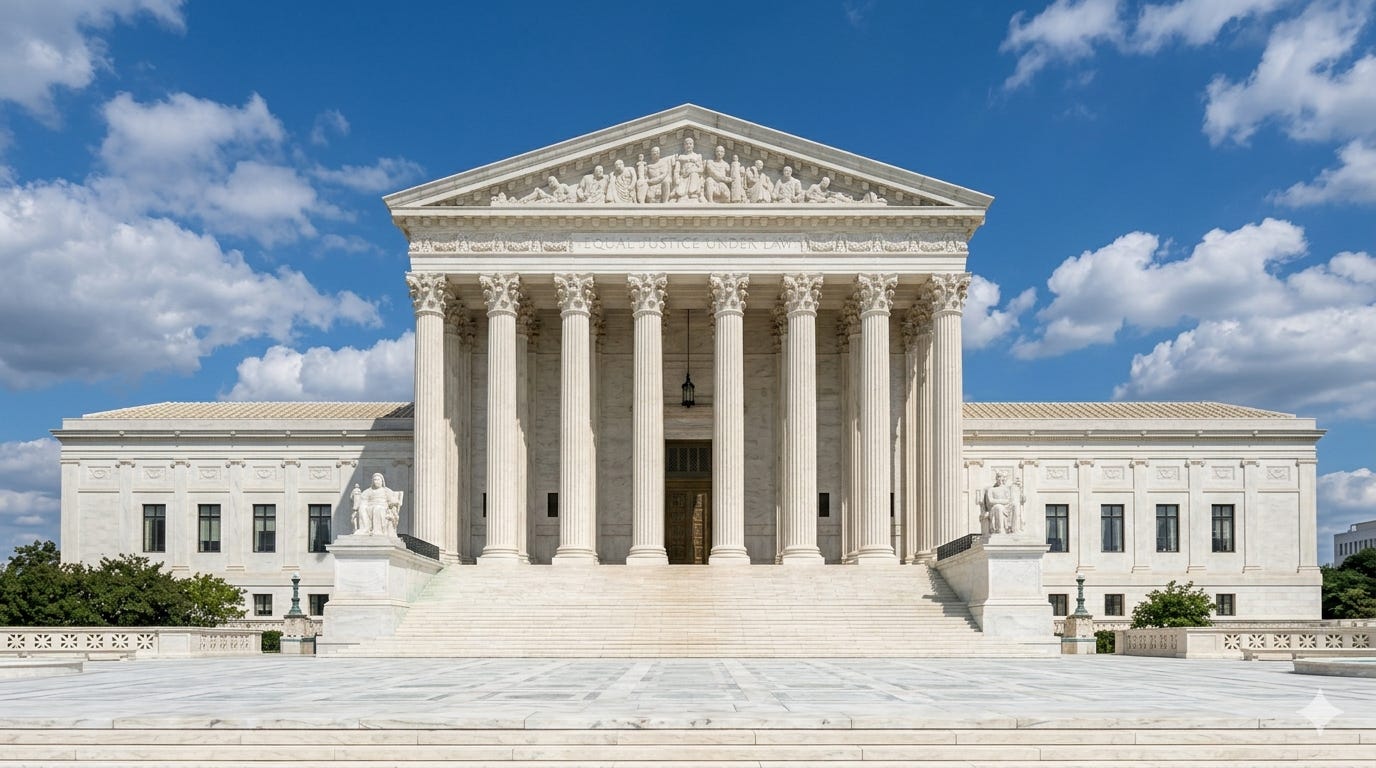
A broad coalition of Texas parents and faith leaders petitioned the Supreme Court on Monday to strike down a state law requiring every public school classroom to display the Ten Commandments, setting up a high-stakes constitutional showdown over the line separating church and state in the nation’s schools.
The petition follows a fractured 9-to-8 ruling in April by the full United States Court of Appeals for the Fifth Circuit, which upheld the Texas statute and took the rare step of declaring that a 1980 Supreme Court precedent barring classroom Decalogue displays is no longer good law.
The families, represented jointly by the American Civil Liberties Union, Americans United for Separation of Church and State, the Freedom From Religion Foundation, and the law firm Simpson Thacher & Bartlett, argue that the Fifth Circuit overstepped its constitutional bounds by defying the High Court’s established precedent and ignoring the coercive reality faced by public school students.
A Uniform Mandate for Classrooms
Enacted in June 2025, Texas Senate Bill 10 requires every public elementary and secondary school in the state to hang a framed poster or durable print of the Ten Commandments in a conspicuous location in every single classroom. Under the statute, the displays must measure at least 16 by 20 inches and feature lettering legible to anyone with average vision from anywhere in the room.
Lawmakers specifically mandated a single scriptural translation drawn from the King James Bible. Schools are required to accept compliant donated copies or use district funds to purchase them, leaving students from kindergarten through the 12th grade to confront the text daily across all academic subjects.
During legislative debate, sponsors of the measure made no secret of their religious intentions. Senator Phil King, a primary author of the bill, stated that lawmakers wanted “every kid . . . every day, in every classroom they sit in to look on the wall and read . . . those words that God says”. Lieutenant Governor Dan Patrick similarly declared that because of the law, schoolchildren throughout the state “are going to know about God”.
A Multi-Faith Coalition
The legal challenge, Nathan v. Alamo Heights Independent School District, brought together more than two dozen families of varied traditions, including Jewish, Christian, Hindu, Bahai, Unitarian Universalist, and nonreligious backgrounds. Several plaintiffs are themselves ordained religious ministers and rabbis who argue that the state’s mandate directly usurps their parental authority.
Rabbi Mara Nathan and Cantor Seth Ettinger, raising their children in the Jewish tradition, testified that the state-mandated text erases key aspects of Jewish scripture, such as the prefatory covenantal phrase acknowledging God freeing the Israelites from Egypt. They noted that the statute adopts Christian numbering and phrasing, like “Thou shalt not kill” rather than the Jewish prohibition against “murder.”
Reverend Kristin Klade, an ordained Lutheran pastor, stated that while she honors the Ten Commandments, she teaches them through Christian gospel principles of grace rather than as a checklist of rules to be loved by God, warning that the state’s rigid classroom posters undermine her family’s theology.
Dr. Arvind Chandrakantan, a lifelong Hindu, testified that the first four biblical directives, demanding exclusive devotion to a singular deity and forbidding graven images, directly conflict with Hindu worship. He stated that the displays send an exclusionary signal to his children that their faith is unacceptable at school.
“When it comes to the expression and inculcation of religious doctrine, there can be no doubt that the messenger matters,” the petition states, citing Supreme Court precedent to argue that religious formation belongs in the home and house of worship, not in compulsory state education.
The Circuit’s Rupture Over Precedent
The appeal arrives at the Supreme Court after a fierce judicial clash within the conservative-leaning Fifth Circuit.
Writing for the majority, Judge Stuart Kyle Duncan held that the Supreme Court’s 1980 decision in Stone v. Graham, which struck down a nearly identical Kentucky classroom display law, relied entirely on the since-abandoned Lemon v. Kurtzman test and therefore had no remaining force. Evaluating the law under the historical approach set forth in Kennedy v. Bremerton School District (2022), Judge Duncan concluded that classroom posters do not resemble the official church establishments of the founding era because they impose no tax, dictate no church governance, and require no active prayer or recitation from students.
The majority also turned aside the parents’ Free Exercise claims, distinguishing Texas’ law from the Supreme Court’s 2025 ruling in Mahmoud v. Taylor. In Mahmoud, the court held that parents had a right to opt their children out of classroom storybooks addressing sexuality and gender. Judge Duncan maintained that S.B. 10 mandates “no religious curriculum” and “no theistic lesson plans,” amounting to nothing more than “a poster on a classroom wall”.
The ruling drew sharp dissents from eight judges. Judge Irma Carrillo Ramirez wrote that the Fifth Circuit lacked the authority to discard Stone, emphasizing that the Supreme Court has long recognized the heightened danger of subtle religious coercion in public classrooms.
“Legislation requiring the permanent fixture of religious rules in public-school classrooms, with no ‘educational function,’ violates these most basic First Amendment principles,” Judge Ramirez wrote.
In a separate dissent, Judge Leslie H. Southwick cautioned that the majority had read recent Supreme Court decisions too broadly, writing that passive scriptural postings in a compulsory setting exert a real coercive force on captive students. Judge Stephen A. Higginson warned that the ruling allowed political majorities to impose religious orthodoxy, while Judge Catharina Haynes stated simply that lower courts “must follow the Supreme Court” and adhere to Stone.
A Rising National Trend
The battle in Texas is part of an escalating, coordinated campaign across conservative states. Over the past two years, lawmakers in at least 24 states have introduced or passed measures seeking to place the Ten Commandments in public school classrooms.
In their petition, the Texas families asked the justices to either summarily reverse the Fifth Circuit for violating vertical stare decisis or grant full briefing and oral argument to resolve whether the First Amendment permits states to turn public classrooms into platforms for biblical scripture.
The Supreme Court is expected to consider the petition this fall.