Church Fires and Vandalism Rise Across Europe and North America, Data Show
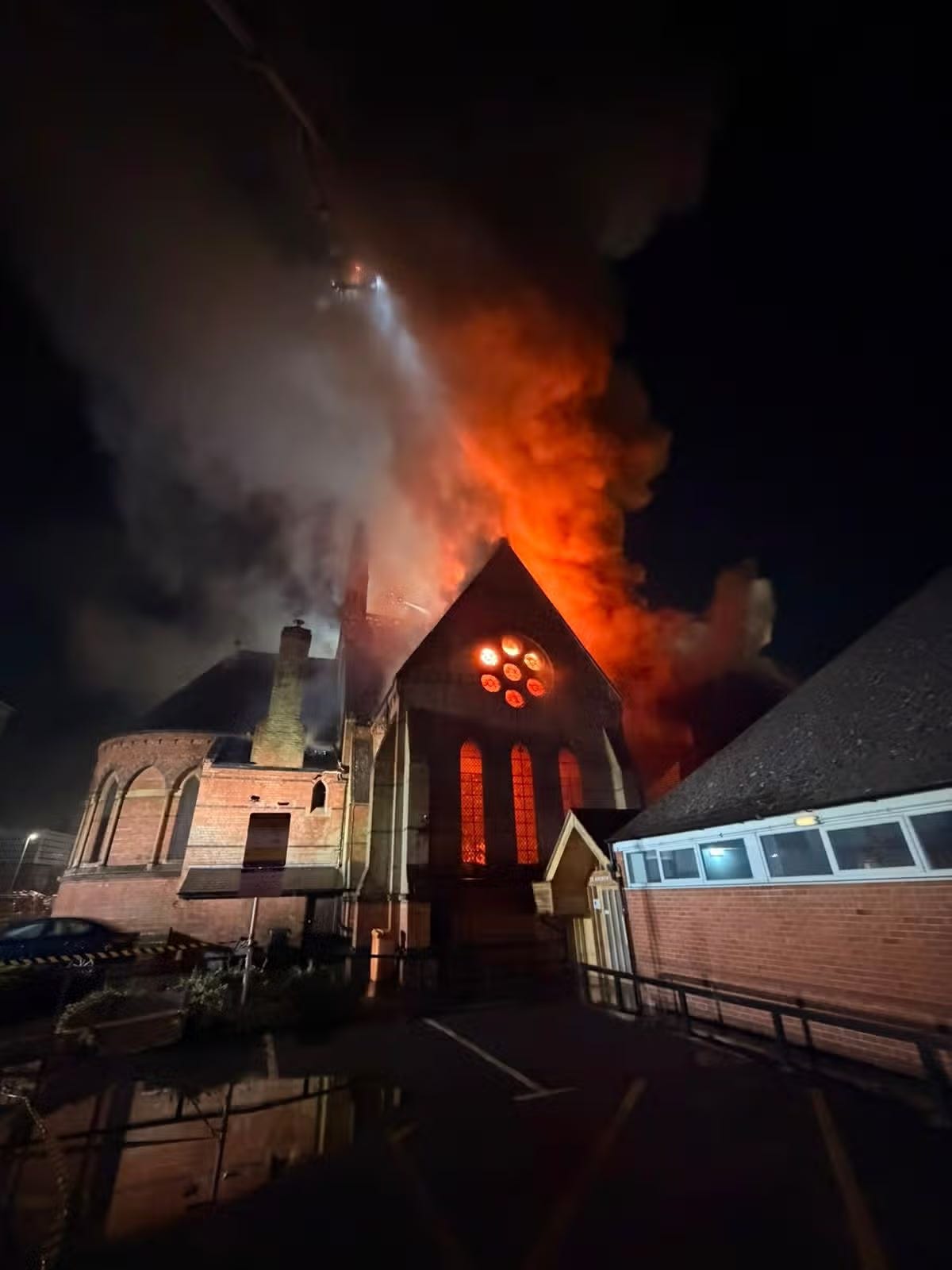
Attempted arson attacks on churches in France jumped more than 30 percent in 2024, part of a wider rise in fires, thefts and vandalism recorded at Christian sites across Europe, the United States and Canada over the past several years, according to police statistics, insurers and religious heritage and advocacy groups.
The increase is documented on both continents. The full picture is messier than the phrase “churches are burning” suggests, and differing methods of counting incidents, along with real disagreement over the cause of individual fires, make exact comparisons difficult.
France
The Observatory on Intolerance and Discrimination Against Christians in Europe, a Vienna-based watchdog known as OIDAC Europe, counted almost 50 arson attempts and completed arsons at Christian sites in France in 2024, up from 38 the year before. A separate body, France’s Observatory of Religious Heritage, tracks church fires regardless of motive and recorded 26 fires in 2024, of which investigators classified 14 as criminal. That compares with eight criminal fires among 27 total in 2023.
Overall anti-Christian incidents in France actually fell. A territorial intelligence report obtained by the French radio station Europe 1 put the 2024 total at 770, down about 10 percent from 853 in 2023. Arson rose even as the broader category declined.
The clearest case came on Sept. 2, 2024, when fire nearly destroyed the historic Church of the Immaculate Conception in Saint-Omer, in northern France. Two months earlier, on July 15, vandals broke into Notre-Dame-du-Travail in Paris, burned papers, stabbed a statue of the Virgin Mary and left anti-Christian and pro-Islam graffiti on the walls. In November 2023, unidentified attackers destroyed the altar and stole sacred vessels from the Basilica of the Sacred Heart in Rouen.
Germany
German government crime statistics, reported by the Catholic news outlet The Pillar, recorded 92 offenses against churches in 2023 and 111 in 2024, a 20 percent increase. OIDAC Europe’s continent-wide count found 94 arson attacks on Christian sites in 2024, nearly double the prior year’s total, with a third of them, 33, occurring in Germany.
The German Bishops’ Conference said in August 2025 that vandalism has grown more severe over roughly the past decade. A spokesman described a progression from broken offering boxes and overturned candles to altars destroyed by fire and statues of Christ and saints decapitated, telling reporters “all taboos have been broken.” In late August 2025, thieves stole the head from a statue of an apostle at Trier Cathedral, Germany’s oldest cathedral and a UNESCO World Heritage Site.
Britain
The Countryside Alliance, a rural advocacy group, used freedom-of-information requests to obtain data from police forces in England and Wales showing 9,148 recorded crimes, including theft, criminal damage, vandalism, arson and assault, at churches and other religious premises from January 2022 through December 2024. A follow-up request found 3,637 such crimes in 2025 alone, an average of about 10 a day, including 1,018 classified as criminal damage, vandalism or arson.
The insurer Ecclesiastical, which covers most parish churches in Britain, says more than 150 churches have suffered arson attacks over the past five years, with damage running into the millions of pounds. London, Lancashire, Yorkshire, Essex and Kent have recorded the most incidents.
United States
The Family Research Council, a Washington advocacy group that has tracked church incidents since 2018, documented 415 hostile acts against U.S. churches in 2024, spread across 383 congregations. Vandalism accounted for 284 of those incidents and arson for 55; the remainder included bomb threats, gun-related incidents and other crimes. Armed aggression incidents more than doubled, rising from 12 in 2023 to 28 in 2024. The group’s tally for 2023 stood at 485, more than double the 198 incidents recorded in 2022. California recorded the most incidents in 2024, with 40, followed by Pennsylvania, Florida, New York, Texas, Tennessee and Ohio. FRC says it has documented 1,384 incidents since it began tracking in January 2018.
The U.S. Conference of Catholic Bishops has separately tracked at least 416 incidents targeting Catholic churches specifically, including arson and beheaded statues, across 43 states and the District of Columbia since May 2020.
Two recent cases show the range of what gets counted. On Sept. 28, 2025, a gunman opened fire and set fire to a Church of Jesus Christ of Latter-day Saints chapel in Grand Blanc Township, Michigan, killing four congregants and injuring eight others before dying in the attack, which authorities attributed to anti-Mormon animus. In August 2025, Brooklyn prosecutors charged a man with setting a series of fires that damaged 20 buildings, including at least one church.
Older federal data put the recent numbers in context. A Pew Research Center analysis found that 51 percent of the 4,705 fires reported at American houses of worship between 1996 and 2015 were ruled intentional. Congress created a National Church Arson Task Force in 1996 after a wave of fires at predominantly Black churches in the South, a response Canadian researchers have since cited as a model their own government has adopted.
Canada
Canada’s experience follows a different arc, tied to the discovery of what First Nations described as potential unmarked graves at former residential school sites using ground-penetrating radar, beginning with an announcement from the Tkemlúps te Secwépemc First Nation in Kamloops, British Columbia, in May 2021. A CBC News investigation published in January 2024 counted at least 33 Canadian churches burned to the ground since that announcement, with 24 confirmed as arson and charges laid in nine cases. A 2025 report from Aid to the Church in Need put the total at 44 churches burned with 24 confirmed arsons over roughly the same period.
A study published by the Macdonald-Laurier Institute, “Scorched Earth,” found that arsons at Canadian religious institutions have run at nearly double the 2011-2017 baseline rate since 2021, with no significant decline through 2024. The same study found that investigators had laid charges in fewer than 4 percent of the arsons recorded between 2021 and 2023, leaving the motive undetermined in the large majority of cases.
Some researchers dispute how the wave should be counted. Historian Sean Carleton and others argue that widely circulated tallies inflate the total by including fires later ruled accidental, pointing to the 2024 destruction of Notre-Dame-des-Sept-Allégresses in Quebec, which investigators attributed to a non-criminal cause even as some compilations listed it among suspected hate-motivated fires. No remains have been exhumed at Kamloops or other residential school sites where ground-penetrating radar detected soil anomalies consistent with unmarked graves, a point critics of the “church-burning” framing raise regularly. The absence of excavation does not, on its own, resolve what caused any individual fire.
Context and caveats
Not every church fire, on either continent, is arson. Faulty wiring, lightning and accidents during restoration work remain common causes, and the 2019 fire that gutted Notre Dame Cathedral in Paris was traced to an electrical fault, not an attack. A map that circulated widely online, showing France covered in red markers meant to depict a wave of church arsons, was flagged as misleading by Reuters. It drew on an unofficial blog’s tally of all reported vandalism rather than confirmed arsons, and it used outdated figures.
A San Francisco case from this year shows the same pattern. The 134-year-old San Francisco Central Seventh-day Adventist Church, at California and Broderick streets, was defaced with antisemitic and homophobic graffiti in early 2026, and a 51-year-old suspect was arrested. On June 29, 2026, a three-alarm fire gutted the church’s sanctuary and roof while the building was undergoing exterior renovation work. Some neighbors and social media accounts linked the fire to the earlier vandalism. The public determination came quickly. By that evening, the district supervisor was already telling reporters it looked construction-related, and at a news conference two days later, on July 1, an SFFD spokesman, Mariano Elias, told reporters the construction had caused the fire and it had spread through the building. The Central California Conference’s own statement, issued around the same time, described the cause as still “under official investigation,” and church leaders asked the public to rely only on confirmed information from official channels. No connection to the earlier vandalism has been reported.
Where OIDAC Europe could identify a motive behind documented attacks, most had links to radical Islamist actors, followed by anti-religious and radical-left motives, with a smaller number tied to tensions over the war in Ukraine. Christians are also not the most frequently targeted religious group in France. Antisemitic incidents made up about 62 percent of religiously motivated hate crimes there in recent years, compared with 31 percent targeting Christians and 7 percent targeting Muslims.
The Commission of the Bishops’ Conferences of the European Union, an umbrella group known as COMECE, asked the European Union this fall to appoint a coordinator on anti-Christian hate crimes, matching positions the bloc already funds for antisemitism and anti-Muslim hatred.
The numbers from France, Germany, Britain, the United States and Canada point to a genuine increase in fires, arson and vandalism at churches over the past several years. They do not support claims of one coordinated international campaign. Motives vary by country and often by case, record-keeping differs from one jurisdiction to the next, and a meaningful share of the fires counted in these tallies turn out, on investigation, to have nothing to do with hostility toward the church at all.
Protecting a church: camera and alarm system considerations
Security consultants, denominational risk managers and specialty insurers such as Church Mutual, GuideOne and Brotherhood Mutual generally recommend a layered approach rather than a single device or contract. The considerations below draw on guidance those groups publish for congregations.
Video surveillance
-
Cover every exterior entry point, the parking lot and any area where flammable materials are stored, since arson at a church more often starts outside the building than inside it.
-
Choose cameras rated for low light and wide dynamic range. Most arson and break-in incidents at churches happen at night or before dawn.
-
Power-over-Ethernet cameras are now the standard choice for new installations because they simplify cabling and reduce points of failure.
-
Set a written retention policy, typically 30 to 90 days, and size storage to match it rather than paying for capacity the church does not need.
-
Require secure remote access with multi-factor authentication for any staff member, security volunteer or law enforcement contact who can view live or archived footage from outside the building.
-
Keep cameras out of restrooms, changing areas and other spaces where congregants have a reasonable expectation of privacy; sanctuaries, hallways, foyers and classrooms are generally considered acceptable.
Intrusion and fire alarm monitoring
-
Use a centrally monitored system rather than a local siren alone, so a monitoring company can verify an alarm and dispatch fire or police response even when no staff are on site.
-
Integrate smoke and heat detectors into the same monitored system as burglar alarms. Running fire detection as a separate, unmonitored system is common in older church buildings and delays response.
-
Ask the alarm provider whether the system can distinguish a forced door from a broken window or interior motion, since faster identification speeds the right kind of response.
-
Confirm with the church’s insurer whether a monitored system qualifies for a premium discount. Several carriers offer discounts in the range of 5 to 15 percent for churches with professional surveillance and monitored alarms, which can offset the cost of installation within a few years.
Other layers worth budgeting for
-
Exterior lighting on motion sensors along the building perimeter and parking areas, one of the least expensive deterrents available.
-
Secure, off-site storage for anything flammable, including cleaning supplies and seasonal decorations, away from entry points and trash enclosures, since exterior arson frequently starts in accumulated debris or bins pushed against a wall.
-
Access control on side and rear doors, particularly in buildings kept unlocked for extended hours to support community use.
-
A written incident response plan naming who is notified first and in what order, since a monitored alarm without a clear call list at the church often adds delay rather than removing it.
-
A periodic security walk-through with local police or a fire marshal, which several insurers offer or recommend at no cost.
This does not eliminate risk. A monitored alarm paired with a well-placed camera system shortens the time between ignition and response, which insurers and security consultants who work with congregations say usually determines how much of a building survives a fire that does start.