The Pulpit, the Ballot, and the Law
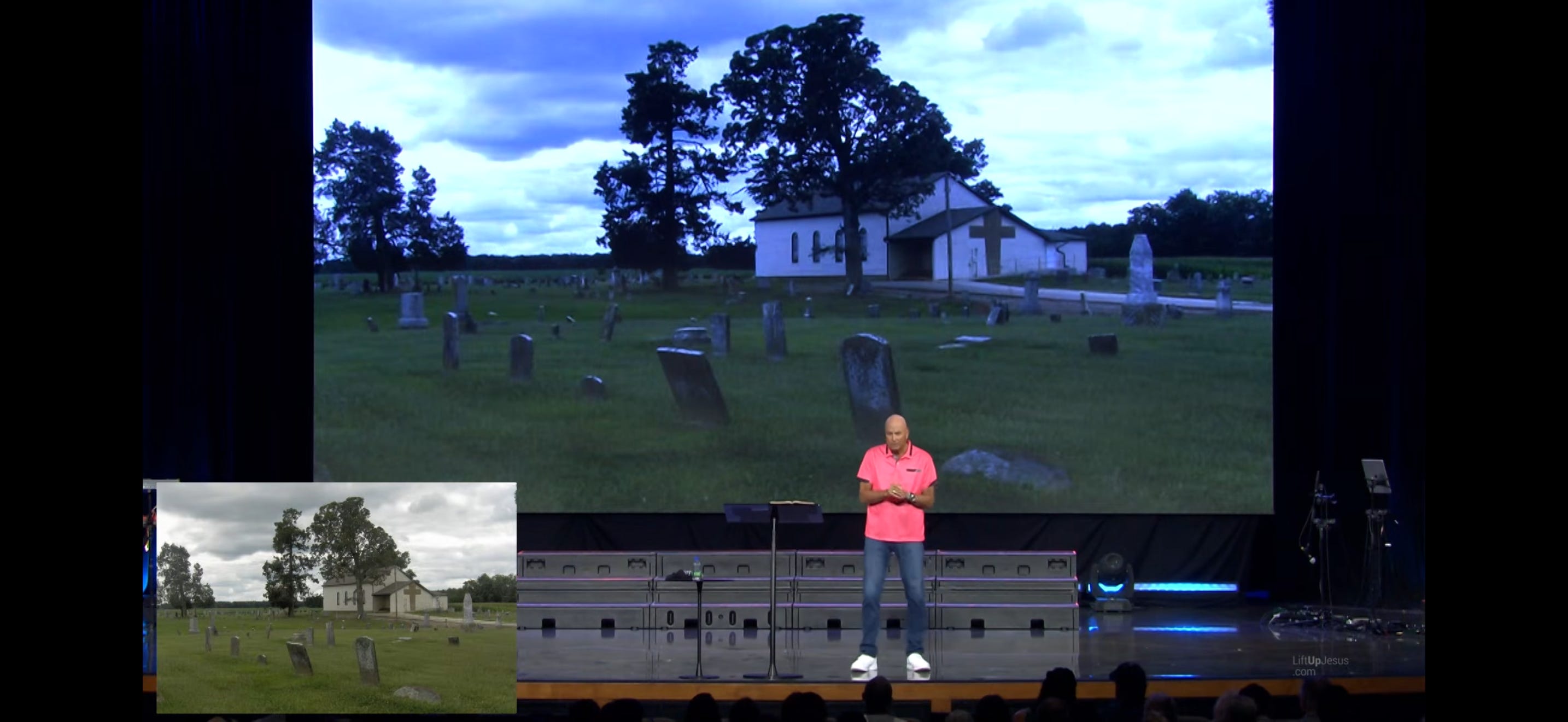
In an 1870 clapboard church in southern Illinois, the pews were once split right down the center aisle. During the Civil War, southern-sympathizing Democrats occupied the benches on the left, Union Republicans sat on the right, and the pastor occupied the pulpit between them. When the minister openly aligned his sermons with Abraham Lincoln, the enraged congregation held a formal church conference to vote on whether to hang him. The building still stands in the center of an old country graveyard, encircled by the tombstones of slaveholders, enslaved laborers, and soldiers who died fighting for the Union.
Preaching at Shepherd Church in Los Angeles, Pastor Dudley Rutherford shared that nineteenth-century confrontation from a church he recently visited to demonstrate that deep partisan divides among believers are neither unprecedented nor temporary.
His illustration highlights a contemporary friction across American congregations. As political tribalism engulfs civic life, clergy find themselves squeezed between two competing pressures: the fear that speaking on public issues will prompt Internal Revenue Service penalties, and the partisan fervor that tempts leaders to turn church services into political rallies. A careful reading of federal law reveals that churches need not retreat from public debate to protect their 501(c)(3) tax-exempt status.
The legal fence surrounding religious speech took shape in 1954. Senator Lyndon B. Johnson, facing a bitter primary challenge in Texas from candidates backed by non-profit conservative foundations, introduced an amendment to Section 501(c)(3) of the Internal Revenue Code. Johnson offered his revision on the Senate floor without committee hearings or public debate. With that brief legislative action, Congress barred all tax-exempt charitable entities—including churches, synagogues, and mosques—from participating in political campaigns on behalf of, or in opposition to, any candidate for public office.
Under Section 508(c) of the tax code, houses of worship enjoy automatic tax exemption and relief from filing standard annual returns. Donors receive tax deductions for their tithes and offerings. In exchange, the government requires that charitable funds and institutional platforms remain detached from electoral campaigns.
The Johnson Amendment does not silence religious institutions on policy questions. A common misconception among church boards is that the law forbids addressing contentious social issues. In reality, the IRS draws a sharp distinction between candidates and causes.
Pastors retain full legal liberty to address moral, ethical, and societal topics from the pulpit. A congregation can preach on poverty, racial reconciliation, abortion, immigration, war, civil liberties, and criminal justice reform. The IRS considers these themes legitimate expressions of religious doctrine. A minister can declare that a pending state bill conflicts with biblical principles. The tax code permits congregations to support or oppose legislative referendums, ballot propositions, and constitutional amendments, provided direct lobbying remains an insubstantial part of the organization’s overall activities.
The boundary turns rigid the moment a sermon targets an individual seeking public office. A pastor may declare, “Scripture commands us to care for the needy.” A pastor cannot declare, “Vote against Candidate Smith since Smith voted to cut public welfare.”
Religious communities possess substantial freedom to educate voters. They can run voter registration tables in the fellowship hall, organize carpools to the polls, and host public candidate forums.
To maintain compliance, these programs must follow strict neutrality. If a church convenes a forum for mayoral candidates, it must invite every qualified contender on the ballot and grant each speaker equal time and impartial moderation. If a ministry distributes a printed voter guide, the document must present candidate stances objectively without expressing approval or disapproval. The guide must span a broad range of policy questions rather than grading candidates on a single litmus test.
The primary trigger for federal tax scrutiny is the misuse of institutional assets. A church cannot donate money to a political action committee, pay for campaign advertisements, or grant free use of its facilities to one preferred candidate to the exclusion of others.
Pastors, acting as individual citizens, retain First Amendment protections to endorse candidates, donate personal income to political campaigns, and volunteer on weekends. That endorsement cannot appear on church letterhead, during an official worship service, or on the congregation’s social media accounts. When a minister steps behind the pulpit, the law views the speech as institutional rather than personal.
Frustration with these restrictions sparked the Pulpit Freedom movement, organized by legal advocacy groups such as Alliance Defending Freedom. Beginning in 2008, hundreds of pastors deliberately preached sermons endorsing or opposing specific candidates on a designated Sunday, mailing audio recordings of their messages to the IRS to provoke a constitutional test case.
The pastors argued that the Johnson Amendment unconstitutionally restricts free exercise of religion and free speech. The IRS chose not to take the bait. The agency has rarely revoked a church’s tax-exempt status over pulpit speech, wary of launching a high-stakes Supreme Court review under the First Amendment.
The threat of an IRS inquiry remains an expensive ordeal. An audit consumes financial resources, demands internal communications, and drains the energy of a congregation. Most denominations advise their ministers to stay well clear of the legal line.
The debate over the Johnson Amendment touches a central question in American democracy: What role should religious institutions play in self-governance? Critics argue that tax exemptions function as an indirect public subsidy, requiring absolute separation from political combat. Religious liberty advocates counter that a faith detached from public action is hollow.
Standing apart from candidate endorsements protects the religious institution. When a congregation links its identity to any political party, it trades long-term moral credibility for temporary partisan favor. By declining to serve as appendages of political campaigns, churches preserve their capacity to speak truth to governors and presidents of all parties.
In that southern Illinois cemetery described by Pastor Rutherford, the gravestones of fierce political adversaries sit silent under the prairie grass. The arguments that once led neighbors to threaten their pastor with a rope gave way to the quiet judgment of history. Modern congregations that focus on moral principles rather than transient electoral races retain their unique standing in civil society. They can feed the hungry, welcome the stranger, and challenge the conscience of their communities—keeping their pulpits free and their doors open.
Pastor Rutherford’s address on the Illinois church and congregational endurance is available on YouTube at http://www.youtube.com/watch?v=FJny8W_viWA [07:15].