Obama’s Olive Branch Doctrine: Religion & the Path of Democratic Reform in the Arab-Muslim World (PART I)
By Gregory W. Hamilton, President
Northwest Religious Liberty Association (NRLA)
March 15, 2011
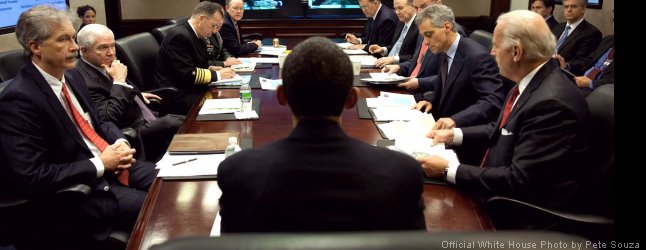
President Barack Obama came to Cairo in 2009 with the purpose of announcing to the Arab-Muslim world that he was not following his predecessor’s “Democracy Project” as a matter of U.S. Middle East policy. One could call this Obama’s “Olive Branch Doctrine”: the message that interfaith tolerance & unity, rather than the insistence of religious freedom and democracy, would be the foreign policy model pursued by his Administration. In a stroke of illusory foreign policy realism,1 he was communicating to Arab Muslims that it was not the purpose of the United States to convert anyone to its way of thinking, politically or religiously.
In the midst of an astonishing Twitter and Facebook Revolution2 that has unleashed a frantic generational demand for democracy and regime change in many countries of the Middle East, including North Africa, the Arab-Muslim world has become a strategic chess match for ideological and political hegemony between the United States and the Mullah-ruled country of Iran. At stake is President Barack Obama’s overall foreign policy approach involving democratic reform, and the political vehicle being used to successfully propagate it—the Administration’s Internet Freedom Agenda.3
But directly connected to it is his international religious freedom policy; and when tied to his overall approach to foreign policy one discovers an emerging “Obama Doctrine”—what I call “Obama’s Olive Branch Doctrine”—which relies on calculated notions of interfaith understanding and tolerance as the best components toward achieving democratic reform in today’s world, and specifically in the Arab-Muslim world.
Pundits claim that President Obama does not have a specifically enunciated foreign policy “doctrine,” per se, but it seems clear that one is emerging. To understand the religious aspect of Mr. Obama’s nascent, yet struggling, foreign policy, one must first understand it in context of the current political and revolutionary fervor sweeping the Arab world.
The Stakes Are High
Four days after Egypt’s bold revolutionary success, this chivalrous chess match became more vivid when our country’s President sharply contrasted Egypt’s reasonably peaceful revolution with Iran’s violent repression of its own protestors who have been calling for the overthrow of its clerical regime. He said, “I find it ironic that you’ve got the Iranian regime pretending to celebrate what happened in Egypt, when in fact they have acted in direct contrast to what happened in Egypt by gunning down and beating people who were trying to express themselves peacefully.”4 The same day, the Iranian Parliament, from direct pressure by the country’s clerical rulers, called for the immediate execution of all opposition leaders.5 So much for freedom!
Siding with the United States in an effort to keep a strategic check on Iran are the autocratic monarchical rulers of Saudi Arabia and most of the Arab League, which makes up all the Gulf States, North Africa, and the Mediterranean corridor. Iran’s Persian-speaking Shias do not rub shoulders easily with the Sunni Arabs of the southern Mediterranean, whom they regard as their cultural inferiors. For now, Arab unrest appears to be enriching Iran’s power and influence over the chief Sunni proponent, Saudi Arabia.6
Yet Saudi Arabia, while clearly nervous, acts cocksure that it will survive the current unrest. Saudi Arabia’s Interior Minister, Prince Nayef bin Abdel Aziz, boasted recently that “Saudi Arabia is immune to the protests because it is guided by religious law that its citizens will not question.”7 In addition, King Abdullah, upon his return from surgery in the United States, made available $37 billion dollars in assistance for those seeking to buy their first home, and other needs badly wanted by the people, as a gesture that he is willing to make major economic concessions in order to keep the peace and thus ensure the people’s loyalty to his monarchical rule.
But when the dust settles who will the real winner be? Iran? Or the young people of the Middle East, who have the opportunity to at last be free of their autocratic rulers, which is due in large part to the fast-paced technology coming from the West? Iran’s supreme leader, Ayatollah Ali Khamenei, proclaimed that Islam and Islamic values was the winner in Egypt, proclaiming that an “Islamic Awakening” had occurred. For him it was an Allah-inspired beginning.
The editors of Economist magazine wryly noted that while Iran’s revolution of 1978-79 was Islamic to the core, Egypt’s was not – “or not yet.” This is because Mr. Khamenei believes that “the fall of Mr. Mubarak can only usher in a government less friendly to Israel and less of a ‘servant’ of the United States—a government more after Iran’s own revolutionary heart.” And he may be right, because the potential of “an alliance between revolutionary Iran and Islamist elements in a new Egyptian government” – or Tunisian, Moroccan, Yemeni, Omani, Saudi, Bahraini, Kuwaiti, Libyan, Syrian, Iraqi and Jordanian governments – is not farfetched.8 This is clearly the concern of Saudi Arabia’s King Abdullah who—to the chagrin of the Obama administration—recently ordered 1,000 troops into neighboring Bahrain to quell the revolutionary unrest that is mostly led by Shiite Muslims. The King is sending the clear signal that he does not believe Mr. Obama is doing enough to back Bahrain’s royal family, and as David Sanger of The New York Times put it, has “little patience with American messages about embracing what Mr. Obama calls ‘universal values,’ including peaceful protests.”9
Economist summed up the situation pretty well with this sobering description: “Iran already enjoys great influence in Lebanon through its proxy there, Hezbollah, and has warm relations with Hamas (itself an offshoot of the Muslim Brotherhood) in Israel’s Gaza Strip. If Iran were able to make high-placed friends in Egypt, where Mr. Ahmadinejad is popular for defying the West, Israel’s sense of encirclement by its most formidable adversary would be almost complete.”10 Add to that mix Iranian influence with the predominantly Shiite countries of Bahrain and Yemen, and the potentially cascading unrest of Shiites in Saudi Arabia.
Scenario One
In this chess match, there are two overarching scenarios being bandied about by foreign policy experts. One optimistic scenario is that the widespread revolutionary movement of young protestors to overthrow and replace their countries’ autocratic regimes with freely elected and “friendly” democratic governments, will succeed, and in turn spill over and overtake Iran’s theocratic regime.
Scenario Two
Another scenario is that with Iran’s supreme leader calling the current revolutionary storm an “Islamic Awakening,” this movement will lead to similar theocratically governed regimes all throughout the Middle East, with Sharia law becoming the radical anti-secular constitutional foundation. (In Tunisia, these demands are already being heard in mass protests, where, even though 98 percent of the population is Muslim, the culture is socially liberal and pervaded by Western lifestyles.)11 The strategic purpose outlined in this argument is that the Middle East will eventually be made up of mostly Islamist-ruled countries surrounding Israel on all sides.12
Fareed Zakaria—more of a proponent of the first scenario described above—believes that this second scenario is unlikely because most Sunni and Shia Muslims located outside of Iran (with the exception of Hamas in Gaza and Hezbollah in Lebanon) do not want Iran’s thug-like theocratic government. They want, he said, what Turkey has and what Indonesia has – mixing together secular forms of democracy with laws enforcing strong Islamic moral values emanating from Sharia law, which claims to practice religious and ethnic tolerance in compliance with the United Nations Charter on Human Rights. (But do they? See part two of this article.)13
Zakaria’s viewpoint, however salient, is easily offset. For example, the Wall Street Journal reported that at the outset of the revolutionary eruption in Tunisia, U.S. Secretary of State Hillary Clinton “blasted Arab governments for stalled political change, warning that extremists were exploiting a lack of democracy to promote radical agendas across the Middle East.” Filling the vacuum, she said, are “extremist elements, terrorist groups and others who would prey off desperation and poverty.” Clinton warned that “the region’s foundations are sinking into the sand.”14
Islamist groups have typically proven to be politically and socially more well organized and in a position to take advantage of democratic processes and changes that result from the peoples’ revolutionary demands. This puts them in a position to fill the void when dictators are overthrown and empowers them to hijack the sincere intentions of the revolutionaries and the revolution itself. How does this happen? As Elliot Abrams, former deputy national security advisor for President George W. Bush explains it, dictators “leave behind a civic culture that has been drastically weakened and moderate parties that are disorganized, impoverished, and without recognizable leaders.” Abrams observes: “For 30 years, President Hosni Mubarak told us to stick with him, or the opposition Muslim Brotherhood would grow stronger. Well, we stuck with him, and the Muslim Brotherhood grew stronger. As he crushed the political center and left, the Brotherhood became the main forum for opposition to his regime.” This, he argues, is what will allow the Muslim Brotherhood in Egypt to play a powerful role in whatever civilian government is elected once elections are actually held there.15 In addition, Iran is notoriously successful in supplying political and economic resources to its favored Islamist party in order to ensure electoral outcomes that favor their strategic gambit in the Middle East.
Israel is very concerned about this second possible scenario due to the fact that it has recently witnessed the seizing of the reins of government in Lebanon by Hezbollah, Iran’s well-funded and militarily supplied political apostle. This realistic fear of encirclement provoked Israeli Defense Minister Ehud Barak to state that “even though its quiet and deterrence exists—Hezbollah remembers the heavy beating they suffered from us in 2006—but it is not forever.” We “may have to re-enter Lebanon,” he said.16
For historian and former Newsweek editor Jon Meacham, the stakes are higher when talking about a nuclear Iran, which, he observes, may mean that we are heading down the path toward nuclear “Armageddon.” Meacham argues that nuclear proliferation throughout the Middle East could become more pronounced and globally destabilizing: “The more people with access to nuclear weapons increases the risk that irrationality will enter the equation; which is a polite way of saying that human forces—pride, ambition, fanaticism—will always confound the most elegant of geopolitical calculations.”17 “Armageddon” talk is not uncommon these days. Israel’s Defense Minister, Ehud Barak, believes that “if Iran gets nuclear weapons, the Middle East will look like hell.”18
Scenario Three
Of course, a third and less dire scenario postures that some autocratic rulers, like the Abdullah’s in Saudi Arabia and Jordan, might successfully convince protestors in their country that they will institute democratic and economic reforms, along with increased human rights provisions, and actually follow through. This explains why the Obama Administration has been strongly encouraging Arab rulers to listen to the protestors in their call for democratic reform and to refrain from violence in the attempt to restore order.
The question of who will win is also tied to Mr. Obama’s apparent break with the traditional U.S. policy of propping up autocratic regimes for the sake of preserving international security and the flow of oil in a terrorist charged world. For example, there has been evident tension between Saudi Arabia’s King Abdullah and Barack Obama over Obama’s handling of Hosni Mubarak’s standing in Egypt during the Egyptian revolt.19
The United States is definitely in a tough spot. Mr. Obama admonished autocratic leaders, both “friend and foe alike,” to “get out ahead of change” because “the world is changing.” He said that advances in freedom of communication through smart phones, Facebook and Twitter were forcing governments to act with the consent of the people, and that they could not afford to be “behind the curve.”20 Admittedly, however, the swiftness of the current unrest in the Middle East has also caught Mr. Obama off guard; this, even despite Mr. Obama’s foresight in August of 2010 to assign a special commission to study all of the best innovative approaches to democratically reform the Arab-Muslim world.21
But that is not how he began his presidency in 2009.
Cairo & the Emergence of the “Olive Branch Doctrine”
It was in Turkey, and then Cairo, barely five months into the first full year of his presidency, that Mr. Obama confidently launched his foreign policy legacy and his diplomatic push for democratic reform in the Arab-Muslim Middle East, using Turkey and Indonesia as models of democracy – “road maps” that the predominantly Muslim countries of the Middle East, including Egypt, should emulate.22
On June 4, 2009, in a speech before Egypt’s government, military and religious leaders titled “A New Beginning,” Mr. Obama put forward his policy goals affecting this volatile region. In it, he stressed political, civil, and economic freedom: “I have an unyielding belief that all people yearn for certain things: the ability to speak your mind and have a say in how you are governed; confidence in the rule of law and the equal administration of justice; government that is transparent and doesn’t steal from people; the freedom to live as you choose.”23 The primary purpose of the speech was to address the matter of religious freedom and tolerance. (As we shall see, he frequently interchanged these terms to meet the Arab-Muslim community half-way.)
Yet, in a bit of historical irony, Mr. Obama came to Cairo in 2009 with the purpose of announcing to the Arab-Muslim world that during his presidency he was not following his predecessor’s “Democracy Project” as a matter of U.S. Middle East policy. One could call this Obama’s “Olive Branch” doctrine. The message was that religious tolerance, rather than the insistence of religious freedom and democracy, would be the foreign policy model pursued by the Obama Administration. By “religious tolerance” was meant that Mr. Obama, in a stroke of supposed foreign policy realism—as opposed to President George W. Bush’s and Secretary of State Condoleeza Rice’s idealism24 —was communicating to Egyptians and all of the Arab-Muslim world that it was not the purpose of the United States to try to convert anyone to its way of thinking, politically or religiously.
Egypt’s President, Hosni Mubarak, praised President Obama’s speech, saying that it demonstrated that Obama understood the complexities that existed between freedom and tolerance in the Arab-Muslim world, and that he was an American president that Arab leaders could trust. He said, “Under the past administration there was a feeling that the Islamic world was a group of terrorists, Islam was hated and Muslims should be watched and that the previous administration was scared of any Muslim.” “But,” he observed, “Obama came and said, ‘We will not fight Muslims and Islam.’” He said that this was because “He is a sympathetic man” who believes that “Islam is a heavenly religion.” Mubarak concluded that Mr. Obama’s attempt to reach out to the Arab-Muslim world placed the United States in a more positive light in the eyes of individual Muslims, and not just with Arab leaders.25 Mubarak’s words were uncannily predictive of something to come, something that included him and the country he governed for nearly 30 years.
On one hand, by reversing course and disavowing President Bush’s idealistic approach of promoting through force, if necessary, the American constitutional ideal of religious freedom and human rights, and the American democratic way of life, the Muslim peoples of the Arab-Muslim Middle East have seen a political opening to take things into their own hands. In a shared cause of resistance to Western leaders who have been perceived – however erroneously – as wanting (since the invasions of Afghanistan and Iraq) to supplant Islam and their way of life, the people no longer see the need of continuing to harness their “strong horse” dictators whom Western leaders have propped up for years in the name of regional stability and security.26
On the other hand, by trying to avoid the failed U.S. democratic projects of the past that brought a militant Islamic Hamas and Hezbollah to the borders of Israel, it created a political wedge, forcing the hands of U.S. policymakers to choose between the Arab-Muslim people’s quest for political and religious autonomy to direct their own path, and their autocratic rulers, who have been valued by the U.S. as their most strategic ally against Muslim extremists and terrorists. By communicating caution and patience in the midst of the revolutionary demands of the people,27 this “safe” approach initially caused many of the protesters in Egypt to accuse Mr. Obama and the United States, including European leaders, of hypocrisy. To be sure, the strategic chess game that Mr. Obama is playing is full of unanticipated choices and dicey moves, but this placed Barack Obama and his administration in the untenable position of being perceived as “Johnny-come-lately” champions of the people’s revolution.28 Admittedly, while it was a nearly impossible balancing act not inconsistent with the administrative approaches and experiences of past U.S. presidents, including Ronald Reagan,29 this confusing and unsteady pattern (i.e., “bungling” to his critiques) – whether real or perceived – risks having the Carteresque effect of permanently shaping a key part of Mr. Obama’s presidential legacy and making whatever foreign policy influence remains seem fairly weak in the eyes of his electoral opposition in the U.S., including world leaders and the international community.
Paul Wolfowitz, former U.S. Ambassador to Indonesia, recently observed in an exclusive interview on CNN with Fareed Zakaria that Mr. Obama and his administration must get away from an apologetic, “hand-wringing,” approach to U.S. foreign policy, and in particular his “hands-off” posture of neutrality in the Middle East which was the essence of his “A New Beginning” speech in Cairo in 2009, the foundational framework for Mr. Obama’s foreign policy in the Muslim world. He said that the president should move full tilt toward reviving some version of former President Bush’s “Project Democracy,” and to quit trying to pick winners – Royal Monarchies like Bahrain, Jordan and Saudi Arabia, as opposed to Presidents like in Egypt and Yemen – in a new Middle East. 30 He argued that if Mr. Obama does not do this, the void left in a transformed Arab-Muslim world is one which the Mullah’s of Iran will exploit to their natural electoral advantage. Wolfowitz stressed that “the United States must be there” to compete with Iran’s proven ability to insert itself into the affairs of other countries of the Arab-Muslim Middle East (Hezbollah in Lebanon, Hamas in Palestine, and the Shiite majority in Iraq) where they have the potential to reshape it in its own radical image.31 For Wolfowitz, this is also true of Al Qaeda in a potentially chaotic aftermath in Libya unless the United States, with the international community, inserts itself into the equation in both humanitarian and military ways.32
Obama’s Interfaith Vision
President Obama appears to have a foreign policy objective in mind toward advancing democracy and democratic reform throughout the world, and particularly in the Arab-Muslim Middle East, but not exactly in the way that Mr. Wolfowitz had in mind. If there is one move President Obama seems to be counting on, it is the promise he sees in both Indonesia and Turkey as models for bringing both the East and West together, no matter how inferior it is to the American ideal, and it is the basis for the “Obama Doctrine.” It represents a subtle yet distinct shift toward religious “tolerance,” away from the ideal of “freedom” – or somewhere in-between – as the national and international norm.
It is a rather optimistic model that is rarely recognized or understood by pundits, foreign policy scholars, and the media – left, right, and center. It is a grand strategy that quietly sails through the criticism in a steady and self-convinced manner, representing Obama’s clear affinity with the young protestors – not only for their yearning for freedom and democracy, but risking even dumping a century’s worth of U.S. support for Arab dictators, their oil (i.e., think alternative energy), and global stability – to support his and their shared yearning to engineer an interfaith approach to solving the world’s religious and political conflicts. Mr. Obama sees it as the best possible means toward achieving world peace—the one last ray of hope in Mr. Obama’s heart and mind, a hope that matches what an Obama biographer, Stephen Mansfield, described in The Faith of Barack Obama as the “eclectic” multi-faith experience that is Mr. Obama based on his upbringing and personal life’s journey.33
According to Mansfield, the President’s foreign and domestic policy strategies appear irreversibly connected to his pluralistic religious experiences—Catholic, Islamic, Atheistic, and Pentecostal—and his years of doing community and social work. This in turn informs his intellect, his decision-making and communication style, and more specifically his Kumbaya togetherness or collective interfaith approach to foreign policy: the all-too-familiar “let’s just get along” appeal.34 This is evidenced by Mr. Obama’s Cairo speech emphasizing “A New Beginning”:
I am convinced that in order to move forward, we must say openly to each other the things we hold in our hearts and that too often are said only behind closed doors. There must be a sustained effort to listen to each other; to learn from each other; to respect one another; and to seek common ground. As the Holy Koran tells us, ‘Be conscious of God and speak always the truth.’ (Applause.) That is what I will try to do today – to speak the truth as best I can, humbled by the task before us, and firm in my belief that the interests we share as human beings are far more powerful than the forces that drive us apart.35
Ideally speaking, this interfaith approach that he hopes will appeal to a new and vibrant generation of young people in the Middle East and around the globe, presumes to bring most people of faith together in the quest for shared democratic and economic values (i.e., world peace), with the affect of forming the most vocal and powerful political force the world has ever seen.
According to a CBS News column published by The Washington Post, President Obama is “preparing for the prospect that Islamist governments will take hold in North Africa and the Middle East, acknowledging that the popular revolutions there will bring a more religious cast to the region’s politics.” This includes “distinguishing between various movements in the region that promote Islamic law in government.” One senior administration official stated that “We shouldn’t be afraid of Islam in the politics of these countries. It’s the behavior of political parties and government that we will judge them on, not their relationship with Islam.”36 Harvard Professor Tarek Masoud believes that “if Muslims” in Egypt actually “got into power, if they go into parliament, they’d try to make some laws that conform with their vision of what Islam requires,” but “they would not,” in keeping with Sunni Muslim religious and political tradition, “try to have the clerics be in charge,” which he says is opposite from the Shiite model in Iran.37
But in President Obama’s overarching argument for a “new beginning” with Islam, “is the clear suggestion that Islamic belief and democratic politics are not incompatible.” After disavowing Bush’s democracy promotion in his June 2009 address at Cairo University, President Obama gave sanction to this sentiment when he said that Bush’s approach did not “lessen my commitment to governments that reflect the will of the people,” adding that “each nation gives life to the principle in its own way, grounded in the traditions of its own people.”38 This demonstrates, to a certain degree, that Obama realizes that the Shiite model of governing in Iran – a cleric controlled government – is not acceptable in a democratic world. In addition, it seems clear that this is Obama’s way of trying an untried approach to bridge the chasm in today’s “Clash of Civilizations” between the Christian West and the Muslim East.
But this approach is alarming to European Union and NATO leaders, as well as Israel, because of the inevitability that “religious law will undercut democratic reforms and other Western values.” Both liberal and conservative foreign policy pragmatists warn that the President’s approach “fails to take into consideration the methodological approach many such [Islamist] parties adopt toward gradually transforming secular nations into Islamic states at odds with U.S. [and European] policy goals.” Again, think Hezbollah in Lebanon and Hamas in Palestine.39 That is why Hillary Clinton warned in Geneva, that if Islamist parties seek to participate in the region’s future elections, “Political participation must be open to all people across the spectrum who reject violence, uphold equality and agree to play by the rules of democracy.”40 Playing by the rules of democracy, that is the big test. It is a test that has never been met by any Arab Muslim nation in the Middle East.
Finally, President Obama’s approach is one that will continue to dog him as he bumps up against the ideal of American exceptionalism in his own country. In the end, Obama’s foreign policy approach to the Arab-Muslim world will either end up backfiring against his intended hopes and desires, or as few believe, a wave of interfaith harmony among Sunni and Shiite Muslims will occur in their seeming quest for democracy and western democratic values. This latter scenario is not realistic or likely. Stay tuned for Part Two of this article series titled: “Obama’s Olive Branch Doctrine: Interfaith Tolerance and the Reshaping of U.S. Foreign Policy.”
Gregory W. Hamilton is President of the Northwest Religious Liberty Association (NRLA). NRLA is a non-partisan government relations and legal mediation services program that champions religious freedom and human rights for all people and institutions of faith in the legislative, civic, judicial, academic, interfaith and corporate arenas in the states of Alaska, Idaho, Montana, Oregon and Washington.
Read also: Obama’s Olive Branch Doctrine (PART II): Interfaith Tolerance & the Reshaping of U.S. Foreign Policy
Tennesee governor signs Religious Freedom Restoration Act into law

On July 1, 2009, Tennessee Governor Phil Bredesen signed the Religious Freedom Restoration Act into law. Introduced in February, House Bill 1598 requires Tennessee courts to apply the “compelling state interest” test to cases in which a law substantially burdens one’s right of free exercise of religion. The state now has the burden of proving that the law furthers a “compelling state interest” and is the “least restrictve means” of furthering that interest.
To those unfamiliar with first amendment litigation, this may seem like a confusing set of terms, but the new law takes a very important step forward. Before this law was in place, the Tennessee legislature could pass a law that applied equally to everybody but could inadvertently disrupt somebody’s free exercise of religion. For instance, the state could pass a law that all high school examinations were to be held on Sunday. If a student who had a religious objection refused to take the test on Sunday and requested accommodation such as another day, the state could deny the accommodation on the grounds that the law applied equally to all students and that this student had not been discriminated against because of his religion. It would be a “facially neutral” law that did not “discriminate” against anybody.
This new law would require the state to prove that the Sunday test was essential to further a “compelling governmental interest” and that it was the “least restrictive means” of furthering that interest. In other words, the state would have to demonstrate that it had a very good reason for scheduling the testing for Sunday and a very good reason for denying a student an opportunity to schedule around it. If the state still refuses and the student has to sue in order to graduate from high school and the student wins, the court may award attorney’s fees and court costs as reimbursement for the expenses of litigation.
This new law is a local state response to the U.S. Supreme Court decision in City of Boerne v. Flores, 521 U.S. 507 (1997) which ruled that a similar Religious Freedom Restoration Act passed by the U.S. Congress was unconstitutional. Tennessee joins 15 other states that have now enacted religious freedom acts.
(Please note that the Religious Freedom Restoration Act (RFRA) which addresses any type of government action in Tennessee is not to be confused with the recently passed Oregon Workplace Religious Freedom Act (WRFA) which requires Oregon employers to make reasonable attempts to accommodate religious observances of holy days and religions dress of their employers.)
A World Enslaved – There are now more slaves on the planet than at any time in human history (Foreign Policy)
By E. Benjamin Skinner
Standing in New York City, you are five hours away from being able to negotiate the sale, in broad daylight, of a healthy boy or girl. He or she can be used for anything, though sex and domestic labor are most common. Before you go, let’s be clear on what you are buying. A slave is a human being forced to work through fraud or threat of violence for no pay beyond subsistence. Agreed? Good.
Most people imagine that slavery died in the 19th century. Since 1817, more than a dozen international conventions have been signed banning the slave trade. Yet, today there are more slaves than at any time in human history.
And if you’re going to buy one in five hours, you’d better get a move on. First, hail a taxi to JFK International Airport, and hop on a direct flight to Port-au-Prince, Haiti. The flight takes three hours. After landing at Toussaint L’Ouverture International Airport, you will need 50 cents for the most common form of transport in Port-au-Prince, the tap-tap, a flatbed pickup retrofitted with benches and a canopy. Three quarters of the way up Route de Delmas, the capital’s main street, tap the roof and hop out. There, on a side street, you will find a group of men standing in front of Le Réseau (The Network) barbershop. As you approach, a man steps forward: “Are you looking to get a person?”
(Read the whole article at http://www.foreignpolicy.com/story/cms.php?story_id=4173 )
OPINION – President Obama: Bad News For the New Atheists and Other Fundamentalists (Frank Schaeffer – Huffington Post)
Frank Schaeffer, blogger at The Huffington Post, and son of one of the founders of the religious right, Francis Schaeffer, makes some very interesting observations about the results of yesterday’s election. http://www.huffingtonpost.com/frank-schaeffer/president-obama-bad-news_b_141342.html
Full disclosure: I was raised by American missionaries — Francis and Edith Schaeffer — who became leaders within the American Evangelical subculture. When I was in my twenties I was their sidekick. We Schaeffers had a lot to do with the formation of the Religious Right. (Sorry!) In the mid 1980s I escaped my tribe’s literal-minded religion and currently go to a Greek Orthodox Church. I’ve also been one of President elect Obama’s most vocal and prolific — judging by the amount I’ve written — supporters.
. . .
Into the all or nothing culture wars, and the all or nothing wars between the so-called New Atheists and religion the election of President elect Obama reintroduces nuance. President elect Obama’s ability to believe in Jesus, yet question, is going to rescue American religion in general and Christianity in particular, from the extremes.
. . .
To the New Atheists who think that with the resounding defeat of the Religious Right, we are entering a secular age, think again. Obama will block your path. He’ll do it for the same reason he’ll make the Religious Right’s paranoid fantasies about him soon seem shamefully ridiculous. That’s because President elect Obama is that rarest of all rare people: a thoughtful, compassionate and likable statesman who also is a thoughtful, compassionate and likable religious believer.
. . .
http://www.huffingtonpost.com/frank-schaeffer/president-obama-bad-news_b_141342.html
OPINION – President Obama: Bad News For the New Atheists and Other Fundamentalists (Frank Schaeffer – Huffington Post)
Frank Schaeffer, blogger at The Huffington Post, and son of one of the founders of the religious right, Francis Schaeffer, makes some very interesting observations about the results of yesterday’s election. http://www.huffingtonpost.com/frank-schaeffer/president-obama-bad-news_b_141342.html
Full disclosure: I was raised by American missionaries — Francis and Edith Schaeffer — who became leaders within the American Evangelical subculture. When I was in my twenties I was their sidekick. We Schaeffers had a lot to do with the formation of the Religious Right. (Sorry!) In the mid 1980s I escaped my tribe’s literal-minded religion and currently go to a Greek Orthodox Church. I’ve also been one of President elect Obama’s most vocal and prolific — judging by the amount I’ve written — supporters.
. . .
Into the all or nothing culture wars, and the all or nothing wars between the so-called New Atheists and religion the election of President elect Obama reintroduces nuance. President elect Obama’s ability to believe in Jesus, yet question, is going to rescue American religion in general and Christianity in particular, from the extremes.
. . .
To the New Atheists who think that with the resounding defeat of the Religious Right, we are entering a secular age, think again. Obama will block your path. He’ll do it for the same reason he’ll make the Religious Right’s paranoid fantasies about him soon seem shamefully ridiculous. That’s because President elect Obama is that rarest of all rare people: a thoughtful, compassionate and likable statesman who also is a thoughtful, compassionate and likable religious believer.
. . .
http://www.huffingtonpost.com/frank-schaeffer/president-obama-bad-news_b_141342.html
Polygamy central issue in Utah Attorney General race
SALT LAKE CITY — Polygamy is never far from the minds of Utahns — even when it occurs in another state.
A raid on a polygamist compound in Texas earlier this year that put more 400 kids in state custody has become one of the biggest issues in the race for Utah attorney general.
Republican Attorney General Mark Shurtleff and Democrat Jean Welch Hill both told The Associated Press that the first question they are asked by voters is always about polygamy, even as they try to focus on other issues.
. . .
Polygamy is a legacy of the early Church of Jesus Christ of Latter-day Saints, who founded Utah and remain its dominant religion. The faith abandoned the practice in 1890 as a condition of statehood, but many self-described fundamentalist Mormons still believe in the principle.
Shurtleff said the Texas raid has made it more difficult for his office to get abused polygamist women to report crimes, and he’s had to reassure polygamist communities that he isn’t prosecuting their religion.
“I think now we’ve convinced them again, ‘That’s Texas. We don’t do that here. We’ll take it a case at a time.’ Ultimately, we have to convince them they have to fear their abuser more than they do us,” he said. “We’re here to serve them, not to judge them.”
For Hill’s part, she said polygamists would never have to fear being prosecuted for their religion. She contends that the state’s bigamy statute is unconstitutional in the wake of the 2003 Supreme Court ruling Lawrence v. Texas.
That case struck down a Texas sodomy law, saying it violated the due process clause and that the state has no justifiable interest intruding into the private lives of consenting adults.
“Our bigamy law still stands, but frankly, it’s indefensible based on that ruling,” Hill said. “You can prosecute for forced marriages, but to actively prosecute a polygamist for being a polygamist? You’re not going to succeed.”
Shurtleff disagrees, saying the state’s bigamy laws would be upheld. He’s more concerned about polygamy being legalized under a court ruling in favor of gay marriage than Lawrence v. Texas.
“Once you take it to the next level of marriage and children, marriage and divorce, that’s different than having sex with who you want in the privacy of your home,” he said.
Read the full article at http://www.chron.com/disp/story.mpl/headline/nation/6077915.html
Saudi King – World facing covert economic war (SaudiGazette.com.sa)
RIYADH – Hit hard by tumbling economy, the world is facing a covert economic war, King Abdullah, Custodian of the Two Holy Mosques, said Saturday in a meeting with press officials and editors-in-chief of Saudi newspapers in Riyadh.
As the GCC ministers of finance met Saturday in Riyadh to tackle the looming financial crisis, the King warned that the Gulf, which was forging ahead in all fields, was also being targeted.
The King stressed that the interests of religion and nation should be kept first.
(Read more at: http://www.saudigazette.com.sa/index.cfm?method=home.regcon&contentID=2008102620226 )
THIS WEEK: Christian-Hindu Unrest leads to Violence in India
A reader in India has alerted us to contemporary conflict between Hinduism and Christianity in India. Here are several news stories about this:
7 prayer halls in DK, Udupi & Chikmagalur face wrath
Thousands of Christians staged road blockades in several parts of the city on Sunday, after suspected Bajrang Dal activists carried out a series of attacks on prayer halls in Dakshina Kannada, Udupi and Chikmagalur districts, alleging conversion…
Police resorted to caning to disperse the protesters, including nuns and women, in the evening near Milagres Hall complex, while a few people threw stones at the police. In the melee, some were hurt and a few vehicles damaged.
The district administration has clamped ban orders in these areas for three days, starting Sunday.
The places of worship which were attacked in Dakshina Kannada include Poor Clares of Perpetual Adoration Monastery in Mangalore city, Christ Church at Kodikal near Mangalore, Believers Church of India at Puttur, Mahima Prathanalaya and Indian Pentecostal (both at Madanthyar in Belthangady taluk) and Bethesda Aradanalaya at Sullia.
The modus operandi of all the attacks was similar: a group of 20-25 persons barged into the prayer halls between 10 am and 10.30 am, damaged the furniture and desecrated the statues of Jesus Christ.
As news spread, Christians in Mangalore came onto the streets in large numbers and blocked roads till night. Union Minister Oscar Fernandes visited the protesters near Milagres in the evening.
Read more from the Deccan Herald – DH News Service Mangalore
Mangalore: Citizens’ Delegation Blames Home Ministry for Collapse of Law and Order
Mangalore, Sep 16: The state home minister is responsible for the total collapse of law and order in coastal Karnataka, and the failure of the state intelligence to warn of such a tragedy. Action must be taken against the district authorities while Christians, who are the victims of this tragedy, must not be targeted and the persons who were arrested on false charges should be released immediately, said Mahesh Bhat, head of the Citizens’ Delegation and noted bollywood director.
Read more and see pictures at Daijiworld
Orissa Govt Acquiesces Plot To Wipe Out Christianity In State
By John Dayal
NEW DELHI, SEPT. 18, 2008, 10.00 Hrs (SAR News):
Late Sunday night I had two very disturbing calls interrupting the unceasing messages and rings from Orissa on my two mobile phones. The first was of two separate gunbattles between police and armed mobs. One was a Sangh Parivar posse attacking a church in Tumuliband and apparently two of the attackers were killed by the police. The second was reportedly a Maoist attack on two villages in the Raikia region.
The second message confirmed something I had been told some days ago – that Vishwa Hindu Parishad leader and surgeon Dr. Praveen Togadia (he is still registered, apparently, with the Medical Council of India) had given a call, almost a contract, to his cadres in Orissa that three prominent Christian leaders, two of them living in Bhubaneswar, had to be “eliminated”.
Already, these three have been named in the Oriya language press, and pamphlets while their names have been distributed in villages in Kandhamal and neighbouring districts.
Read more at Catholic Bishops Conference of India (CBCI)
###
UPDATE:
Mangalore: Hindus and Catholics Agree for Amicable Settlement
Mangalore, Sep 18: The leaders of Catholic Christian and Hindu community have decided to burry the hatchet and resolve differences, if any between two communities with amicable settlement in the future to maintain peaceful atmosphere in the district. They also assured not to hurt religious sentiments of each other. The leaders of both the communities agreed to resolve all differences at the peace meeting led by district in-charge-minister J Krishna Palemar held on Wednesday September 17 in the presence of district commissioner M Maheshwar Rao…
. . .
Fr Francis Serrao said that Catholic Christian institutions never played any kind of discriminatory role among students. The New Life Society has no connection with Catholic Christian community. It is not under the jurisdiction of any Catholic Bishop.
“Baseless allegations against Catholic community and attack on churches either owing to mistaken identity or well-planned strategy have hurt our sentiments. We should respect and encourage the culture of every community. Such incidents should not occur again. Nobody is above the law. Hereafter nobody should take law and order into their hands,” he added.
When he was asked as why other sections of the Christian community had not been invited during the peace meeting, Fr Serrao replied that they also to be invited during next peace meetings.
Puranik clarified that attacks on churches in other parts of the state have no connection with Sangh Parivar. It is a well-planned political conspiracy, fishing in troubled waters. “Being a RSS member, I can say that Hindutva is a nationality. According to RSS, all religions of our country are Hindu only. Hindu community is a peaceful community. We never want to hurt anybody,” he opined.
“The Abortion Controversy” by John V. Stevens, Sr.
by Gregory W. Hamilton, President
The Northwest Religious Liberty Association (http://www.nrla.com)
You can purchase the book [amazonify]0981587003::text::::The Abortion Controversy[/amazonify] from Amazon.
The official book website is located at http://www.theabortioncontroversy.com

John V. Stevens, Sr.

John V. Stevens, Sr.
The Abortion Controversy addresses the many myths surrounding just that: the historic abortion controversy in America—theologically, ethically, scientifically, politically, constitutionally, and socially.
More important, John V. Stevens, Sr., focuses on its affect on the distinct roles of church and state. For example, how is the issue of abortion and the so-called immortality of the soul assigned to the fetus—also referred to as the “sacred gift of life”—being used as a tool by Rome and Evangelical leaders to shift the balance of power between church and state in America and Europe back to the medieval model of a church that once dominated and controlled the agenda of the state, and dictated its will to kings and emperors? This is a central theme throughout.
In many respects, John’s groundbreaking book combines, as does nothing ever published before or since, the art of understanding political science, or the making of public policy, with prophetic or biblical insight. Revealed through that insight is the inherent danger of wittingly or unwittingly using what many of America’s conservative Evangelical and Catholic faithful—including yours truly—consider to be a vitally important moral and social issue, as a means of securing political power.
Issues involving “life” go beyond abortion to include such questions as the use of discarded human embryos in stem-cell research, euthanasia, and birth control—all once primarily Catholic issues. Whether or not these issues can be assigned motives, they remind me of the art of espionage, in which purposeful misdirection and deception are used to further larger and more central hidden agendas. And as with modern medical science and drug usage, there is the unwitting aspect—the law of unintended consequences.
For example, Seventh-day Adventist church pioneer and national reformer Ellen G. White warned that many apparently noble issues—including the heated political matter of temperance and prohibition in her day—would attach themselves to sinister attempts (that is, premeditated movements that went far beyond the control and original intent of their founders) that would rob people of their basic civil and religious liberties.
One of these was a national Sunday closing law, which violated the Establishment Clause separating church and state in the First Amendment. Today, such “catalyst” issues to which John refers—specifically abortion—ultimately result, he argues, in what Ellen White foresaw as the rise and development and establishment of the prophetic “image of the beast.” As the oppression of a Roman church that for centuries dominated the will and purposes of kings and emperors, so too in America would it rear its ugly head again, in the land where religious freedom is presently guaranteed.
Highlighting Revelation 13, verse 14, White wrote, “[As did] the papacy, a church that controlled the power of the state and employed it to further her own ends,” so too, “in order for the United States to form an image of the beast [in the likeness of Rome], the religious power[s] must so control the civil government that the authority of the state will also be employed by the church to accomplish her own ends” (The Great Controversy, p. 443). This formula is making its way, whether one sees the movement as deliberate and intentional, or not.
Every Christian and non–Christian should read this provocative but insightful book. Doing so might just might make you rethink everything you believe about the issue of “life.”
You can purchase the book [amazonify]0981587003::text::::The Abortion Controversy[/amazonify] from Amazon.
INSPIRATION: The Secret of All Persecution and the Power of Love

In a year when religious views seem to be shaping public discourse and ultimately impacting the law, this short excerpt from a classic religious work seems particularly relevant. ReligiousLiberty.TV publishes articles from a wide variety of political viewpoints and faith perspectives. Freedom can be celebrated from a secular perspective as well from a religious perspective. Your thoughts and comments are always welcome.
Editor
———————–
By Ellen G. White, Thoughts from the Mount of Blessing
“Why beholdest thou the mote that is in thy brother’s eye?” Matthew 7:3.
Even the sentence, “Thou that judgest doest the same things,” does not reach the magnitude of his sin who presumes to criticize and condemn his brother. Jesus said, “Why beholdest thou the mote that is in thy brother’s eye, but considerest not the beam that is in thine own eye?”
His words describe one who is swift to discern a defect in others. When he thinks he has detected a flaw in the character or the life he is exceedingly zealous in trying to point it out; but Jesus declares that the very trait of character developed in doing this un-Christlike work, is, in comparison with the fault criticized, as a beam in proportion to a mote. It is one’s own lack of the spirit of forbearance and love that leads him to make a world of an atom. Those who have never experienced the contrition of an entire surrender to Christ do not in their life make manifest the softening influence of the Saviour’s love. They misrepresent the gentle, courteous spirit of the gospel and wound precious souls, for whom Christ died. According to the figure that our Saviour uses, he who indulges a censorious spirit is guilty of greater sin than is the one he accuses, for he not only commits the same sin, but adds to it conceit and censoriousness.
When men indulge this accusing spirit, they are not satisfied with pointing out what they suppose to be a defect in their brother. If milder means fail of making him do what they think ought to be done, they will resort to compulsion.
Christ is the only true standard of character, and he who sets himself up as a standard for others is putting himself in the place of Christ. And since the Father “hath committed all judgment unto the Son” (John 5:22), whoever presumes to judge the motives of others is again usurping the prerogative of the Son of God. These would-be judges and critics are placing themselves on the side of antichrist, “who opposeth and exalteth himself above all that is called God, or that is worshiped; so that he as God sitteth in the temple of God, showing himself that he is God.” 2 Thessalonians 2:4.
The sin that leads to the most unhappy results is the cold, critical, unforgiving spirit that characterizes Pharisaism. When the religious experience is devoid of love, Jesus is not there; the sunshine of His presence is not there. No busy activity or Christless zeal can supply the lack. There may be a wonderful keenness of perception to discover the defects of others; but to everyone who indulges this spirit, Jesus says, “Thou hypocrite, first cast out the beam out of thine own eye; and then shalt thou see clearly to cast out the mote out of thy brother’s eye.” He who is guilty of wrong is the first to suspect wrong. By condemning another he is trying to conceal or excuse the evil of his own heart. It was through sin that men gained the knowledge of evil; no sooner had the first pair sinned than they began to accuse each other; and this is what human nature will inevitably do when uncontrolled by the grace of Christ.
When men indulge this accusing spirit, they are not satisfied with pointing out what they suppose to be a defect in their brother. If milder means fail of making him do what they think ought to be done, they will resort to compulsion. Just as far as lies in their power they will force men to comply with their ideas of what is right. This is what the religious leaders did in the days of Christ and what the church has done ever since whenever she has lost the grace of Christ. Finding herself destitute of the power of love, she has reached out for the strong arm of the state to enforce her dogmas and execute her decrees. Here is the secret of all religious laws that have ever been enacted, and the secret of all persecution from the days of Abel to our own time.
Finding herself destitute of the power of love, she has reached out for the strong arm of the state to enforce her dogmas and execute her decrees. Here is the secret of all religious laws that have ever been enacted, and the secret of all persecution from the days of Abel to our own time.
Christ does not drive but draws men unto Him. The only compulsion which He employs is the constraint of love. When the church begins to seek for the support of secular power, it is evident that she is devoid of the power of Christ–the constraint of divine love.
But the difficulty lies with the individual members of the church, and it is here that the cure must be wrought. Jesus bids the accuser first cast the beam out of his own eye, renounce his censorious spirit, confess and forsake his own sin, before trying to correct others. For “a good tree bringeth not forth corrupt fruit; neither doth a corrupt tree bring forth good fruit.” Luke 6:43. This accusing spirit which you indulge is evil fruit, and shows that the tree is evil. It is useless for you to build yourselves up in self-righteousness. What you need is a change of heart. You must have this experience before you are fitted to correct others; for “out of the abundance of the heart the mouth speaketh.” Matthew 12:34.
When a crisis comes in the life of any soul, and you attempt to give counsel or admonition, your words will have only the weight of influence for good that your own example and spirit have gained for you. You must be good before you can do good. You cannot exert an influence that will transform others until your own heart has been humbled and refined and made tender by the grace of Christ. When this change has been wrought in you, it will be as natural for you to live to bless others as it is for the rosebush to yield its fragrant bloom or the vine its purple clusters.
If Christ is in you “the hope of glory,” you will have no disposition to watch others, to expose their errors. Instead of seeking to accuse and condemn, it will be your object to help, to bless, and to save. In dealing with those who are in error, you will heed the injunction, Consider “thyself, lest thou also be tempted.” Galatians 6:1. You will call to mind the many times you have erred and how hard it was to find the right way when you had once left it. You will not push your brother into greater darkness, but with a heart full of pity will tell him of his danger.
He who looks often upon the cross of Calvary, remembering that his sins placed the Saviour there, will never try to estimate the degree of his guilt in comparison with that of others. He will not climb upon the judgment seat to bring accusation against another. There can be no spirit of criticism or self-exaltation on the part of those who walk in the shadow of Calvary’s cross.
Not until you feel that you could sacrifice your own self-dignity, and even lay down your life in order to save an erring brother, have you cast the beam out of your own eye so that you are prepared to help your brother. Then you can approach him and touch his heart. No one has ever been reclaimed from a wrong position by censure and reproach; but many have thus been driven from Christ and led to seal their hearts against conviction. A tender spirit, a gentle, winning deportment, may save the erring and hide a multitude of sins. The revelation of Christ in your own character will have a transforming power upon all with whom you come in contact. Let Christ be daily made manifest in you, and He will reveal through you the creative energy of How word–a gentle, persuasive, yet mighty influence to re-create other souls in the beauty of the Lord our God.
Excerpted from Thoughts from the Mount of Blessing, pages 125-129
Read the whole work at http://www.egwtext.WhiteEstate.org/mb/mb6.html

Add to Google