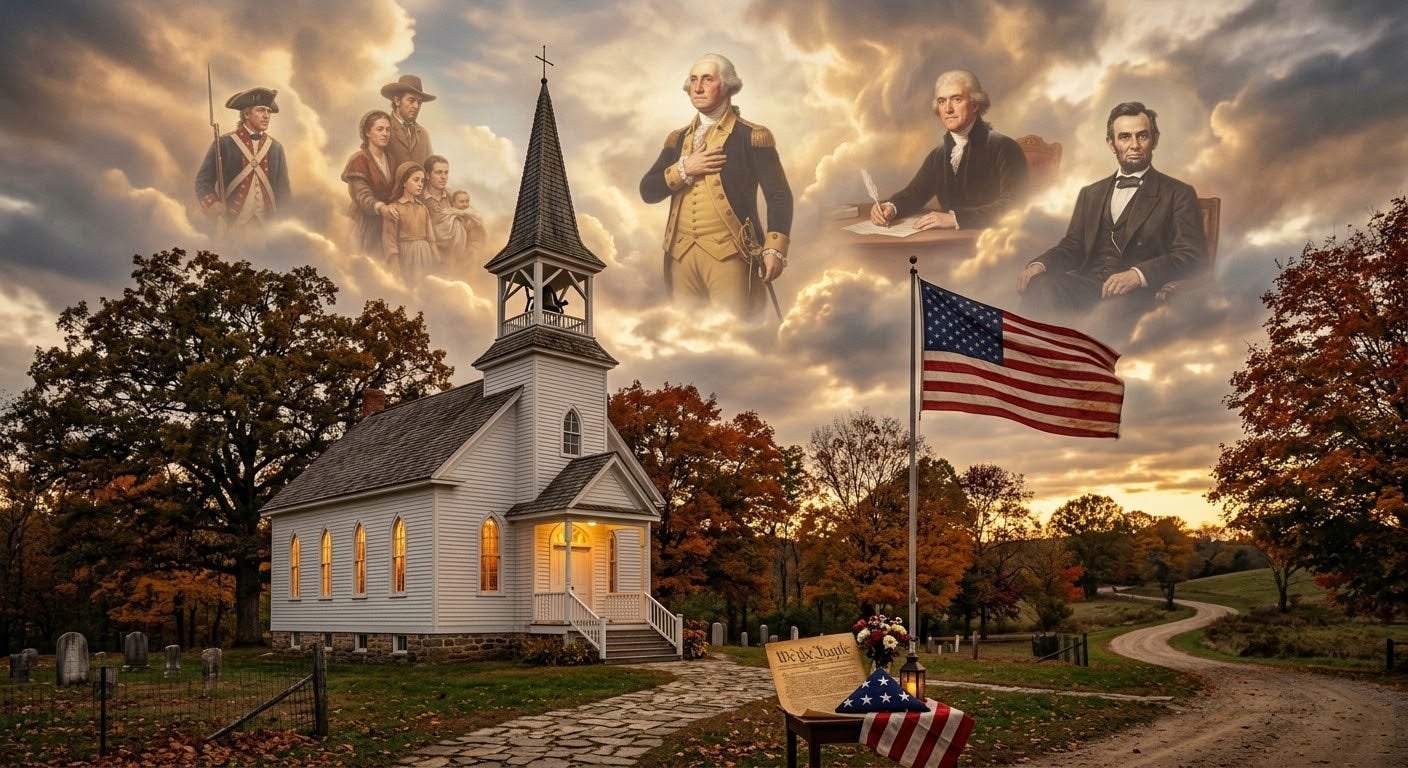
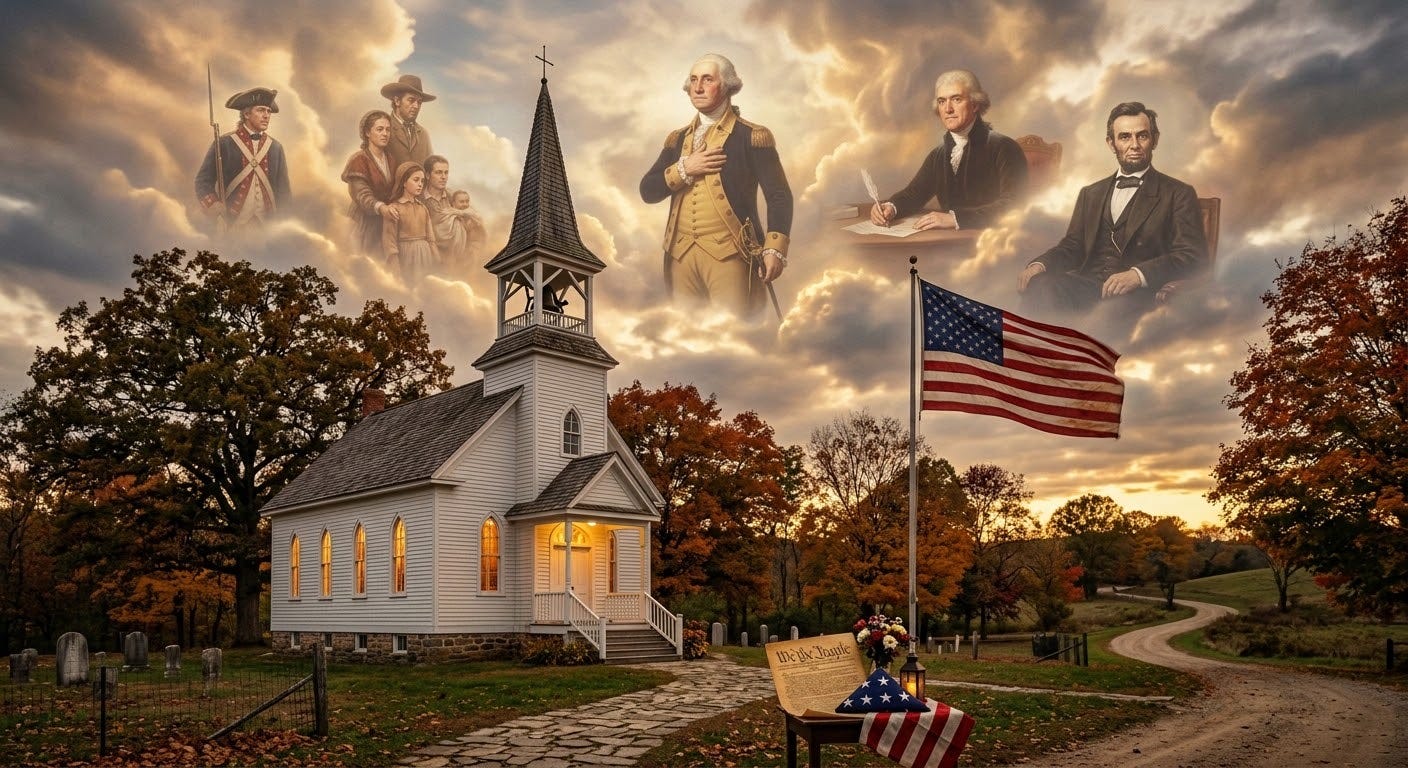
This morning, somewhere in America, a woman walked into a building of her own choosing, knelt where she wanted to kneel, and prayed to the God she believes in. No one stopped her at the door. No clerk wrote down her name. No soldier stood at the end of the aisle to make sure she said the approved words in the approved order. Tonight she will go home, and she will sleep, and her prayer will not be counted against her in any ledger held by any government on earth.
We have stopped noticing how strange that is.
Lean in for a moment, because I want to tell you something we have grown too comfortable to feel. For most of human history, and for most people alive on the planet at this very hour, that quiet morning would be unthinkable. Across the long centuries, the man who prayed wrong was the man who paid. He paid with his property, with his pulpit, with his children, with his neck. Kings decided what God required. Magistrates enforced it. The dissenter learned to whisper, or he learned to bleed. That is the ordinary story of religion and power, the worn groove the whole world ran in, and the marvel of America is that a band of stubborn, imperfect, often quarreling people decided to climb out of that groove and try something the world had mostly refused to try.
They bet on conscience.
Think about the audacity of it. Roger Williams was driven into a New England winter for the crime of believing the state had no business in a man’s soul, and he kept walking until he founded a colony where it would have no business. James Madison watched Baptist preachers thrown into Virginia jails for preaching without a license, and the memory of those bars worked on him until he wrote the words that still guard us. The First Amendment was not handed down from a throne. It was wrenched out of the experience of people who knew, from their own scars, what happens when Caesar decides he is also a bishop. Sixteen words. Congress shall make no law respecting an establishment of religion, or prohibiting the free exercise thereof. Sixteen words standing between every American and the oldest tyranny there is.
I am not going to stand here and pretend the story has been clean. It has not. We held those words in one hand while we held a whip in the other, and the contradiction was monstrous, and good people died over it. We have shut doors in the faces of Catholics and Jews and Mormons and Muslims and Adventists who only wanted to keep a different Sabbath or wear a different garment or answer to a different conscience. The promise of America has always run ahead of the practice of America, and anyone who tells you otherwise is selling something. Gratitude that cannot admit the failures is not gratitude. It is propaganda.
But here is what eighteen years of doing this work has taught me, and I believe it more now than the day I started. The genius of the American settlement was never that Americans were more righteous than other people. We are not. The genius was the architecture. The founders built a house designed for sinners, a structure that does not depend on the goodness of whoever happens to hold the gavel. It assumes power will be abused, and it scatters that power, and it carves out one room that the government is told it may never enter. The room where you meet your Maker. They understood something the Adventist tradition has always pressed close to its heart, that force is the instrument of the adversary and persuasion is the way of Christ, that a faith compelled is no faith at all, and that the God who refused to coerce Adam in the garden does not want His name conscripted by men with badges. Free exercise is not a concession the state grants to the church. It is a fence the people built to keep the state out of a place where it has no standing.
That is why America remains the last best hope, even now, even tired, even fraying at the edges. Not because we have arrived. Because the blueprint still holds. When a believer in this country is wronged for his faith, he has somewhere to go. He has a Constitution that takes his side, courts that must hear him, and a long line of people willing to stand at the door with him and refuse to move. Try finding that in most of the world. Try finding it across most of the centuries. The woman who prayed this morning is the inheritor of something purchased at staggering cost, and she does not even know it, and the fact that she does not have to know it is the whole point.
The pressure has not let up. It never does. There are voices today that would happily trade a little liberty for a little order, that would fold the cross into the flag until you cannot tell which one you are saluting, that grow impatient with the dissenter and the oddball and the man who will not bow. There always have been. The temple is always tempted to borrow the sword, and the empire is always glad to lend it, and the price is always paid by whoever believes the wrong thing in the wrong decade. Vigilance is not paranoia. It is the rent we pay to keep living in the house. I have spent eighteen years writing about cases most people never hear of, the cook fired for keeping the Sabbath, the nurse pushed out for her convictions, the small congregation zoned out of existence, because liberty is not lost in one thunderclap. It erodes one quiet ruling, one weary compromise, one shrug at a time.
So we keep working. We file the briefs and write the articles and tell the stories and refuse to let the fence rot. ReligiousLiberty.TV began eighteen years ago today on a simple conviction, that an independent voice, unbought and unafraid, could watch this ground and sound the alarm when it needed sounding. I did not know if anyone would listen. You listened. You have read, and argued back, and corrected me, and supported the work, and that partnership is the freedom doing exactly what it was built to do.
And tonight, before we sharpen the pencils for tomorrow’s fight, I want to do the one thing the watchman too rarely does. I want to give thanks. Thank God for the open door and the unguarded altar. Thank God for the founders He used in spite of themselves. Thank God for sixteen words and the people across two centuries who bled to mean them. Thank God for a country that, for all its sins, still believes the soul belongs to its Maker and not to the magistrate. We have work to do, and we will do it. But first, on this anniversary, we kneel where we choose, and no one stops us at the door, and we say the oldest and freest prayer of all.
Thank You.
