High Court Curbs Federal Jurisdiction Over Global Human Rights Abuses
TLDR
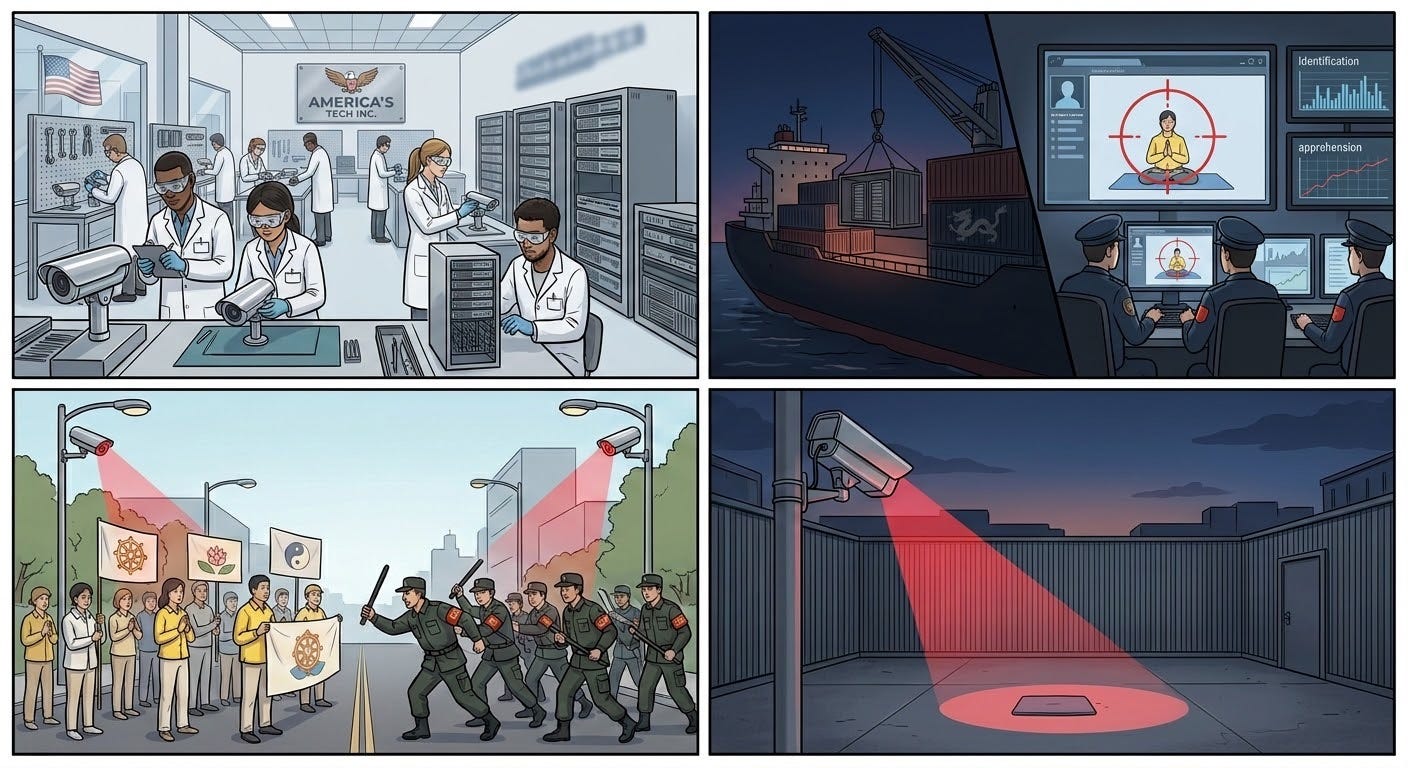
The Supreme Court barred federal courts from creating new causes of action under the Alien Tort Statute. The ruling also eliminates corporate aiding and abetting liability under the Torture Victim Protection Act. Practitioners of Falun Gong sued Cisco Systems for designing surveillance technology that enabled the Chinese government to track, apprehend, and torture them. The plaintiffs asserted claims for aiding and abetting international law violations. The Supreme Court reversed a Ninth Circuit ruling that had allowed the lawsuit to proceed. The majority concluded that creating new legal remedies remains an exclusive prerogative of Congress. Additionally, the Court ruled that the explicit statutory text of the Torture Victim Protection Act does not encompass secondary liability for individuals or corporations assisting primary torturers. This decision effectively ends federal common law human rights lawsuits against domestic corporations for foreign abuses.
Case Info:
Caption: Cisco Systems, Inc., et al. v. Doe I, et al.
Date: June 23, 2026
Decision: Cisco Systems, Inc. v. Doe, No. 24-856
The Supreme Court prohibits lower federal courts from establishing any new implied private rights of action for international norm violations under the Alien Tort Statute. The ruling also prohibits plaintiffs from bringing aiding and abetting claims under the Torture Victim Protection Act. Courts must dismiss human rights lawsuits brought against secondary actors under these frameworks unless Congress expressly creates the specific remedy.
This case shifts the landscape of corporate accountability for overseas human rights compliance. It solidifies a long-standing trend where the judiciary defers entirely to the legislative branch regarding foreign policy and civil remedies. Litigants can no longer use federal common law to hold technology providers liable for surveillance systems used by authoritarian regimes.
How does this ruling impact Religious Freedom?
The decision restricts the ability of persecuted religious minorities to hold United States corporations accountable for manufacturing tools used in foreign crackdowns. While the ruling does not alter direct liability for core offenses, it removes a major judicial check against corporate participation in state-sponsored religious persecution.
Facts of the Case:
1990s: The Falun Gong religious movement originates in China.
1999: The Chinese Communist Party designates Falun Gong organizations as illegal and launches a nationwide crackdown involving torture and arbitrary detention.
2001: Cisco Systems secures contracts to design and build the “Golden Shield” surveillance system to track online Falun Gong activity.
2011: Displaced practitioners and victims file a federal lawsuit against Cisco and its executives in California.
2014: The District Court dismisses the complaint.
2023: The Ninth Circuit Court of Appeals reverses the dismissal, permitting aiding and abetting claims under both statutes.
June 23, 2026: The Supreme Court reverses the Ninth Circuit’s judgment and orders the dismissal of the claims.
What are the arguments presented by the Parties?
Cisco Systems and its executives argued that the Alien Tort Statute functions strictly as a jurisdictional grant and gives courts no power to invent new forms of substantive civil liability. They also asserted that the Torture Victim Protection Act uses the word “subjects,” which requires a direct causal relationship between the torturer and the victim, omitting secondary liability.
The plaintiffs argued that international law universally recognizes aiding and abetting as a binding norm, satisfying the requirements for judicial recognition. They contended that designing custom surveillance features explicitly intended to facilitate state-sponsored torture constitutes subjecting individuals to that abuse.
What did the Court decide in this matter?
The Supreme Court ruled 6–3 to dismiss the Alien Tort Statute claims and 8–1 to dismiss the Torture Victim Protection Act claims. Justice Amy Coney Barrett delivered the opinion of the Court, explicitly closing the door on judicially created claims under the Alien Tort Statute.
The Court reasoned that fashioning new causes of action belongs solely to Congress under the separation of powers. The majority簡emphasized that foreign policy implications require strict judicial deference to the political branches. Regarding the Torture Victim Protection Act, the Court applied a strict textual analysis, ruling that statutory silence on aiding and abetting indicates that Congress deliberately excluded secondary liability.
The Court’s decision represents a final consolidation of its separation of powers doctrine, abandoning the flexible common law approach established twenty-two years ago in Sosa v. Alvarez-Machain. By declaring the class of permissible new Alien Tort Statute claims to be a “null set,” the majority establishes a rigid boundary that prevents lower courts from responding to novel forms of global misconduct.
The long-term effects on civil liberties are profound, particularly for religious dissidents and human rights advocates operating under tech-enabled authoritarian regimes. Domestic corporations now possess broad legal immunity in United States courts when supplying generalized or customized surveillance architecture to repressive foreign governments.
The majority’s logic relies heavily on statutory silence, treating the absence of explicit text as an absolute bar while minimizing historical common-law context. Conversely, the plaintiffs’ strategy suffered from an over-reliance on international criminal law paradigms that the current judicial majority refuses to import into domestic civil statutes.
For the practical reader, this ruling establishes that legal remedies for corporate complicity in foreign human rights violations must come through direct federal legislation or international sanctions rather than litigation. Advocacy groups must redirect their compliance efforts from federal courtrooms to congressional lobbying and shareholder activism.
What to expect next:
The case will return to the United States Court of Appeals for the Ninth Circuit for formal dismissal and final administrative processing consistent with the Supreme Court’s mandate.
Citations
Cisco Systems, Inc. v. Doe*, 609 U.S. ___ (2026). Supreme Court of the United States.
Subscribe
Join ReligiousLiberty.TV to receive breaking news, case summaries, and expert constitutional analysis. Subscribers gain direct access to legal updates as they happen.
AI Disclaimer: This article was assisted by AI.
Legal Disclaimer: This does not constitute legal advice. Readers are encouraged to talk to licensed attorneys about their particular situations.