The Great Northern Shift: How Canada’s Bill C-9 Reconfigures the Landscape of Hate Speech
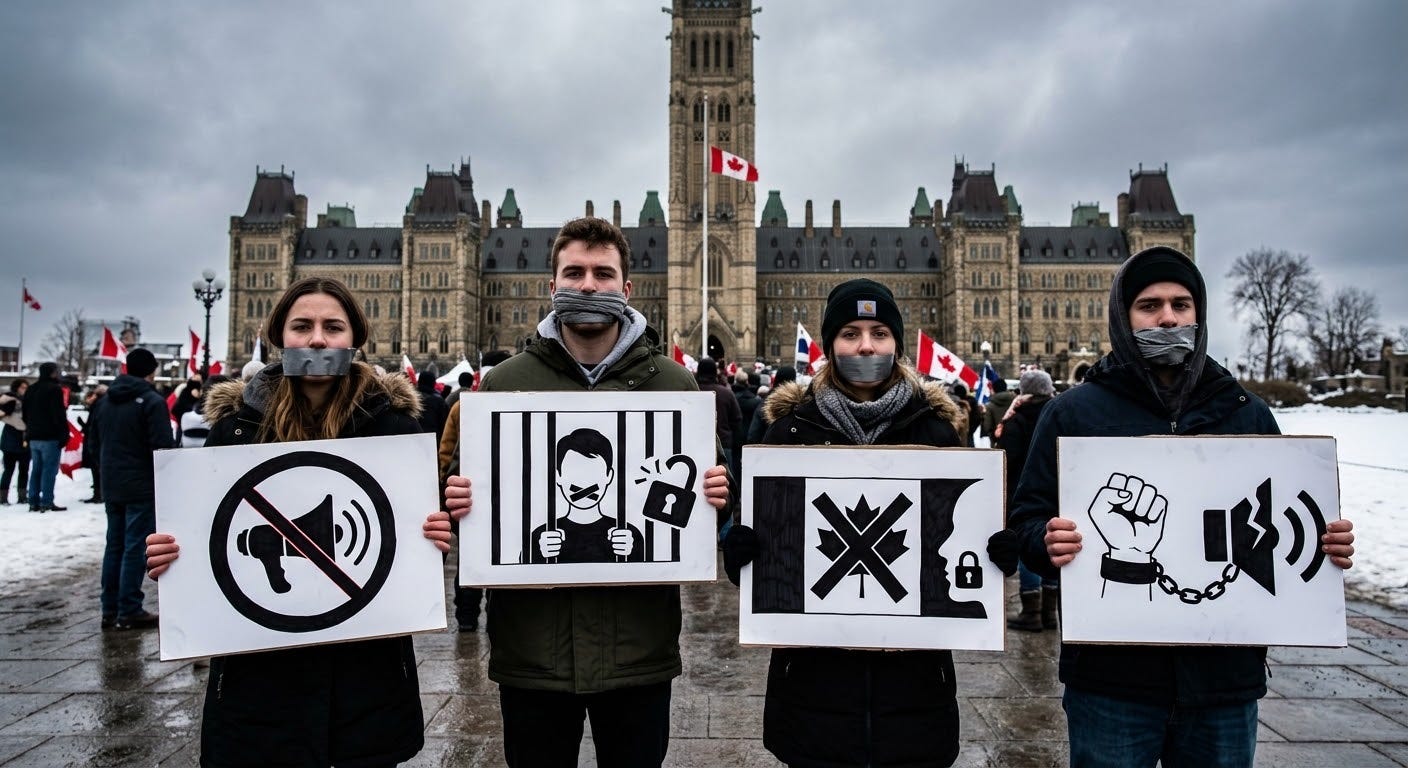
As an American, my baseline for “hate speech” is comfortably anchored in the First Amendment. In the United States, we operate under the near-absolute protection of the Brandenburg v. Ohio standard: speech is protected unless it is directed to inciting or producing “imminent lawless action.” In the U.S., the government generally cannot criminalize the content of an idea, no matter how detestable.
But just across the border, our Canadian neighbors have taken a fundamentally different, and increasingly aggressive, path. The recent passage of Bill C-9, the “Combatting Hate Act”, serves as a stark reminder that Canadian constitutional law is governed by the Charter of Rights and Freedoms —a document that explicitly allows for “reasonable limits” on fundamental freedoms if they can be “demonstrably justified in a free and democratic society.”
Bill C-9 is a masterclass in this Canadian departure from American legal philosophy. Here is what Americans need to understand about the shift happening in Ottawa.
1. The Death of the “Sentencing Factor” Paradigm
Historically, Canadian courts, much like our own, treated hate motivation as an “aggravating factor” during sentencing. You committed a crime (e.g., assault), and if you did it because of the victim’s race, you got a stiffer penalty.
Bill C-9 changes the game by elevating hate to a substantive, standalone offense. From a prosecution standpoint, this is a massive shift. The Crown no longer has to just prove a base crime and then tack on the hate element at the end; they can now charge the “hate-motivated act” as a distinct crime. For a criminal defense attorney, this changes the entire discovery and trial strategy. It forces the defense to litigate the *intent* of the defendant regarding the protected group earlier and more aggressively.
2. The Codification of Taboo
Perhaps most shocking to the American sensibility is the Bill’s specific prohibition on the public display of symbols associated with “listed entities” (terrorist groups) and, specifically, Nazi iconography like the swastika.
In the U.S., National Socialist Party of America v. Village of Skokie solidified our right (however misguided) to march in Nazi uniforms. Canada has effectively decided that the “marketplace of ideas” does not require the public display of genocide-adjacent symbols. By writing these specific symbols into the Criminal Code, Parliament is moving from “general hate speech” laws to a regime of “specifically prohibited imagery.” It is a legislative shortcut that bypasses the need for judicial interpretation of what constitutes a “hateful” symbol.
3. Protecting the “Sanctuary”
Bill C-9 also creates a new criminal odefense for intimidating people at religious or cultural sites. While we have “buffer zone” laws around abortion clinics in the U.S. that have withstood some constitutional scrutiny, Canada is extending this concept to cover almost any building used by an “identifiable group”—including synagogues, community centers, and daycares.
For civil libertarians, this is a red flag. The bill essentially creates a “protected zone” around institutions. While the intention—protecting vulnerable communities from harassment—is noble, the breadth of the language creates real concerns about where the line sits between a protest and a criminal “obstruction” of a cultural space.
4. The “Intense and Extreme” Threshold
The bill attempts to codify a definition of “hatred” as an “emotion of an intense and extreme nature.” This is an attempt by the legislature to rein in the “chilling effect” that Canadian hate speech laws have historically had on political discourse.
However, from an American perspective, this is a distinction without a difference. The core of the First Amendment is that the government is a poor arbiter of what constitutes “intense emotion” or “vilification.” When a state begins to classify which emotions are criminal, it inevitably drifts into policing dissent.
The Bottom Line for American Observers
Bill C-9 represents a divergence in the constitutional trajectory of our two nations. While the U.S. remains the outlier in its near-total protection of abhorrent speech, Canada is doubling down on the belief that social cohesion and the protection of vulnerable groups necessitate a tighter, more regulated public square.
For Americans, Bill C-9 is a cautionary tale—or a roadmap, depending on your jurisprudence. It proves that a country can, at least for now, maintain a democratic system while simultaneously deciding that the state has an affirmative duty to purge the public square of certain symbols and certain types of “extreme” speech. Whether this makes Canada safer, quieter, is applied unevenly, or drives speech underground and creates a black market of communications, is a question we will have to watch play out in the Canadian courts over the next decade.
Disclaimer: This article is for informational purposes only and does not constitute legal advice. It reflects the perspective of a U.S.-based writer interpreting foreign legislation.