The plane lands and the visitor steps into a country she was warned about. She knows the America that shouts. She braces for it. Then a stranger holds the door, looks her in the eye and says welcome like he means it, and something in her loosens, some knot she had carried so long she forgot it was there.
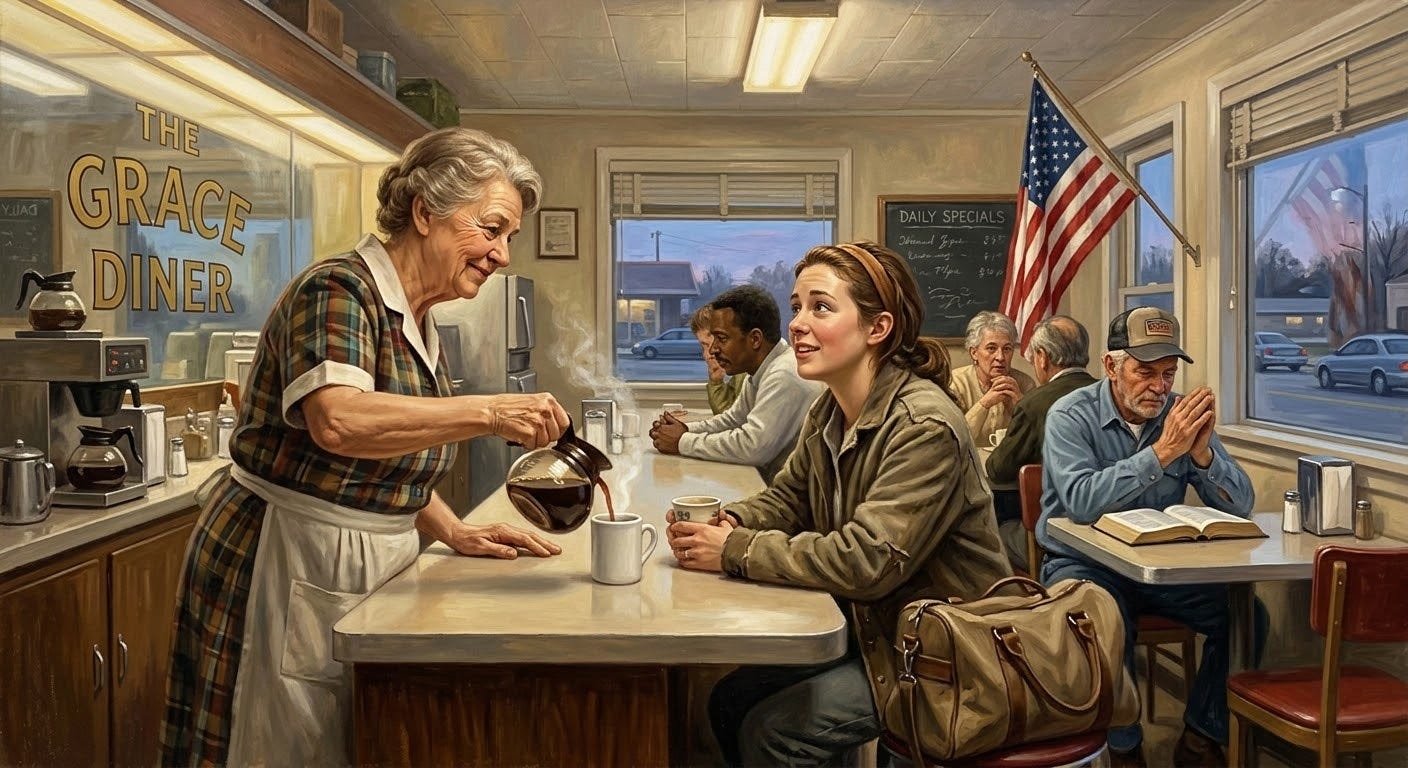
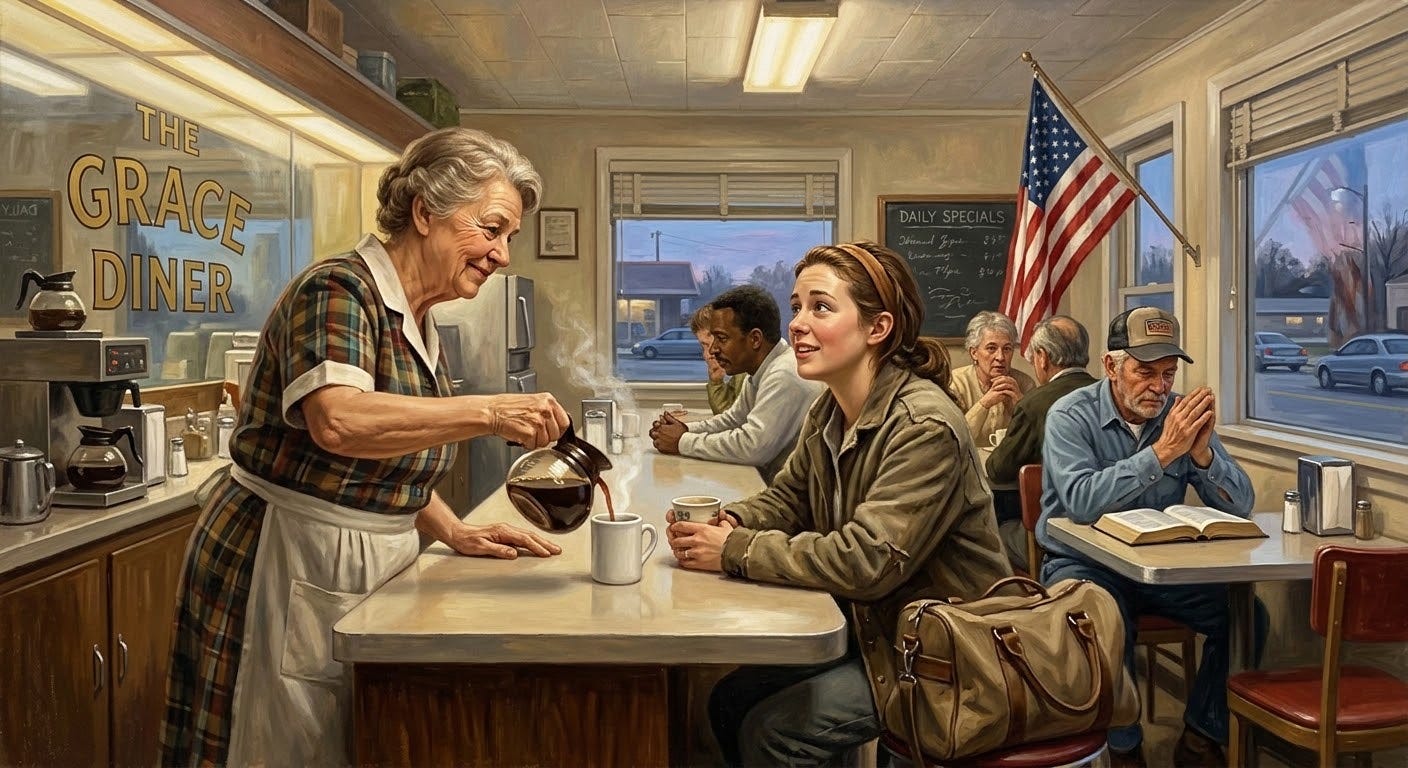
She will spend two weeks here feeling that warmth and never quite naming it. The smile from the cashier. The hello from people she will never see again. The waitress who calls her honey. The man who climbs out of his truck in the rain to change a stranger’s tire and waves off the money. She will go home and tell her friends that Americans are kind, and she will be right, and she will have missed the deeper thing by a mile. The kindness has a source. Something planted it.
A faith built this country. I mean more than the faith on the church sign, though that one counts too. I mean the faith that sank so deep into the culture that it stopped looking like faith at all and started looking like common sense. The conviction that every person carries something sacred. The instinct to welcome the stranger. The belief in the second chance, the wiped slate, the prodigal who comes home to the robe and the ring instead of the lecture he earned. America invented none of it. The whole inheritance is gospel, worn smooth by centuries of handling until a nation could pick it up without remembering where it came from.
Here is the part that surprises people. No one has to believe any of it to be shaped by all of it. The man holding the door may have skipped every Sunday since his grandmother’s funeral. The waitress might tell you, if you asked, that she is spiritual and she leaves it there. The volunteer at the food bank may call himself an atheist and mean it. And every one of them is running on a moral operating system that a believing people installed long before they were born. They inherited the kindness the way you inherit your mother’s laugh. It is theirs now. It came from somewhere.
Walk into the basement of almost any American church on a weeknight and you will find people who would never come upstairs on Sunday. They sit in folding chairs, drinking bad coffee, telling the truth about their lives to strangers, handing one another a grace most of them would struggle to define. The recovering drunk who got his life back will call it luck or the program or the people in the room. He got it from a faith older than the building, the one that always insisted the broken can be remade and the lost can be found and nobody is past saving. He may never say the name out loud. He is living the sermon anyway.
Even our rebellions are catechized. When Americans have risen up against their own cruelty, they have done it in the cadences of the faith. The abolitionists preached from the pulpit. The protest songs were hymns with the dust shaken off. The preacher who stood on the steps in Washington and told a country to live up to its promise was reading the prophets, and the crowd knew the tune. We reach for scripture even when we are furious at the people holding the book, because scripture is the language our conscience learned to speak in. The argument against America has always been made in the moral vocabulary America got from its faith.
I will spare you the fairy tale. The same book that fed the abolitionist was quoted by the man who owned the plantation. Faith shaped this culture for ill as well as for good, and any honest accounting says so plainly. We have blessed our cruelties and baptized our greed and called it providence. The inheritance is real, and it is mixed, and pretending otherwise would dishonor the people who felt the lash of it. And the welcome, the dignity of the stranger, the stubborn belief that the least of these is somebody, those came from the same well, and they are worth claiming out loud.
So the world arrives this summer for the World Cup. Forty-eight nations at our door, and they meet a hospitality they cannot quite account for. Why are these people so glad to see me? Why does the stranger want to feed me, cheer for me, tell me about the brisket and show me the church on the corner and the diner that never closes? The answer runs older than the highway and older than the flag. A long time ago a people decided that the face of the stranger is the face of God, and that decision soaked into the floorboards and stayed there, long after many of them stopped attending the house that taught it to them.
That is the thing the visitor felt and had no word for. She was warmed by a fire she never lit, in a house she never built, kept burning by hands she will never shake, some of them folded in prayer and some of them folded around a cup of bad church-basement coffee and most of them folded for reasons their owners could no longer explain. We walk by borrowed light in this country, believers and doubters together, all of us reading by a lamp that faith hung in the window generations ago and nobody has had the heart to put out. The world came for a game. What it will carry home is the glow.
