
TLDR (Too Long / Didn’t Read Summary)
Canada’s Supreme Court began hearing arguments Monday in English Montreal School Board, et al. v. Attorney General of Quebec, et al. (No. 41231), a challenge to Quebec’s Bill 21. The law bars public employees from wearing religious symbols on the job. Quebec pre-emptively invoked Section 33 of the Canadian Charter, the “notwithstanding clause,” to shield the law from most rights challenges. A view circulating among constitutional lawyers holds that the court may not need to reach Section 33 at all: Bill 21 may be void on jurisdictional grounds alone under the Constitution Act, 1867, and a 1953 Supreme Court precedent may already supply the answer. Hearings run March 23-26, 2026.
Quebec’s law targets religion by name, bans its visible expression categorically, and rewrites Quebec’s own Charter to make secularism a state value.
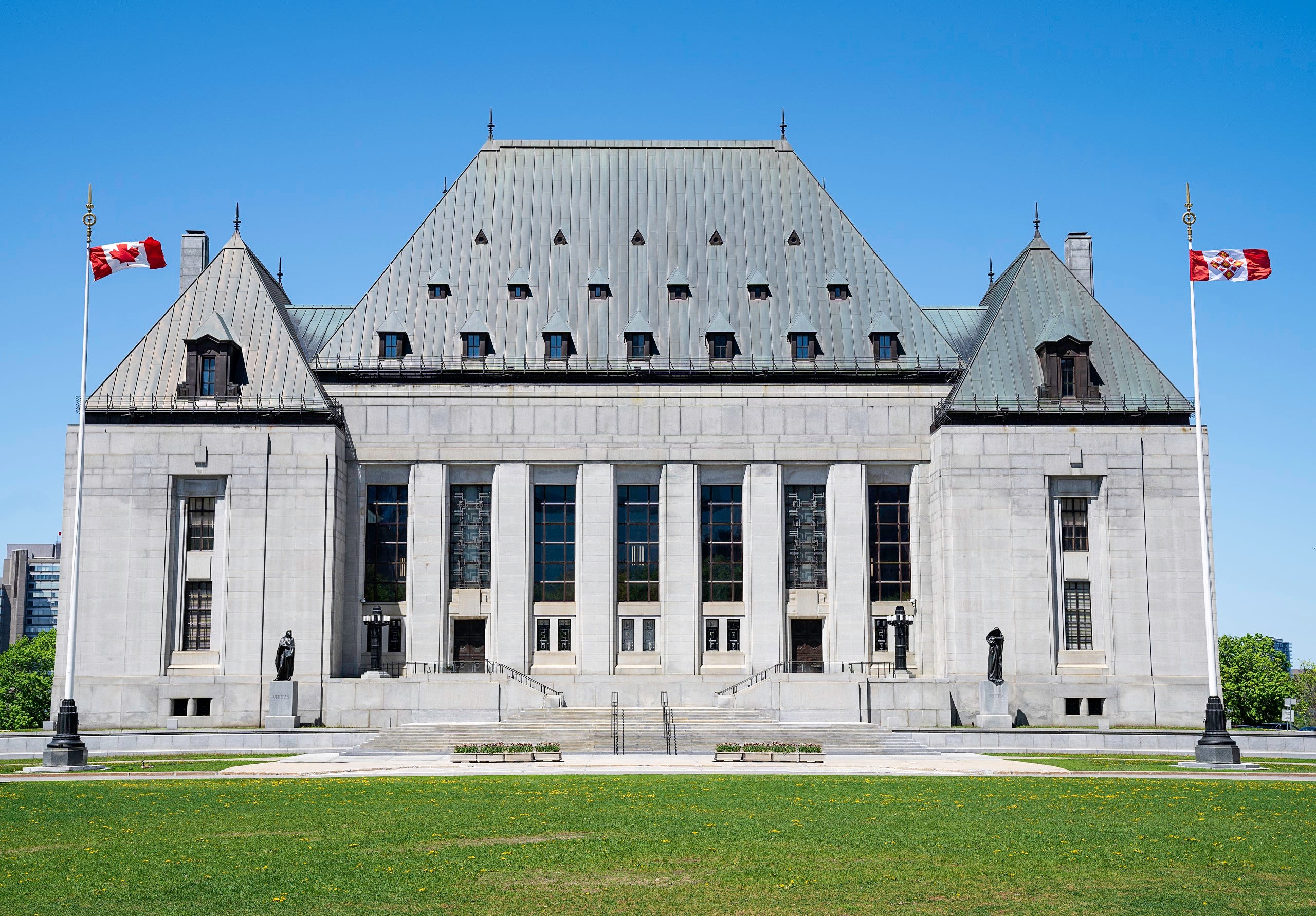
Case Caption: English Montreal School Board, et al. v. Attorney General of Quebec, et al., Supreme Court of Canada, File No. 41231
Court of Appeal Decision: Organisation mondiale sikhe du Canada c. Procureur general du Quebec, 2024 QCCA 254 (Feb. 29, 2024) (https://www.leaf.ca/case_summary/hak-v-attorney-general-of-quebec/)
SCC Docket: (https://www.scc-csc.ca/cases-dossiers/search-recherche/41231/)
Canada’s highest court will decide whether Quebec can permanently ban religious symbols from public employment, and whether it can do so free from judicial review. A constitutional lawyer posted on LinkedIn today that the court may sidestep the debate entirely: in his view, Quebec lacked the power to pass Bill 21 in the first place, and a 70-year-old Supreme Court ruling may already require that result.
Legal experts say whatever the eventual ruling, it will have a profound effect on constitutional law in Canada. (https://lethbridgeherald.com/news/national-news/2026/03/22/quebecs-bill-21-lands-in-the-supreme-court-with-notwithstanding-clause-in-spotlight/)
What Is Bill 21, and What Does It Do?
Bill 21 bans public servants from wearing religious symbols while performing their duties and requires public servants to have their faces uncovered while working. (https://egale.ca/awareness/emsb-v-quebec/) Passed in June 2019, it targets visible religious expression in Quebec’s public sector. A Muslim teacher who wears a hijab cannot be hired. A Sikh lawyer who wears a turban cannot serve in government. The law applies across the board.
For Americans, the closest analogy is a state law barring public employees from wearing a cross, a yarmulke, or any visible religious item to work, with no ability to challenge it in court.
What Is the Notwithstanding Clause?
Section 33 of the Canadian Charter allows a legislature to declare that a law operates “notwithstanding” specific Charter rights, including freedom of religion and equality. It requires no justification. It lasts five years and can be renewed indefinitely. No other constitutional democracy in the world has a similar blanket override of fundamental rights and freedoms. (https://www.el-balad.com/16890072)
Quebec’s Coalition Avenir Quebec government pre-emptively invoked the provision into the law passed in June 2019. (https://lethbridgeherald.com/news/national-news/2026/03/22/quebecs-bill-21-lands-in-the-supreme-court-with-notwithstanding-clause-in-spotlight/) Challengers argue that pre-emptive use, before any court has even found a violation, goes beyond what Section 33 permits.
Could the Court Void Bill 21 Without Touching Section 33?
Yes, and that argument has deep roots in Supreme Court precedent.
Gerald Chipeur, KC, a constitutional lawyer who has appeared before the Supreme Court of Canada, posted on LinkedIn today that “the case may be decided without considering section 33 of the Charter. The Quebec legislation in question (Bill 21) is ultra vires, because the province does not have the jurisdiction to enact it under section 92 of the Constitution Act, 1867.”
“Ultra vires” means beyond the powers. In Canadian constitutional analysis, a subject matter which falls within provincial legislative jurisdiction does not come within federal jurisdiction, and vice versa. (https://en.wikipedia.org/wiki/Section_92_of_the_Constitution_Act,_1867) The notwithstanding clause can only shield a law the legislature had authority to pass. If Quebec lacked that authority, Section 33 never enters the analysis.
That is not a novel theory. The Christian Legal Fellowship, an intervener in this case, argues in its factum that the notwithstanding clause only enters the legal calculus after an impugned law has been found to be intra vires the enacting body, and that laws whose very purpose is the regulation of religion as such have been deemed ultra vires the provinces. (https://www.christianlegalfellowship.org/blog/bill21intervention)
On Day One of argument, Olga Redko, representing the National Council of Canadian Muslims and the Canadian Civil Liberties Association, argued that Bill 21 is motivated by morality and is not under provincial jurisdiction. “This is about imposing a vision of values on Quebec society,” she said, contending that only the federal government has jurisdiction to draft such laws. (https://www.cbc.ca/news/canada/montreal/livestory/bill-21-supreme-court-9.7138285)
What Does a 1953 Case Have to Do with Bill 21?
Potentially everything.
In Saumur v. City of Quebec, [1953] 2 SCR 299, the Supreme Court struck down a Quebec City by-law that barred the distribution of religious literature without police permission. In a 5-to-4 decision, the Court held that the subject matter of the law was in relation to “speech” or “religion,” which were both in the exclusive legislative jurisdiction of the federal government. (https://en.wikipedia.org/wiki/Saumur_v_Quebec_(City_of))
Justice Ivan Rand wrote that “religious freedom has, in our legal system, been recognized as a principle of fundamental character, and… the untrammelled affirmations of religious belief and its propagation, personal or institutional, remain as of the greatest constitutional significance throughout the Dominion is unquestionable.” He found that authority to place limitations on religious belief or expression rests exclusively with Parliament under Section 91 of the Constitution Act, 1867, not with the provinces.
Justice Rand held that freedom of religion is a first-level primary liberty that transcends property and civil rights in the province. (https://canliiconnects.org/en/commentaries/34401)
Apply that reasoning to Bill 21. The law does not incidentally affect religious expression. Its stated purpose is to remove visible religion from public employment. The trial judge described the law’s goal as the “bannissement,” “effacement,” and “disparition” of religion in those spaces. That is regulation of religion as such. Under Saumur, that is Parliament’s domain. The Saumur decision was subsequently used to dismiss more than 1,000 cases against Jehovah’s Witnesses in the Province of Quebec. (https://en.wikipedia.org/wiki/Saumur_v_Quebec_(City_of)) Its core holding has never been overruled.
What Happens Next?
142 lawyers are participating in the case. 61 parties are expected to be heard over four days. 51 parties hold intervener status, including the federal government and five provinces. (https://lethbridgeherald.com/news/national-news/2026/03/22/five-things-on-the-bill-21-supreme-court-hearings-this-week-in-numbers/) Arguments wrap up March 26, 2026. The Supreme Court does not announce ruling dates in advance. A decision is expected months later.
If the court follows Saumur and rules Bill 21 ultra vires, it voids the law without deciding the notwithstanding clause question at all. That outcome would give direct relief to every teacher, lawyer, and public servant excluded under the law, without setting new precedent on Section 33. If the court reaches Section 33, its ruling will affect every Canadian government that has used, or is considering using, the override.
Commentary
The Saumur precedent has been on the books since 1953. Justice Rand did not write in abstractions. He held that laws targeting religious expression for religious reasons fall outside provincial authority. That holding fits Bill 21 precisely. Quebec’s law does not regulate workplaces in a way that incidentally touches religion. It targets religion by name, bans its visible expression categorically, and rewrites Quebec’s own Charter to make secularism a state value. That is not employment law. That is the regulation of religion as such, and Saumur places that power in Parliament, not in the National Assembly.
Courts resolve cases on the narrowest available ground. If Bill 21 is ultra vires, as Saumur strongly suggests, the court does not need to redefine Section 33 to reach the right result. The answer has been waiting since October 6, 1953.
Subscribe to ReligiousLiberty.TV for breaking news, case updates, and legal analysis. Subscribers get first access to case information and new developments as they happen. If this article was useful to you, share it.
This does not constitute legal advice. Readers are encouraged to talk to licensed attorneys about their particular situations.