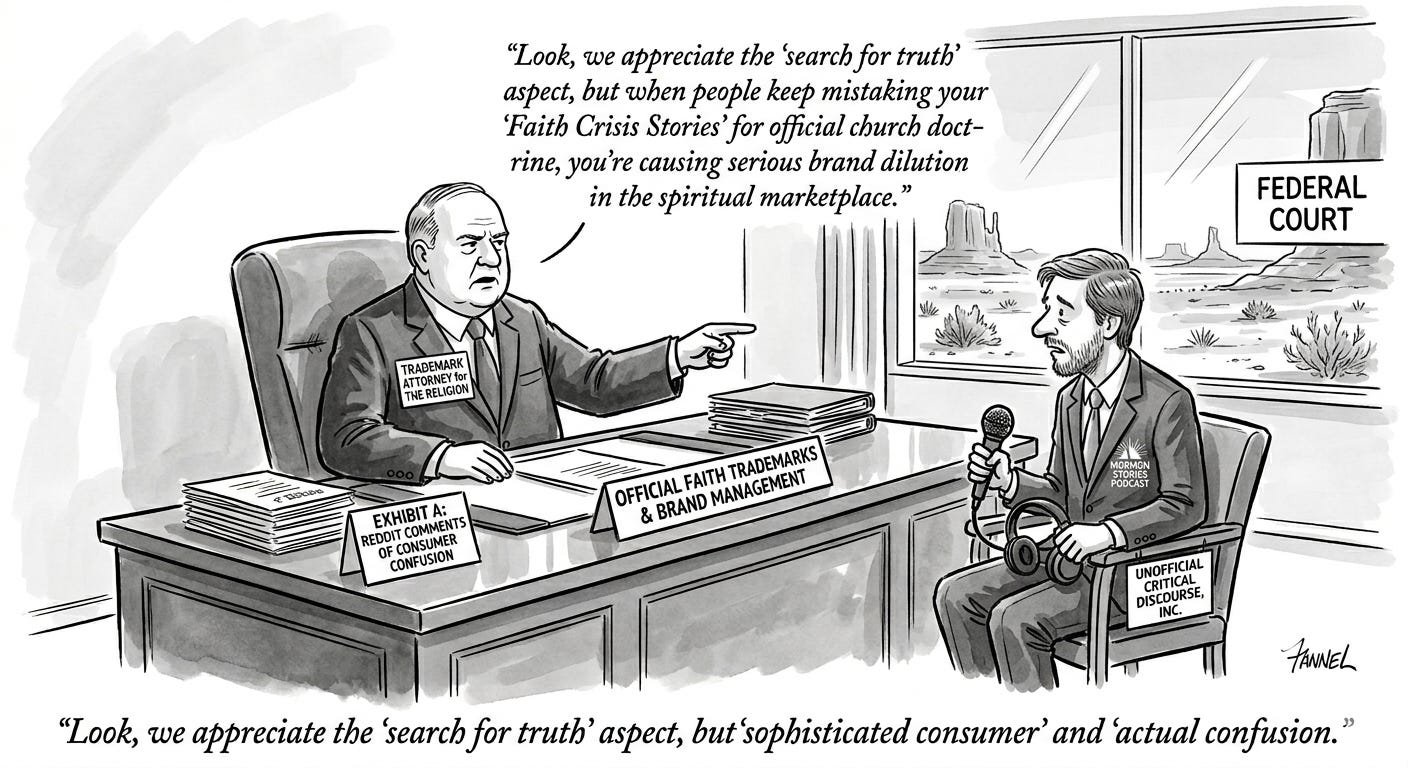
A complaint filed in federal court in Utah raises hard questions about intellectual property rights, public confusion, and how religions protect their brands online.
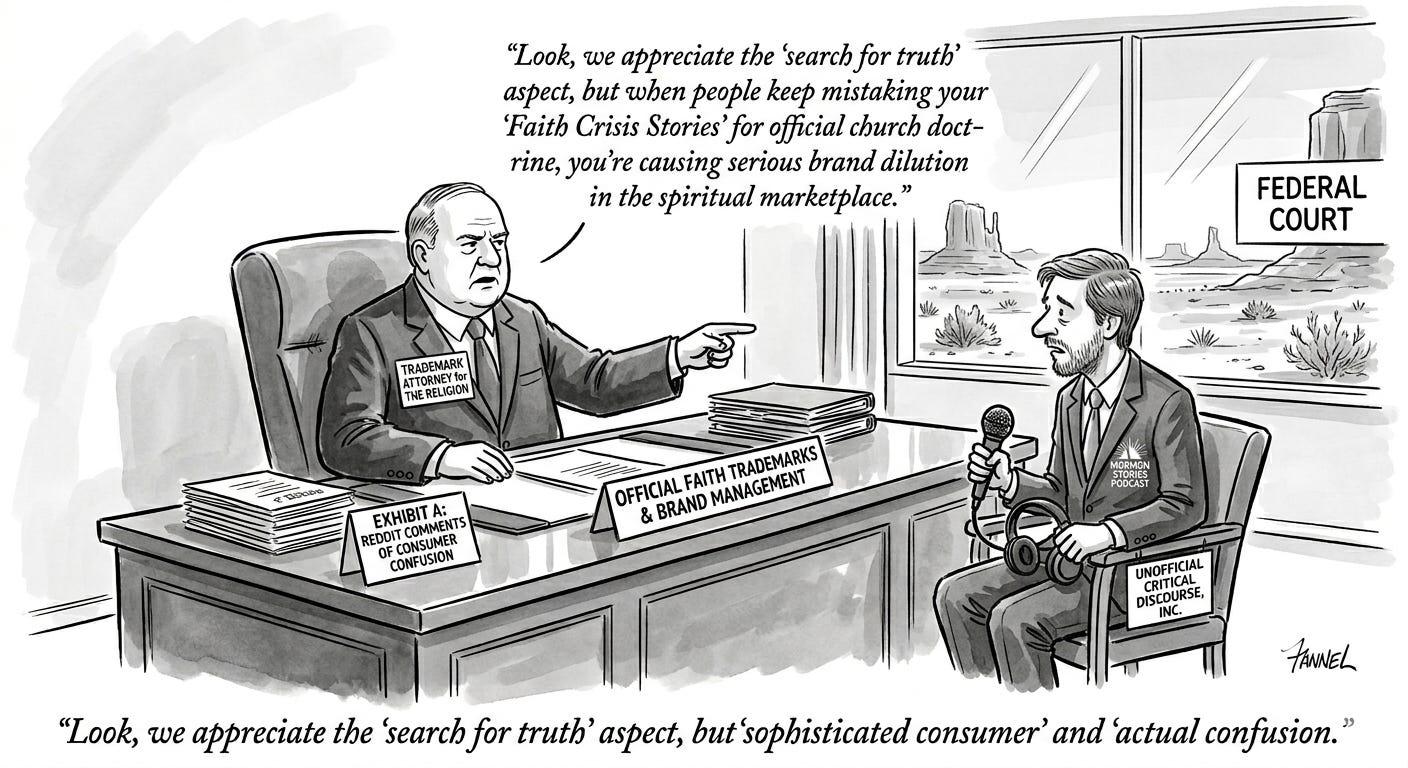
The Church of Jesus Christ of Latter-day Saints filed a trademark and copyright infringement suit on April 17, 2026, against Open Stories Foundation and John P. Dehlin, the creator and operator of Mormon Stories, a podcast that critically examines LDS church history, doctrine, and institutional practices. The complaint alleges that Mormon Stories’ use of the term “Mormon,” combined with a blue logo incorporating light rays similar to those featured in official church branding, creates a substantial likelihood of consumer confusion about affiliation and endorsement.
There is no mystery about what the church objects to. The complaint is remarkably lucid on this point. The church has invested nearly two centuries in building consumer recognition of the term “Mormon” and its visual identity, including the light-rays design that has become ubiquitous across official LDS websites, apps, YouTube channels, and other digital platforms. That investment amounts to something. And the LDS institution is correct that a reasonable consumer who encounters the Mormon Stories podcast might well assume, at first glance, that it represents the official voice of the church or at minimum has been approved by church leadership.
The church’s complaint cites what appears to be genuine marketplace confusion. Reddit comments, YouTube comments, and Facebook posts included in the litigation record show people saying they subscribed to Mormon Stories thinking it was church-affiliated, or were shocked to discover it was critical rather than devotional in orientation. One person reported that a new convert in their ward “went on to Mormon Stories, not realizing it was anti and got caught up in it.” This is the kind of evidence that trademark law exists to address.
But the complaint also illustrates something more complicated. The web page where you encounter Mormon Stories is not remotely difficult to scrutinize. Within seconds, a visitor sees categories like “Faith Crisis Stories,” “LGBTQ+,” and “Mormon Doctrine vs. Science.” The site explicitly states it is not affiliated with the church. Dehlin has operated this podcast for over two decades. The fact that new converts and casual internet users have been momentarily confused does not mean the confusion is systematic or that reasonable diligence by users would not dissolve it entirely.
The church’s negotiation efforts are telling. The complaint reveals that before filing suit, church leadership asked Dehlin to include a disclaimer at the beginning of podcast episodes stating that Mormon Stories is not church-affiliated. Dehlin refused. He also agreed to remove copyrighted church images but then posted a temple photo to promote an episode shortly after, which the church sees as bad faith.
From a plaintiff’s perspective, this looks like Dehlin refusing to take simple, reasonable steps to prevent ongoing confusion. From a critical media perspective, this is murkier. A disclaimer before every episode is a form of compelled speech that subtly reframes the podcast’s mission each time it appears. If you have to announce every 50 minutes that you are “not affiliated with the church,” you have tacitly conceded something about the legitimacy of the association. Dehlin’s refusal may reflect a judgment that the cure is worse than the disease, that constant disclaimer-statements would undermine his publication’s credibility or reinforce the very confusion the church wants to dispel.
The temple photo incident is less defensible. If the church and Dehlin had reached a provisional understanding and he violated it within days, that suggests either bad faith or negligence. A serious publisher of critical religious content should exercise control over promotional materials, especially images associated with trademarked visual elements.
The trademark claims rest on the strength of the Lanham Act and will turn on likelihood of confusion analysis, which courts evaluate through a multifactor test: the strength of the plaintiff’s mark, the similarity between marks, the relatedness of the services, the sophistication of the target consumer, and evidence of actual confusion. The church is strong on strength of mark, actual confusion, and similarity of design. The question of consumer sophistication cuts the other way. A person seeking LDS content is likely to exercise at least minimal diligence in determining whether a source is official.
The copyright claims appear more straightforward. The church alleges that Dehlin has reproduced and displayed copyrighted images of temples, church leaders, and religious artwork on his website and social media pages without permission. Copyright law does not require likelihood of confusion. Unauthorized use of registered copyrighted works, even in a critical or transformative context, remains infringement unless the use qualifies as fair use. Whether Mormon Stories’ use of temple photos and images of church leaders constitutes fair use will depend on how transformatively those images are employed. If they are used merely to illustrate Mormon Stories content or to evoke the visual language of the church in a promotional capacity, the fair use argument weakens.
At the deepest level, this suit reflects a tension inherent in how institutions protect their brands against critics. The LDS church is entitled to ensure that its intellectual property is not used to generate confusion about source or affiliation. It is also defending a theology and moral worldview against people who have concluded that theology and worldview are harmful. That Dehlin refused a disclaimer does not establish that he acted with willful intent to deceive. It suggests, more plausibly, that he believes the merits of his podcast should be separable from its association with Mormonism.
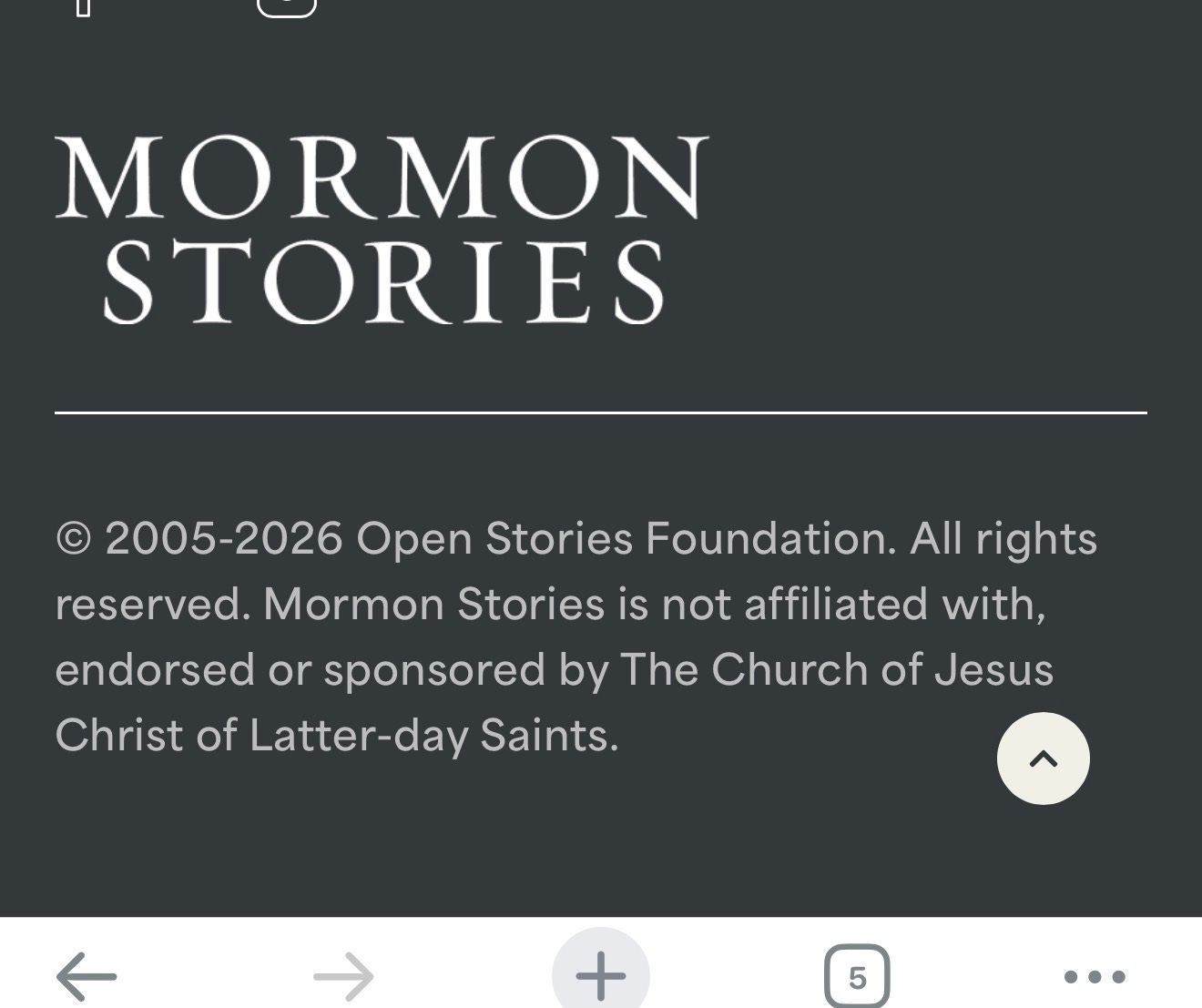
(A disclaimer currently exits on the site.)
Whether Mormon Stories will ultimately prevail depends on the careful work of both parties’ counsel and the factual record that emerges in discovery. But the case will also test how much intellectual property law can coherently constrain critical media that trades, necessarily, in the visual and linguistic currency of the institutions it examines.
