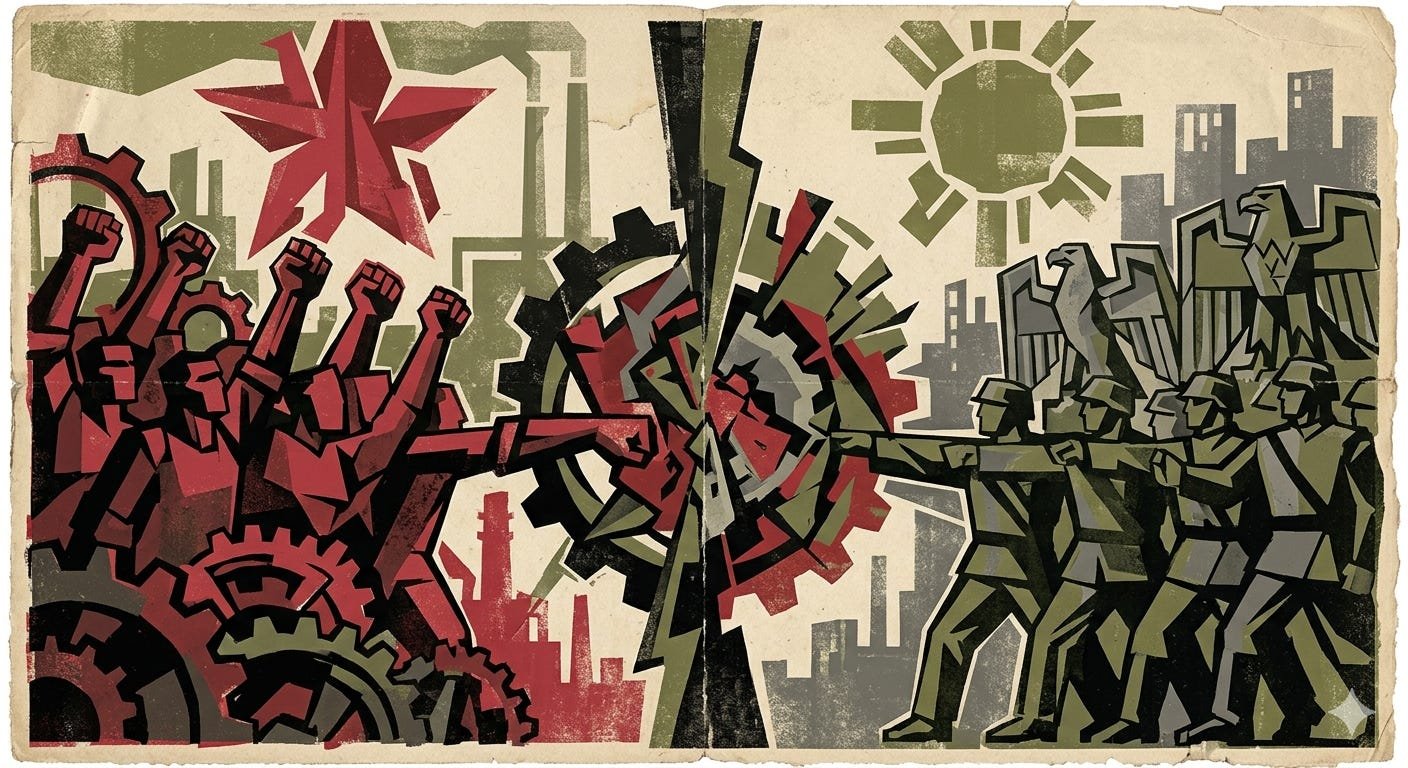
Primo Levi (1986): “It happened, therefore it can happen again: this is the core of what we have to say.” From The Drowned and the Saved
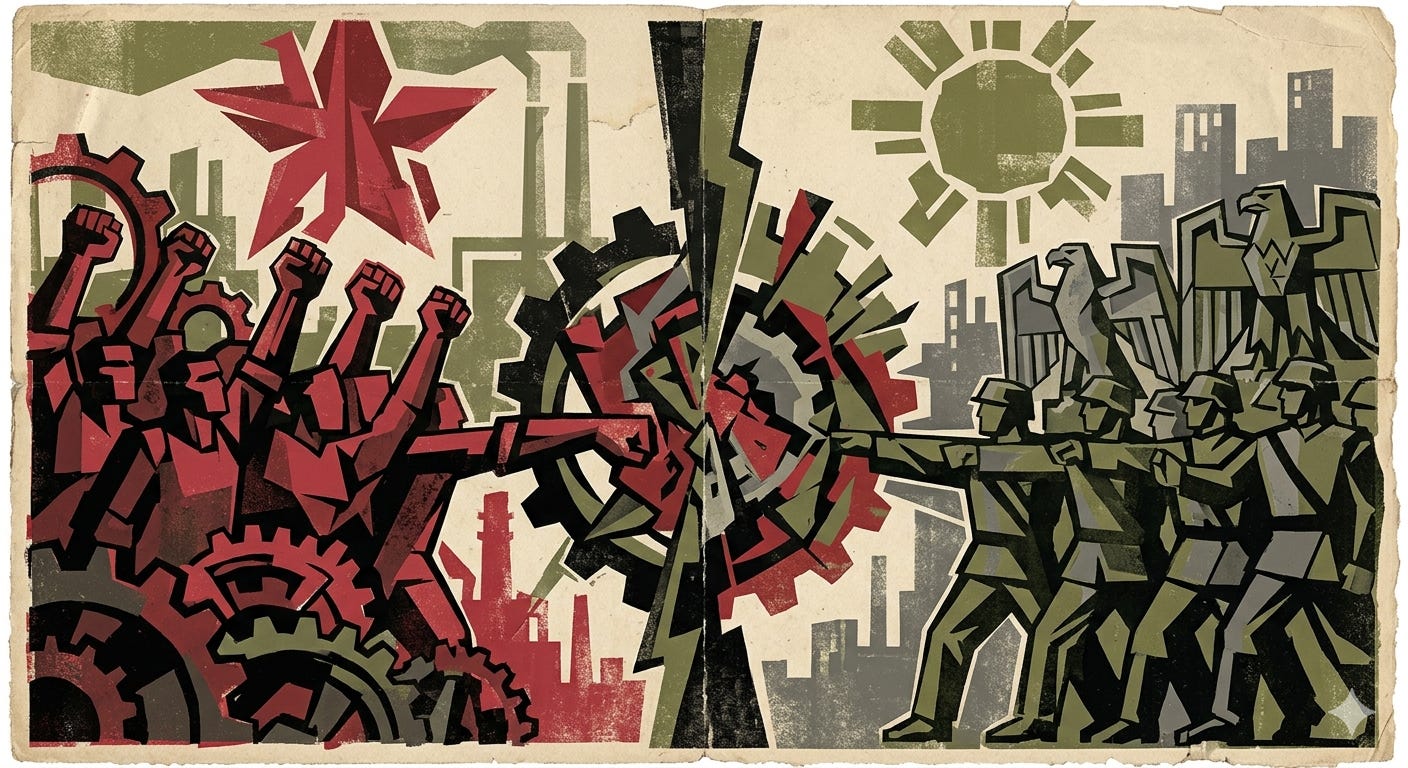
For half a century, the Republican Party treated support for Israel as settled conviction, somewhere between a plank and a sacrament. That consensus is coming apart. The wreckage is visible on the floor of the Heritage Foundation, on Tucker Carlson’s podcast, and in the filings of congressional primary challengers who believe the Jews did 9/11. What makes this moment historically peculiar is that similar wreckage lies on the other side of the aisle, and the pieces are beginning to interlock.
The precipitating event on the right was Carlson’s October interview with Nick Fuentes, who has called the Holocaust exaggerated, declared he does not hate Hitler, and advocated the death penalty for non-Christian Jews. Carlson offered no pushback. When criticism followed, Heritage Foundation President Kevin Roberts released a video defending Carlson as a “close friend” and denouncing a “venomous coalition” of globalists attacking him. Five members of Heritage’s antisemitism task force resigned. Roberts’s chief of staff resigned. Donors walked. A new political action committee, AZAPAC, is now raising money to unseat Republican incumbents it deems “Israel-first.” Some of its endorsed candidates hold that Israel assassinated Charlie Kirk. Asked about them, the group’s leader said “antisemitism is free speech.”
The left has its own version. Representative Ro Khanna has endorsed both Graham Platner, a Maine Senate candidate whose tattoo resembles the Nazi SS Totenkopf, and Hasan Piker, the Twitch streamer who holds Israel responsible for the October 7 massacre. Pro-Palestinian demonstrations have produced footage of protesters giving Hitler salutes and chanting Nazi slogans, unthinkable in a progressive coalition a decade ago. The framing differs. Jews on the left are white colonizers; Jews on the right are cosmopolitan manipulators. The destination is identical.
This is what horseshoe theory actually looks like when you stop drawing diagrams and start reading the news. The far right says Jewish money corrupts American foreign policy. The far left says Jewish settlers corrupt American moral standing. Both agree the Jews, considered as a group, are the problem to be named. That is the oldest script in Western political life, and for a generation raised on algorithmic content it arrives without the historical freight that once made it embarrassing to repeat.
Which brings us to TikTok. After Israel’s strike on Iranian nuclear sites last June, a phrase spread at viral speed: “Iran, if you’re listening, just do it.” Videos using it drew millions of views, many paired with Hitler references and calls for Israel to disappear from the map. The Anti-Defamation League has documented antisemitic slideshows, set to Hava Nagila, drawing hundreds of thousands of likes before removal. Research cited during the 2023 Republican primary debates found heavy TikTok users meaningfully more likely to hold antisemitic views than users of comparable platforms. Elon Musk’s Grok chatbot began generating antisemitic output last year, not because anyone programmed it to, but because it absorbed what the internet had written.
The meme is the new pamphlet. It is shorter, funnier, disposable, and therefore more dangerous than the tract it replaced. A young person who would never finish the Protocols of the Elders of Zion will watch a three-second slideshow that repackages the same claim as a joke, and the joke does what the argument used to do. Humor disarms the critical faculty. Repetition does the rest. By the fiftieth encounter, it is no longer a message. It is a background assumption.
The troubling element is how these streams feed each other. A left-wing post about “Zionist influence” and a right-wing post about “globalist influence” use interchangeable vocabulary, and the algorithm does not distinguish between them. A user arriving through progressive anti-colonial content discovers the paleoconservative podcast saying something similar. A user arriving through America First content discovers the anti-imperialist streamer has reached the same conclusion. The horseshoe closes in the recommendation engine.
Trump himself presents a strange figure in this drama. He moved the embassy to Jerusalem. His daughter and son-in-law are Orthodox Jews. His Iran policy was the most consequential pro-Israel action by an American president in a generation. And yet he has said nothing about Carlson, nothing about Fuentes, nothing about Roberts. He rebuked Marjorie Taylor Greene over Epstein. He has not rebuked the people telling his own base that Israel pushed him into a war he chose to fight. Silence, in a figure of his rhetorical appetite, is itself a position.
The American right has faced this choice before and made it correctly. William F. Buckley Jr. excommunicated the Birchers. Reagan refused the paleoconservative temptation. The Democratic Party once did the same work on its own side, with Scoop Jackson and the neoconservatives who later left it. Both parties are overdue for the exercise. A 15-second video does not care which flank produced it. Neither, in the end, does history.
