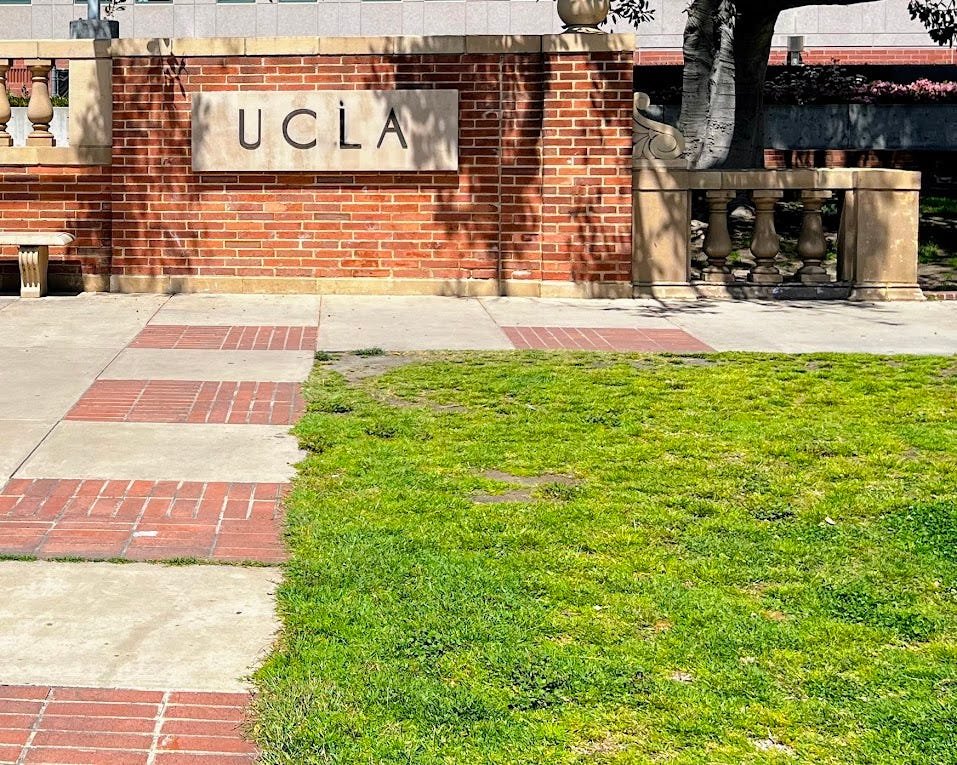
The United States Department of Justice filed a federal civil rights lawsuit against the Regents of the University of California on May 26, 2026. The complaint alleges that the University of California, Los Angeles (UCLA) violated Title VI of the Civil Rights Act of 1964 by showing deliberate indifference to severe and pervasive antisemitic harassment and discrimination on its campus. Federal prosecutors state that UCLA administrators allowed an illegal encampment to block Jewish and Israeli students from accessing classes and campus facilities. The lawsuit seeks to compel Title VI compliance, enforce strict disciplinary reforms, and recover federal taxpayer subsidies from the institution.
Case Information
-
Case Caption: United States of America v. Regents of the University of California
-
Court: United States District Court for the Central District of California, Western Division
-
Case Number: 2:26-cv-05589
-
Filing Date: May 26, 2026
-
Original Complaint: United States v. Regents of the University of California (link)
The Department of Justice lawsuit establishes that higher education institutions receiving federal funds must actively protect students from discriminatory hostile environments. Yes, the federal complaint clarifies that university administrators face severe legal and financial penalties under Title VI if they utilize passive de-escalation strategies instead of stopping physical exclusion and harassment. This litigation follows a series of campus disruptions where Jewish students were blocked from university infrastructure based on their ancestry and national origin.
This story is critical right now because it represents an escalation in federal civil rights enforcement against major universities over campus safety and discrimination. The lawsuit follows internal university task force findings, congressional testimony, and a permanent injunction issued in a related private student lawsuit. The narrative below details the specific factual timeline, the university processing of discrimination complaints, the documented faculty involvement, and the contractual remedies sought by the federal government.
What Are the Factual Allegations Against UCLA?
The federal complaint outlines a timeline of systemic discrimination and physical violence beginning after the October 7, 2023, terrorist attacks in Israel. On April 25, 2024, protesters established an unauthorized encampment that occupied Royce Quad, a central campus artery. The occupiers fortified the perimeter with plywood barriers and bicycle racks, creating a checkpoint system.
-
Protesters formed human phalanxes to block individuals perceived as Jewish or Israeli from entering academic buildings, Royce Hall, and Powell Library.
-
Occupiers required passersby to wear specific wristbands, which were denied to students who supported the existence of the state of Israel.
-
Multiple physical assaults occurred, including protesters kicking a Jewish student until she was unconscious, pepper-spraying a woman wearing a Star of David, and striking counter-protesters.
-
Campus property was defaced with antisemitic graffiti, including phrases such as “F___ ALL Jews” and a swastika carved into a tree.
UCLA administrators left campus sprinklers off to accommodate the encampment and issued a public advisory telling other students to simply avoid the area. Law enforcement did not clear the encampment until May 2, 2024, after a massive outbreak of night-time violence between occupiers and outside counter-protesters.
How Did UCLA Respond to Discrimination Complaints?
The Department of Justice alleges that UCLA possessed actual knowledge of the hostile environment but failed to enforce its own policies. The university Office of Equity, Diversity & Inclusion (EDI office) received over one hundred formal and informal complaints regarding antisemitism and anti-Israeli hostility.
-
A student reported being barred from Royce Quad on April 30, 2024, because she was Jewish.
-
A parent complained that her child could not access classes or the library because protesters refused him a wristband due to his faith.
-
A student reported being chased by an individual shouting antisemitic slurs on May 2, 2024, but campus security brushed off the concerns.
A survey conducted by UCLA’s own Task Force to Combat Antisemitism and Anti-Israeli Bias revealed that 67.1% of Jewish respondents viewed antisemitism as a problem on campus. The data showed that 59.6% of these respondents spent less time on campus, and 41.4% considered leaving the university entirely. The Department of Justice concluded that UCLA’s routine failure to investigate these complaints chilled the filing of meritorious grievances.
What Is the Alleged Role of University Faculty and Staff?
The complaint alleges that anti-Israel bias is systemically present within UCLA’s academic departments and diversity bureaucracy, directly influencing the university non-response. Several faculty members entered the encampment, participating in and abetting the denial of campus access to Jewish students.
-
Multiple academic units, including the Center for the Study of Women and the Department of Art, issued official statements praising the encampment and demanding full amnesty for arrested protesters.
-
The Department of Architecture and Urban Design faculty published a statement endorsing the checkpoint system where occupiers checked IDs to grant access to campus spaces.
-
Some faculty members canceled classes, altered assignments, or offered extra credit for student attendance at the encampment.
-
UCLA’s Undergraduate Students Association Council Cultural Affairs Commission maintained an explicit policy reserving the right to remove staff members who supported Zionism, utilizing an unauthorized “no hire list” against applicants.
The lawsuit highlights public social media statements from senior EDI officials. Former Vice Chancellor for Equity, Diversity, and Inclusion Anna Spain Bradley publicly characterized the illegal encampment as protected speech and a stand against oppression. Assistant Vice Chancellor for Civil Rights Chandra Bhatnagar, responsible for investigating antisemitism complaints, failed to act while his wife, a UCLA law professor, participated in the masked occupation and labeled it a “liberation zone.”
Why Is the Federal Government Suing for Breach of Contract?
The second count of the Department of Justice complaint introduces a distinct contractual claim separate from statutory Title VI violations. UCLA is a direct recipient of federal financial assistance, including more than $2.5 million in grants from the Department of Justice since October 7, 2023. To receive these taxpayer funds, the university signed legally binding assurance contracts certifying full compliance with Title VI and its implementing regulations.
The United States asserts that compliance with civil rights laws is a material term of these federal grants. By permitting a segregated campus environment where students were excluded from programs based on ancestry, UCLA materially breached its contractual obligations. The government is requesting the court to declare the university in breach, halt all future payments under existing grants, and order the restitution and clawback of all federal grant funds paid during the period of noncompliance.
What Legal Remedies Are Sought Next?
The lawsuit seeks extensive judicial intervention to restructure UCLA’s administrative and safety procedures. The Department of Justice filed this action after determining that university leadership will not enter into a voluntary compliance agreement.
The government asks the court to permanently enjoin UCLA from allowing the exclusion of Jewish students. The specific demands require the university to cooperate with external law enforcement during unlawful campus occupations, enforce its identity-concealing mask bans, and issue swift disciplinary suspensions to violating students and faculty. Crucially, the United States requests the appointment of an independent outside monitor to audit UCLA’s civil rights compliance and oversee the resolution of all future discrimination complaints. The University of California Regents must file a formal response to the federal complaint within the statutory deadline in the Central District of California.
Legal Commentary
This federal complaint exposes a severe administrative failure in higher education. When a university uses a “de-escalation strategy” as a shield to permit the physical segregation of its campus, it ceases to operate as a lawful public institution. Civil rights laws are not optional suggestions that administrators can balance against the vocal demands of a masked mob. The factual record demonstrates that UCLA senior leadership possessed clear notice that students were being assaulted and denied entry to libraries based entirely on their ethnic identity.
The legal defense previously raised by the university, claiming it bears no liability because third-party agitators engineered the exclusion, is entirely deficient. Under Title VI, a funding recipient is liable if its own deliberate indifference permits a hostile environment to persist within its programs. Turning off campus sprinklers to comfort occupiers while telling Jewish students to avoid central academic buildings is the textbook definition of deliberate indifference. It is an active accommodation of discrimination.
Furthermore, the integration of the diversity bureaucracy into the protest movement itself highlights a structural conflict of interest. When the very administrators appointed to investigate civil rights complaints are publicly applauding the individuals blocking campus gates, the internal compliance mechanism is broken. Students cannot find equity in an office led by officials who view an illegal, selective blockade as mere expression.
The contractual clawback remedy sought by the Department of Justice represents the most effective mechanism for institutional reform. For decades, universities have viewed civil rights assurances as routine paperwork necessary to secure federal funding. By suing for a total restitution of grant funds based on a material breach of compliance contracts, the federal government is shifting the financial incentives. Universities will only restore order and equal access when the failure to protect students results in the immediate forfeiture of federal taxpayer subsidies.
Citations & Sources
-
The Task Force to Combat Antisemitism and Anti-Israeli Bias at UCLA, Antisemitism and Anti-Israeli Bias at UCLA, 2024.
-
U.S. House of Representatives Committee on Education & the Workforce, Antisemitism on College Campuses Exposed, Republican Staff Report, October 31, 2024.
-
Frankel v. Regents of the University of California, 744 F. Supp. 3d 1015 (C.D. Cal. 2024).
Subscription Call
If you want to stay informed on breaking legal battles defending religious freedom and civil rights on American campuses, like, share, and subscribe to ReligiousLiberty.TV. Our subscribers receive exclusive, real-time access to breaking news alerts, deep-dive legal briefs, and primary court documentation directly affecting your liberties.
Disclaimers
This article was assisted by AI.
This does not constitute legal advice. Readers are encouraged to talk to licensed attorneys about their particular situations.
