Canada’s “Combatting Hate Act”: Legislative Expansion of Criminal Speech Laws
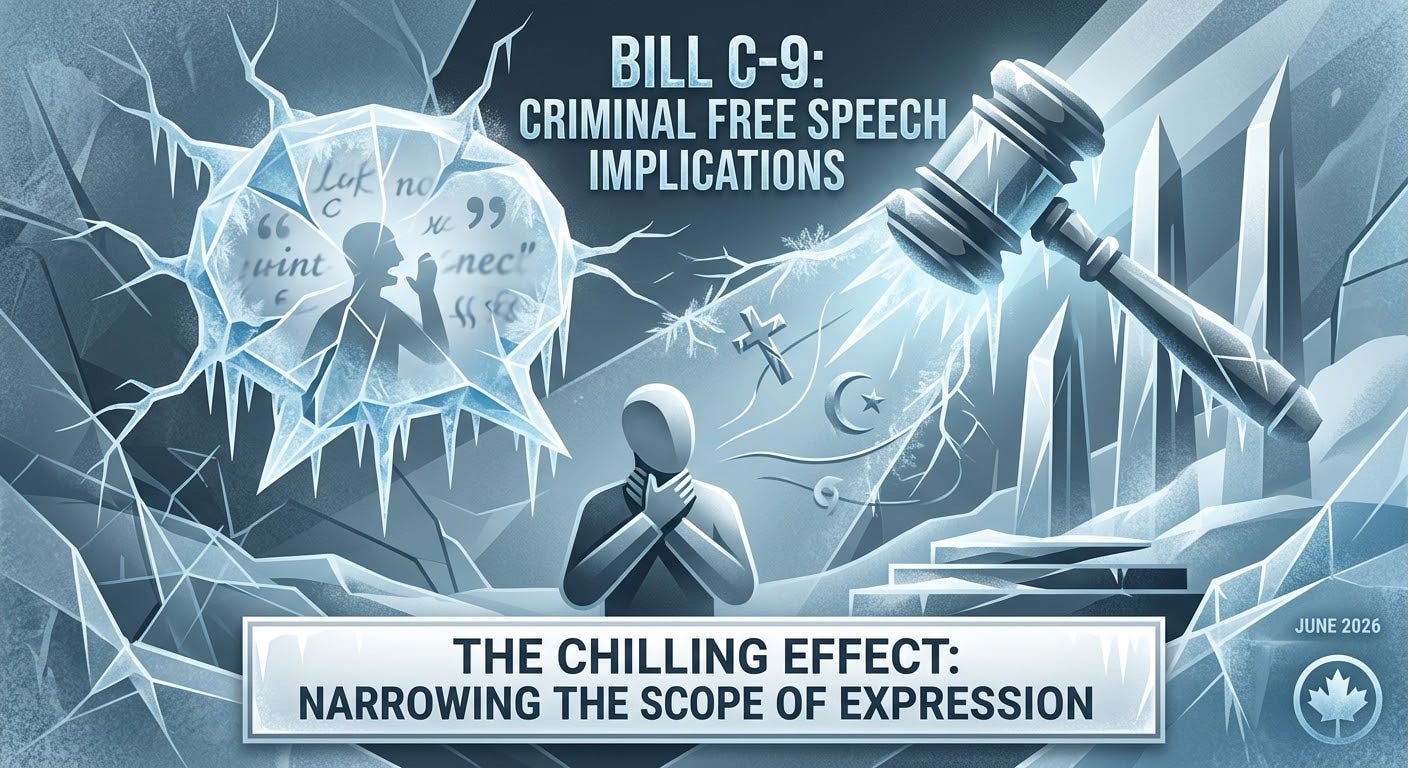
Bill C-9, the *Combatting Hate Act*, has cleared the Canadian Senate, instituting expansive new criminal penalties for hate-motivated activities. The legislation creates a specific criminal offense for intimidating or obstructing access to religious, cultural, and educational institutions. Critically, the final version of the bill removes established legal defenses for “good faith” religious expression, raising significant concerns regarding the potential prosecution of scriptural citation and traditional religious teaching. While the law mandates that hate speech must involve “extreme” vilification or detestation to warrant prosecution, the absence of explicit religious protections leaves the threshold for criminal liability subject to judicial interpretation. The bill now returns to the House of Commons for a final procedural vote to confirm Senate amendments before moving to the Governor General for Royal Assent.
Bill C-9, An Act to amend the Criminal Code (hate propaganda, hate crime and access to religious or cultural places)
Date: June 4, 2026 (Senate Passage)
Link: Parliament of Canada: Bill C-9 Status
The legislation mandates the criminalization of public displays of specific hate and terrorist symbols and establishes a new intimidation offense targeting individuals accessing designated facilities. It removes the long-standing “good faith” religious defense previously found within the *Criminal Code* regarding hate speech prosecutions.
This bill represents a move toward increased state oversight of public discourse. By lowering the barriers to prosecuting hate-motivated conduct and narrowing the scope of protected speech, the legislation signals a departure from historical legal standards that explicitly shielded religious expression from hate propaganda charges.
Impact on Religious Liberty
The removal of the religious expression defense creates legal uncertainty for faith communities. Where once individuals could cite scripture or religious texts as a “good faith” exercise of belief, they now face potential liability if such speech is characterized by the Crown as promoting “detestation” or “vilification.”
Legislative Timeline
* September 19, 2025: Government introduces Bill C-9 in the House of Commons.
* March 25, 2026: Bill passes the House of Commons.
* June 4, 2026: Bill passes the Senate with an amendment regarding hate symbols (the hangman’s noose).
* June 2026 (Upcoming): Final House of Commons vote to confirm Senate amendments and submission for Royal Assent.
Summary of Arguments
Proponents: Argue the law provides necessary protections for vulnerable communities facing rising intimidation and hate-motivated crimes, particularly around places of worship.
Opponents: Contend the law is overly broad, risks “thought policing,” and will result in a chilling effect on religious and political speech by removing necessary exemptions.
Legislative Reasoning
The legislative intent centers on defining “hatred” as an emotion stronger than disdain, specifically identifying “vilification and detestation.” The Senate’s reasoning for excluding broader religious protections was tied to concerns from the Department of Justice that “good faith” clauses could be weaponized to legitimize hate speech. By removing these clauses, the government asserts the law is more narrowly tailored to criminalize only the most extreme forms of expression.
Legal Observation
The passage of Bill C-9 reflects a modern legislative trend prioritizing the regulation of public expression over the preservation of broad, content-neutral free speech defenses. By codifying a more subjective definition of “hatred” and removing statutory defenses, the government has placed the burden of protecting dissent on the judiciary.
The long-term effect on civil liberties may include a narrowing of the public square. Without the “good faith” protection, the risk of litigation for controversial or traditional religious views significantly increases, likely leading to self-censorship among faith-based organizations and public speakers.
The strategy of the bill’s supporters relies on the expectation that provincial attorneys general will act as a “gatekeeper” by requiring their consent for hate speech prosecutions. However, this strategy relies on political discretion rather than statutory immunity, providing a fragile shield for fundamental rights.
For the reader, the practical implication is clear: the threshold for criminal risk regarding public statements has been lowered. Expression that was previously protected by religious exemptions may now be subject to police investigation and prosecutorial scrutiny.
What to Expect Next
The bill will return to the House of Commons for a final vote to approve the Senate’s amendment concerning hate symbols. Once passed, it will move to the Governor General for Royal Assent. The provisions will come into force 30 days following royal assent.
### Citations
* Senate Passes Anti-Hate Bill (iPolitics, June 5, 2026)
* Bill C-9 Has Passed: What You Need to Know (Canadian Constitution Foundation, June 5, 2026)
Join ReligiousLiberty.TV to receive breaking news, case summaries, and expert constitutional analysis. Subscribers gain direct access to legal updates as they happen.
AI Disclaimer: This article was assisted by AI.*
Legal Disclaimer: This does not constitute legal advice. Readers are encouraged to talk to licensed attorneys about their particular situations.*
#BillC9 #ReligiousFreedom #FreeSpeech #CanadaLaw #ConstitutionalRights