
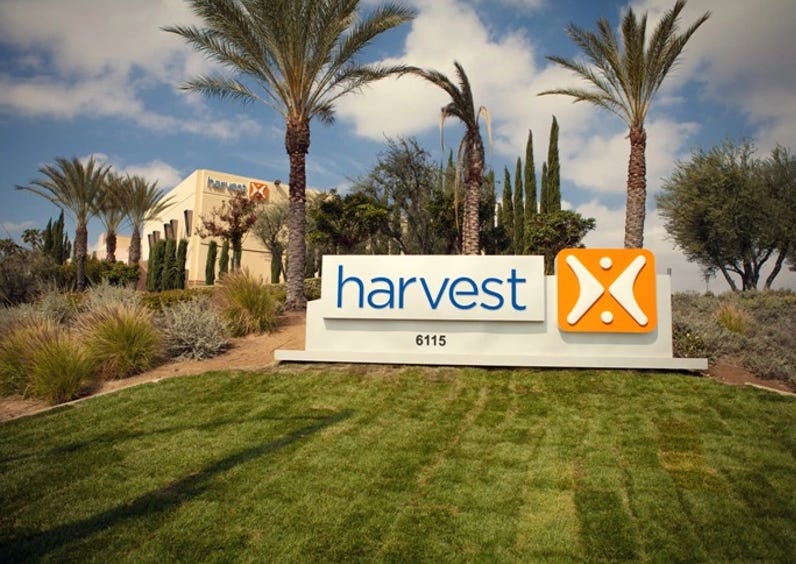
Four million dollars. That’s what it allegedly cost Harvest Christian Fellowship in Riverside, California to keep a departing pastor quiet about sexual misconduct with women on staff. Not to compensate victims. Not to fund counseling. Not to rebuild trust. To buy silence.
A 201-page federal court filing consolidating 23 lawsuits against senior pastor Greg Laurie and Harvest has blown the lid off what church leadership spent years methodically concealing. Website bios scrubbed. Teaching videos pulled. Facebook photos deleted, including candid baptism shots where the subject happened to be standing in the background. When staff asked questions, they were reportedly told they were gossiping. When two senior pastors disappeared without explanation in consecutive years, the congregation of 15,000 got nothing. No announcement. No accountability. No truth.
To be precise about what Laurie is and is not accused of: the lawsuits do not allege that he personally committed sexual misconduct. The allegations against him center on what he allegedly knew, when he knew it, and what the institution under his leadership chose to do with that knowledge. In the eyes of the law, and in the eyes of the people who trusted him, that distinction matters, but it does not absolve. A shepherd is responsible for what happens in the flock, and what allegedly happened here was that the flock was told to be quiet while the institution wrote checks.
The lawsuits also allege that children in church-funded overseas homes were subjected to horrific sexual abuse while leadership looked away for years. For the full investigative account, read The Roys Report. Harvest says it will fight every allegation.
On a personal note, I grew up near Harvest Church in Riverside. Going to the Harvest Crusade at Angel Stadium was, for many of us who came of age in the Inland Empire, not merely a religious event. It was a landmark experience. Tens of thousands of people filling a baseball stadium, the field lights blazing, an altar call that seemed to pull half the crowd out of their seats. I remember the scale of it, the sincerity of it, and the genuine sense that something important was happening. Greg Laurie and God built something real. The people who found faith in those seats were not deceived about the core of the message. That matters, and I will not pretend otherwise.
Which is exactly why reading these allegations hits differently than it might coming from someone with no personal connection to this ministry. This is not a distant institution being picked apart by critics who never believed. This is a place that meant something, to me and to hundreds of thousands of people across Southern California and beyond. The grief that comes with these allegations is proportional to the investment. And the obligation to speak plainly about them is proportional to the grief.
This Is Not a Harvest Problem. It’s a Church Problem.
Before the reader at First Baptist of Anywhere, USA nods along thinking this is someone else’s crisis, stop. This happens in megachurches. It happens in storefront congregations. It happens in the beloved little church on the corner with the potluck suppers and the faithful volunteer who has worked with the youth group for twenty years. Predators do not check the attendance figures before selecting a target. They look for trust, access, and an institution more afraid of scandal than committed to transparency. Those ingredients exist everywhere.
Greg Laurie has done genuine good. His crusades have filled stadiums. His ministry has reached people at the bottom of their lives and pointed them toward something worth living for. The misconduct alleged in these lawsuits was committed by his associates, men he trusted and elevated, not by Laurie himself. That distinction is real and it deserves to be stated clearly. What Laurie is alleged to have done is something different and, in some respects, something that carries its own distinct moral weight: he allegedly knew, and the institution he leads allegedly chose concealment over accountability. Luke 12:48 does not grade on a curve: “For everyone to whom much is given, from him much will be required.” The leader who builds the platform bears responsibility for what is done in its shadow.
The congregant who gave sacrificially, who believed in the mission, who told their neighbors that Harvest was where they found God, is now reading that their offering plate dollars may have paid for a $4 million silence agreement. That is not a public relations problem. That is a betrayal. And Matthew 18:6 makes clear what Jesus thought of those who betray the vulnerable: a millstone around the neck would be preferable.
An NDA Is Not Stewardship. It Is the Opposite.
Let us be precise about what a nondisclosure agreement in this context actually is. It is an institution spending donor money to prevent donor-supported ministry from facing accountability to the very donors who funded it. It is the legal architecture of concealment dressed in contract language. And in the cold light of a federal courthouse, it looks exactly like what it is: evidence of a consciousness of guilt and an institutional decision that reputation mattered more than the people the institution was built to serve.
When a church writes a check to silence a witness, it is not protecting the ministry. It is mortgaging it. Every dollar spent on an NDA is a dollar that did not go to a food bank, a missions trip, a counseling program, or a family in crisis. It is a dollar that went to a lawyer to draft language designed to ensure that the congregation, the very community whose tithes made that check possible, would never know what happened. That is not stewardship. It is the precise opposite of everything the church claims to stand for.
Good stewardship means spending congregational resources in ways that protect and strengthen the community of faith. Proverbs 11:3 saw the alternative coming centuries ago: “The integrity of the upright guides them, but the unfaithful are destroyed by their duplicity.”
Harvest Still Has a Future. But Not Without a Reckoning.
Here is something that needs to be said as clearly as the criticism: Harvest Christian Fellowship does not have to be defined by these allegations. The thousands of people whose faith was shaped within its walls, whose marriages were counseled, whose children were baptized, whose grief was met with genuine pastoral care, did not experience a fiction. The community that filled Angel Stadium year after year was not assembled under false pretenses. Real ministry happened. Real lives were changed. And the associates who are alleged to have committed misconduct were Greg Laurie’s colleagues, not Greg Laurie. The institution’s alleged failure was in how it responded to what they did.
But institutions, like individuals, do not heal by pretending the wound is not there. They heal by acknowledging it, by facing it without flinching, and by doing the hard work of making things right with those who were harmed. The path forward for Harvest is not a legal strategy designed to minimize liability. It is a posture of transparency and genuine accountability that demonstrates, in action rather than press releases, that the institution has reckoned with what happened and chosen a different way.
The model for this exists in Scripture and in history. When David confronted his own catastrophic moral failure in Psalm 51, he did not reach for silence. He reached for confession: “Create in me a clean heart, O God, and renew a right spirit within me.” The churches that have survived scandal and emerged stronger are the ones that chose that path. The ones that chose concealment discovered, sooner or later, that the cover-up outlasted the original offense as the primary source of damage.
Harvest has the community, the history, and the mission infrastructure to come through this. It has people in its pews who love it and want it to survive. What it cannot do is survive on the terms it has apparently been trying: silence the accusers, manage the narrative, and hope the lawsuits settle quietly enough that the congregation never fully understands what happened. That strategy is not working. The 201 pages filed in federal court are evidence enough of that.
The congregation deserves a full accounting. The survivors deserve acknowledgment and genuine restitution. And the institution deserves the chance to be what it has always claimed to be, a place where truth is spoken, grace is extended, and the vulnerable are protected. None of that is possible without first telling the truth.
What Every Church Board Needs to Do Right Now
Here is what good stewardship actually looks like. None of it requires a million-dollar legal settlement to learn.
Require LiveScan background checks. California’s LiveScan fingerprint system, administered through the Department of Justice, queries state and federal criminal databases and catches what name-based screening misses. The state already requires it for teachers and healthcare workers. Requiring it for church volunteers who work with children is not an accusation. It is due diligence. It is the minimum standard any reasonable institution should meet before placing an adult in a room with someone else’s child. If your church is not doing this, start this week.
Install security cameras. Cameras in children’s classrooms, nursery corridors, and youth spaces cost less than one hour of litigation. They deter misconduct. They document incidents. They protect innocent volunteers against false accusations and vulnerable children against the adults who have learned to exploit institutional trust. There is no theological argument against them that survives contact with a 23-count federal lawsuit.
Enforce a two-adult rule. No staff member or volunteer should ever be alone with a minor in a church context. This policy costs nothing to implement and eliminates the private access that predators require. It is not a statement of distrust toward volunteers. It is a statement of commitment to the children in their care.
Train your people. Organizations like Darkness to Light and MinistrySafe offer church-specific curricula that teach staff and volunteers to recognize grooming before it becomes a crime. An adult who always finds reasons to be alone with a child, who gives special gifts, who cultivates secrets, who reacts to oversight with irritation rather than cooperation, is displaying warning signs that trained eyes can catch. Untrained eyes cannot. The training takes hours. The consequences of skipping it can take decades to resolve.
Build a reporting channel that works. A confidential mechanism for raising concerns, one that does not route through the senior pastor when the concern involves senior leadership, is not an organizational luxury. It is the difference between an institution that can correct itself and one that cannot. One former Harvest volunteer described the culture these safeguards are designed to prevent: “When the staff found out, the volunteers found out, and the leaders came down and said, ‘Do not tell anyone.’ That was their mode of operation.” religionunplugged A reporting channel with real independence makes that mode of operation impossible to sustain.
Review your insurance coverage now, not after a claim. Carriers scrutinize pre-incident conduct with meticulous attention. A church that cannot demonstrate documented safeguards hands its insurer a roadmap for denial. Find out what your carrier requires, implement it, and document that you did.
Ezekiel 34:4 named this failure three thousand years ago: “You have not strengthened the weak or healed the sick or bound up the injured.” Jesus said in Luke 8:17 that nothing concealed will remain so. The survivors who spent years in silence grew up, found counsel, and filed 23 federal lawsuits. Numbers 32:23 is not poetry: “Be sure your sin will find you out.”
The Choice
I still remember those stadium lights at Angel Stadium, the crowd on its feet, the sense that something genuinely holy was in the air. I want Harvest to still be there for the next generation of people who will walk through its doors at the lowest point of their lives and need what it has to offer. That future is possible. The men who allegedly committed misconduct were Laurie’s associates, not Laurie. The institution that allegedly covered it up can still choose to become the institution that comes clean. Those are different things, and the difference matters.
The church that screens its volunteers, watches its hallways, trains its staff, builds reporting channels that work, and faces its own failures with the same honesty it preaches from the pulpit is not a weakened institution. It is a stronger one. It has decided that protecting the sheep is worth more than protecting the reputation of any shepherd. It has decided that the mission is more important than the myth.
Every church board in America faces the same decision. Spend a few thousand dollars on cameras, background checks, and training now. Or spend millions on attorneys, settlements, and silence payments later, only to discover that the silence was never actually purchased. It was only deferred.
Harvest can still be what it was built to be. So can yours. But not by pretending. Not by erasing. Not by writing checks to keep the truth from the people who deserve it most.
The courthouse is patient. The record is permanent. And God’s money was never meant to buy anyone’s silence.
Michael Peabody is an attorney and the founder and editor of ReligiousLiberty.TV, an independent publication covering First Amendment law and religious liberty.