
Finland just convicted a parliamentarian for a 20-year-old church pamphlet. In Canada, legislators want to take away the religious-opinion defense entirely. Americans should stop assuming the First Amendment makes them immune from this trend.
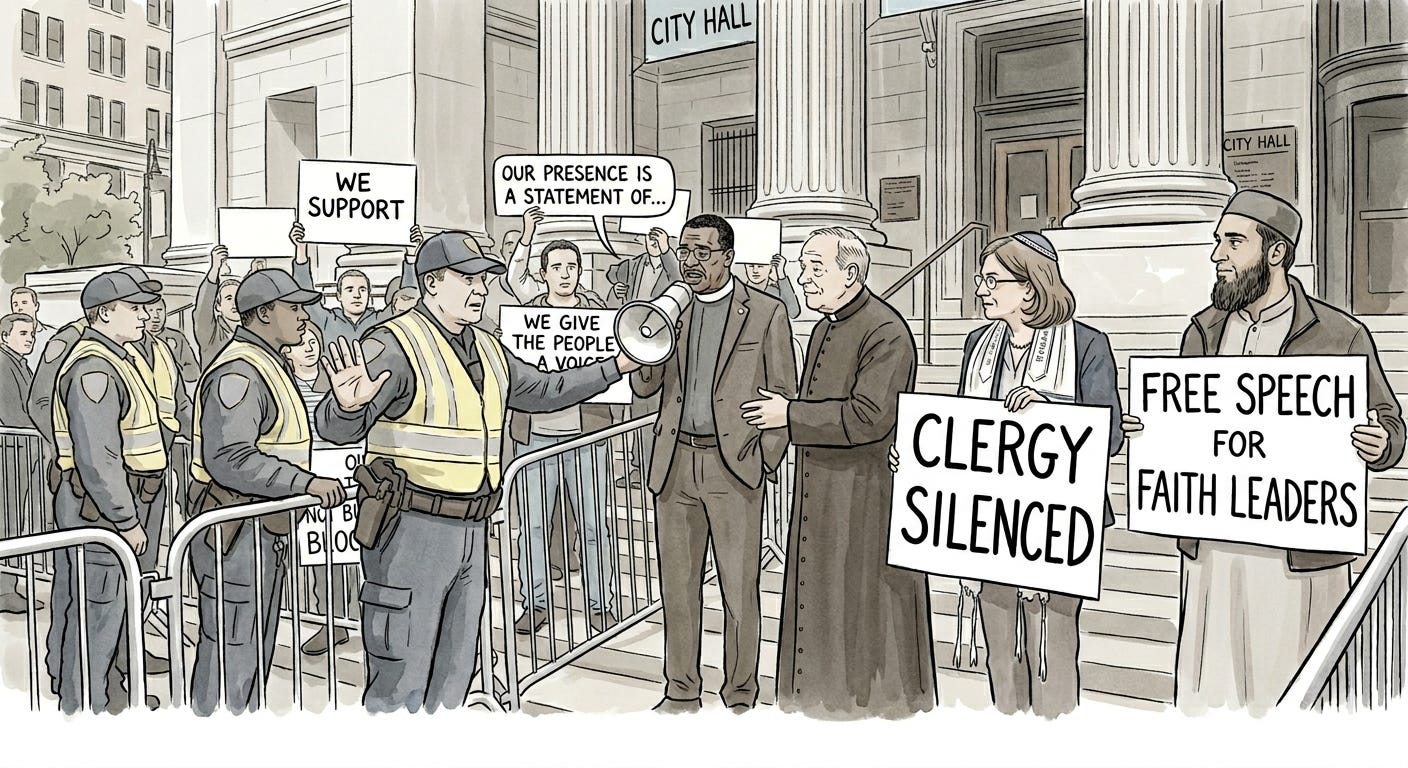
Three days ago, the Supreme Court of Finland handed down a ruling that should unsettle anyone who believes in the freedom of conscience. Paivi Rasanen, a sitting member of parliament, a medical doctor, and a grandmother of many years, was convicted of a hate crime for a church pamphlet she wrote more than two decades ago. The court split 3 to 2. The statement the Finnish state found criminal was not a call to violence, not an incitement to riot, not even a slur. It was a theological argument about human sexuality, drawn from Lutheran doctrine, published in a church context for a church audience. For that, she now faces criminal fines, and the court has ordered her words destroyed.
This is not a story about Finland. It is a story about where Western liberal democracies are heading, and it is moving faster than most Americans or Canadians have noticed.
Canada Is Not Waiting for a Court Case to Start
Canada has the architectural advantage of being able to build its censorship regime legislatively rather than through prosecution. The Trudeau government’s Bill C-63, the Online Harms Act, proposed restoring Section 13 of the Canadian Human Rights Act, which had previously been repealed precisely because it was weaponized against unpopular speech. Bill C-63 died when Trudeau prorogued Parliament in January 2025, but it did not die quietly. The Mark Carney government absorbed its most aggressive provisions into a successor bill, C-9, rebranded as the Combatting Hate Act.
What makes C-9 genuinely alarming is not only what it adds to Canadian law but what it proposes to remove. A companion private member’s bill, C-373, would strip from the Criminal Code the existing “good faith” defense for religious opinion. Right now, a Canadian who publicly expresses a view grounded in religious conviction has at least a statutory argument that the expression was a sincere exercise of faith. C-373 would eliminate that protection entirely.
The stated rationale is reasonable enough on its surface: religious texts should not function as a blanket shield for hatred. Nobody disagrees with that principle in the abstract. The problem is that “hatred” in the bills’ operative language is not defined by incitement to violence or even a demonstrable harm. It is defined by “detestation or vilification” as judged by a commission, a tribunal, or a prosecutor who holds views about which religious positions are acceptable. As Conservative MP Roman Baber, who is Jewish, argued before the House of Commons justice committee: the religious defense has never been used to acquit someone charged with actual incitement to hatred. It functions, instead, as protection for ordinary believers who quote Scripture.
The Carney government says the legislation targets rising antisemitism, Islamophobia, homophobia, and transphobia. Those are real problems. But the mechanism chosen does not distinguish between a hate crime and a homily. And in Canada, as in Finland, the enforcement apparatus does not wait for courts to draw that line. It outsources the drawing to whoever files the complaint first.
The First Amendment Is Strong. The Workarounds Are Stronger.
American readers will be tempted, at this point, to feel a comfortable immunity. The First Amendment, they will say, forecloses this kind of prosecution. They are right, for now, about the direct legislative route. The Supreme Court has said clearly and repeatedly that there is no hate speech exception to the First Amendment. In Matal v. Tam in 2017, Justice Alito wrote that speech demeaning on the basis of race, ethnicity, gender, or religion is hateful, but that the “proudest boast” of American free speech jurisprudence is precisely that it protects the thought that we hate.
What the First Amendment does not protect against is softer forms of institutional coercion. Universities have deployed Title VII hostile-environment doctrine to discipline faculty for expressing traditional religious views on sexuality. A state court in New Jersey found that religiously themed messages in a workplace newsletter constituted unlawful religious harassment. Federal contractors are subject to executive order frameworks that can condition employment on affirmations about gender ideology that conflict with the convictions of many religious employees.
The architecture is different from Finland’s. There is no prosecutor who can charge a pastor for a sermon. But there is a Human Resources office that can end a career. There is an accreditation body that can threaten a religious university’s standing. There is a bar association that can decline to certify a lawyer whose published writings reflect traditional religious views on marriage. The ceiling that the First Amendment provides is genuinely high. The floor, increasingly, is not.
There is also a bill worth watching: the Stop Hate Crimes Act of 2025, introduced in the current Congress. Its provisions focus on violent conduct, which is legally uncontroversial. But every expansion of the federal hate crimes framework creates a new jurisdictional hook, and jurisdictional hooks tend to accumulate. The religious-liberty bar has learned to watch not just the text of a bill but the enforcement discretion it creates.
The Prosecution’s Argument Is the Most Dangerous Part
In the Rasanen proceedings, the Finnish state prosecutor made an argument that deserves more attention than it has received. She did not claim that quoting the Bible was criminal. She claimed that Rasanen’s interpretation of the Bible was criminal. You can cite Scripture, the prosecutor said. It is your opinion about what the verses mean that crosses the line.
Think about what that argument authorizes. It authorizes the state to approve some theological readings and criminalize others. It places a government official, in a criminal proceeding, in the role of deciding which exegesis is acceptable. This is not a novel problem in legal theory; it is precisely what the religion clauses of the First Amendment were designed to prevent. The Founders, steeped in the history of Crown-sponsored theology and parliamentary religious tests, understood that the moment government begins distinguishing between acceptable and unacceptable interpretations of sacred texts, it has set itself up as a religious tribunal. The Finnish Supreme Court, in its 3-to-2 decision, became exactly that.
Canada’s proposed removal of the religious-opinion defense operates on the same logic. It does not prohibit religion. It simply reserves to the state the right to determine which religious expressions are genuine conviction and which are hatred dressed in theological clothing. That determination will be made by people who may not share the faith, may actively oppose it, and are subject to no standard of review that a believer could appeal to on their own terms.
What Churches and Believers Should Do Now
The path Rasanen is considering, an appeal to the European Court of Human Rights, is the right one for the Finnish context. A favorable ruling from the ECHR would establish binding precedent across all 46 Council of Europe member states and put a formal check on the creeping criminalization of theological expression. It should be supported broadly, across denominational and political lines, because the legal principle at stake belongs to no single tradition.
In Canada, the most immediate practical step is the defeat of C-373 and the preservation of the religious-opinion defense in the Criminal Code. That is a parliamentary fight, not a courtroom fight, and it requires coalition-building between faith communities that do not always agree with each other but share an interest in the state’s not appointing itself their theologian-in-chief.
In the United States, the work is harder to describe because the threat is harder to locate. It does not come in a single bill with a number and a sponsor. It comes through the slow normalization of the idea that certain religious positions are not merely wrong but socially inadmissible, that holding them disqualifies a person from professional life, and that the institutions of civil society may be used to enforce that inadmissibility even where the government cannot. That is a cultural project, and it requires a cultural response: religious communities that are articulate, legally literate, and willing to defend the rights of those they disagree with, because those rights will not defend themselves.
Rasanen said after the verdict that she is not only defending her own free speech but that of every person in Finland. She is right. And the geography of that fight is wider than Helsinki.
