By Michael Peabody
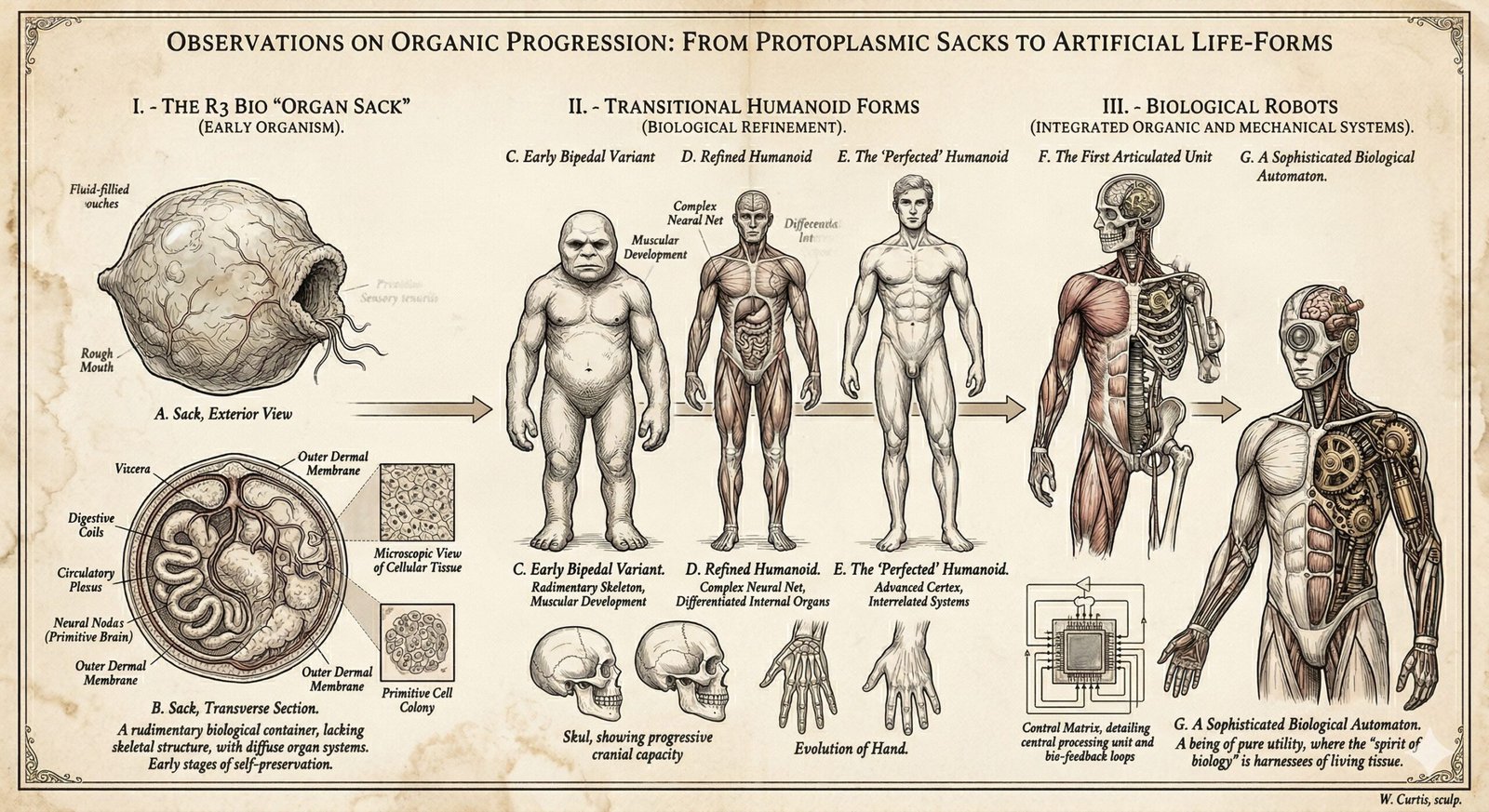
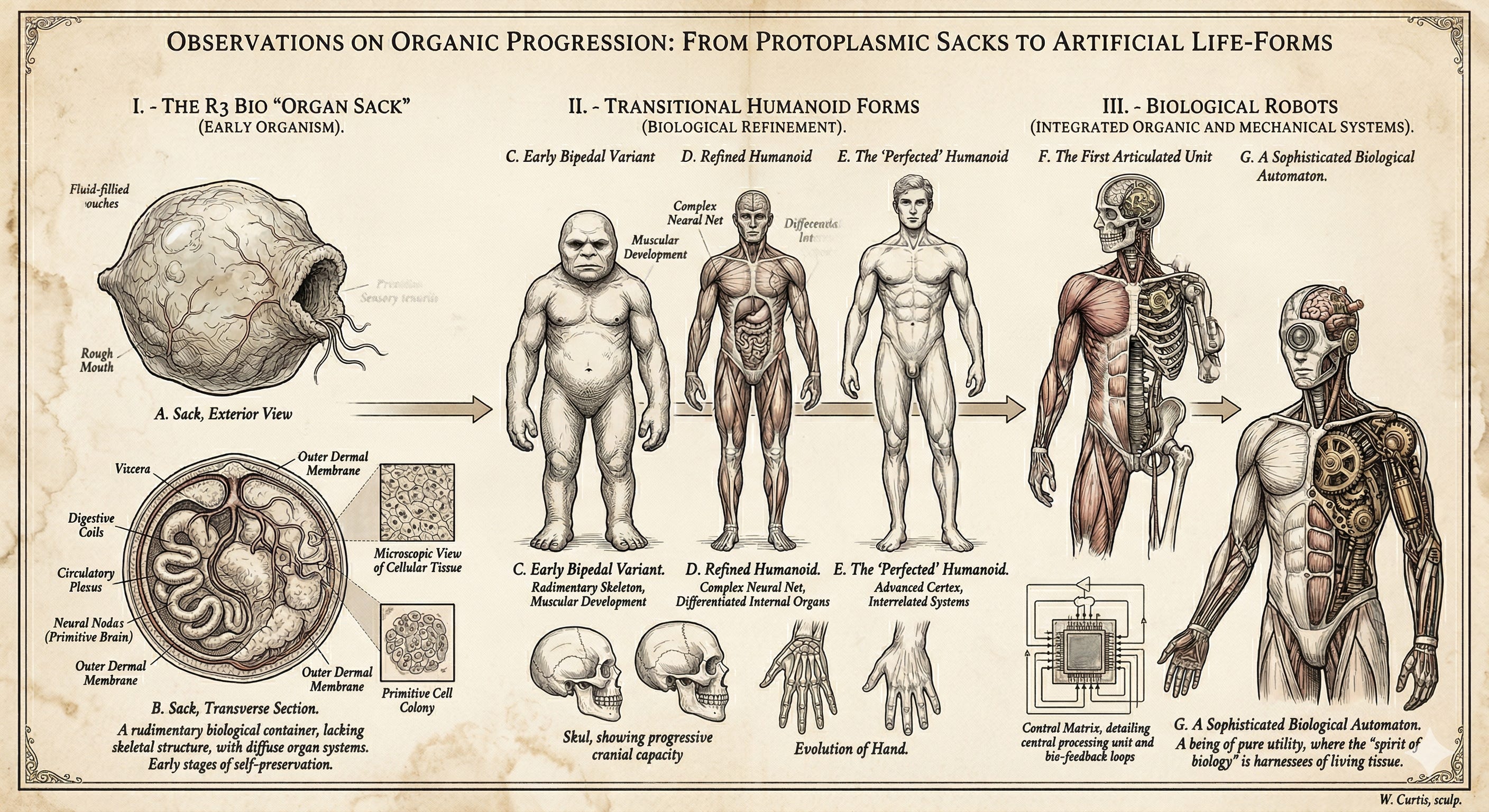
Three Stanford University researchers published a proposal in MIT Technology Review in March 2025 that deserves more scrutiny than the science press has given it. Using stem cells, artificial uterus technology, and genetic techniques to suppress brain development, Carsten T. Charlesworth, Henry T. Greely, and Hiromitsu Nakauchi proposed creating “bodyoids”: living human bodies, developed entirely outside a human body from stem cells, that lack sentience or the ability to feel pain. A Bay Area startup called R3 Bio, backed by billionaire investors, is already attempting to commercialize the concept. According to Wired, R3 Bio describes its near-term products as brainless “organ sacks,” with human versions as the long-term goal.
The pitch is seductive. More than 100,000 patients are currently waiting for a solid organ transplant in the United States alone. Animal testing is imprecise and morally contested. Drug trials fail at catastrophic rates. Against that backdrop, an unlimited supply of brainless, pain-free human bodies sounds, at minimum, worth discussing.
It is worth discussing. Just not on the timeline the investors prefer.
What You Are Actually Growing
The heart can beat without a brain. It has its own intrinsic electrical system, the sinoatrial node, that generates rhythm independently of any central nervous system signal. A beating heart cadaver, declared dead in all medical and legal definitions and connected to a ventilator, retains cardiopulmonary function, with the heart continuing to beat on its own even in the absence of brain activity, thanks to its pacemaker cells.
Breathing is a different matter. The dependence of the lungs on central nervous system stimuli for ventilatory drive is absolute. A bodyoid would not breathe on its own. It would require continuous mechanical ventilation to survive, exactly as a brain-dead patient on a ventilator does today. It would have a pulse. Its organs would circulate blood. It would be warm to the touch. From the outside, it would look like a human being in a hospital bed.
Brain death patients have characteristics of the living and the dead. That ambiguity is the source of decades of litigation, family grief, and contested medical ethics over what it means to be alive. A bodyoid lands squarely in that territory, except without the prior history of personhood a brain-dead patient carries into the ICU. Proponents are asking society to pre-emptively declare the question settled.
One peer-reviewed analysis estimated that maintaining a bodyoid to the point of organ maturity would require continuous physiological support akin to long-term intensive care, making an annual cost well in excess of $1 million plausible. (Springer)
The economics alone suggest this technology, if it ever works, will not remain a niche medical procedure. It will require scale. And scale requires a legal framework that treats the product as a product.
The Slippery Logic of Non-Personhood
Here is where the proposal’s internal logic becomes dangerous, not because the researchers are malicious, but because legal categories, once established, do not stay where they were placed.
If a beating-heart, ventilator-sustained human body can be manufactured and harvested as biological inventory, the same legal reasoning that licenses that use does not stop at organ procurement. A bodyoid capable of physical labor, connected to mechanical systems for locomotion, would be, by the law’s own prior definition, a non-person. It would feel no pain. It would have no cognizable interests. It would be, in the vocabulary the proponents themselves have constructed, ethically available. The science fiction scenario of biological robots pressed into service as human-shaped labor is not a fantasy inserted from outside this argument. It is the argument’s own next sentence, written in the same logic, waiting for the next funding round.
The AMC series, “The Walking Dead,” dramatized exactly this progression. Creator Robert Kirkman confirmed that the walkers are “mindless,” non-sentient former human beings with no consciousness and no capacity for suffering. The show then spent twelve seasons depicting what people do with such entities once the legal and social structure collapses: Michonne chained two walkers, her zombified former companions, and used them as living shields. The Governor’s Woodbury community used walkers as gladiatorial entertainment, their teeth removed to make them manageable. Negan’s Sanctuary lined its perimeter fence with impaled walkers as a security system. The show’s moral horror is not the walkers. It is what the living become once they stop asking whether instrumentalizing former human beings has a limit. The bodyoid proposal is that story told without the outbreak and with a Stanford affiliation instead of a screenplay.
The Question of “Personhood”
When philosophers talk about “personhood,” they are referring to something or someone having exceptionally high moral status, often described as having a right to life, an inherent dignity, or mattering for one’s own sake. The history of who gets excluded from that category, and why, should give anyone pause. The pattern is consistent: when a class of human beings becomes economically useful, the philosophical frameworks that exclude them from full moral consideration become more elaborate and better funded.
The Stanford authors themselves cannot close the gap they opened. Would bodyoids be considered human beings, entitled to the same respect? If so, why? Just because they look like us? Because they are alive and have our DNA? (MIT Technology Review) Those are not rhetorical questions waiting for obvious answers. They are the oldest and hardest questions in bioethics, still unresolved after 2,500 years of serious philosophical and legal argument.
Philosopher Francis Beckwith argues that what is crucial morally is the being of a person, not their functioning: a human person who lacks the ability to think rationally is still a human person because of their nature.
Under that account, a human biological entity engineered to suppress its own neural development is not a non-person. It is a person whose personhood was deliberately removed by design, which is a morally different thing entirely. Defining the limits of personhood is especially consequential because it shapes how we treat anencephalic infants, people with disabilities, individuals in a persistent vegetative state, and people with advanced dementia. (The Conversation) A legal framework built to license bodyoid manufacturing does not stay in the laboratory. It becomes precedent.
“Your scientists were so preoccupied with whether or not they could that they didn’t stop to think if they should.” Jurassic Park
Bioethical speculation creates space to consider which novel technologies should be developed in the first place. It does not follow that merely because something becomes technologically possible, it ought to be pursued. (Springer) The appropriate moment for that deliberation is before the manufacturing infrastructure exists, not after the first funding round closes.
Just because something can be done does not mean it should be done. (MIT Technology Review) The Stanford researchers wrote that themselves. The civilization-level question they left unanswered is the one that needs answering first.
The pattern is consistent: the optimistic use case gets the press release. The unintended application gets the history book.
Michael Peabody, Esq., is the founder and publisher of ReligiousLiberty.TV.
