Michael Peabody, Esq. / ReligiousLiberty.TV
ReligiousLiberty.TV launched on June 1, 2008. On June 1, 2026, it turns 18. Old enough to vote. Old enough to enlist. Old enough, at last, to say the thing out loud that I spent the better part of two decades being too polite to say.
The greatest threat to religious liberty in America over these 18 years was not Christian nationalism. I know that disappoints the conference circuit. There is a cottage industry of frightened essayists who can spot a theocracy forming in every prayer at a school board meeting. They sold a great many books. They were watching the wrong door.
The real blow landed in the spring of 2020, and here is the part that ought to keep us awake. The state did not have to break the church. The church volunteered.
Consider the arithmetic of that spring, because it is funny in the way a man stepping on a rake is funny right up until the handle hits him in the face. A citizen could walk into a windowless casino, breathe the recycled exhalations of four hundred strangers, pull a lever, lose his rent money and stagger back out into the night a free and unmolested American. But if that same man wanted to sit in a sanctuary and sing “It Is Well With My Soul” at a polite distance from his neighbor, he was a public health emergency. The slot machine was essential. The hymn was not. Somewhere a public health official wrote that down and did not laugh, which tells you everything about the seriousness with which the thing was conducted.
The governors put it in writing, which was generous of them, because it spared the rest of us the labor of imagining their contempt. Nevada capped Calvary Chapel Dayton Valley at fifty souls while the floor of Caesars hummed along at half capacity, and Justice Neil Gorsuch said the obvious thing, that the Constitution does not let a state rank a casino above a church. New York throttled the Roman Catholic Diocese of Brooklyn until the Supreme Court struck the order down in November 2020. California fought South Bay United Pentecostal Church for the better part of two years over the radical public menace of people singing indoors. By the spring of 2021, in Tandon v. Newsom, the Court had spelled it out in words a child could follow. The state may not treat the gathered church as more dangerous than the open store.
The courts fixed the law. Good. The law was the easy part.
I want to be honest about the air in the room that spring, because the people who fold under pressure are rarely cowards in the cartoon sense. It was a frightening time, and the fear was not invented. Pastors were threatened with citations, with fines, with arrest, and a handful of them were in fact arrested and booked and charged for the offense of holding church. A man could stand in his own pulpit and wonder, in a way no American pastor had wondered in living memory, whether the next knock on the door was the police coming for him. That is a real fear, and I will not mock it.
But here is what fear does, and it is worth saying clearly because nobody wants to. Fear is the oldest tool ever used to pry a freedom loose from the people who hold it. Tyrants know it, and bureaucrats relearn it every generation. You do not have to seize a liberty if you can frighten people into handing it over, and the handing over feels, in the instant, like prudence and even like virtue. Freedom is seldom taken in one violent grab. It is surrendered in small frightened installments by people who promise themselves they will collect it back once things calm down. They rarely do. A freedom given away under fear has to wait for the fear to leave before anyone goes looking for it, and the fear is patient, and it never entirely leaves.
I understand the fear. It is what we did with it that I cannot forgive, and that is the part that comes next.
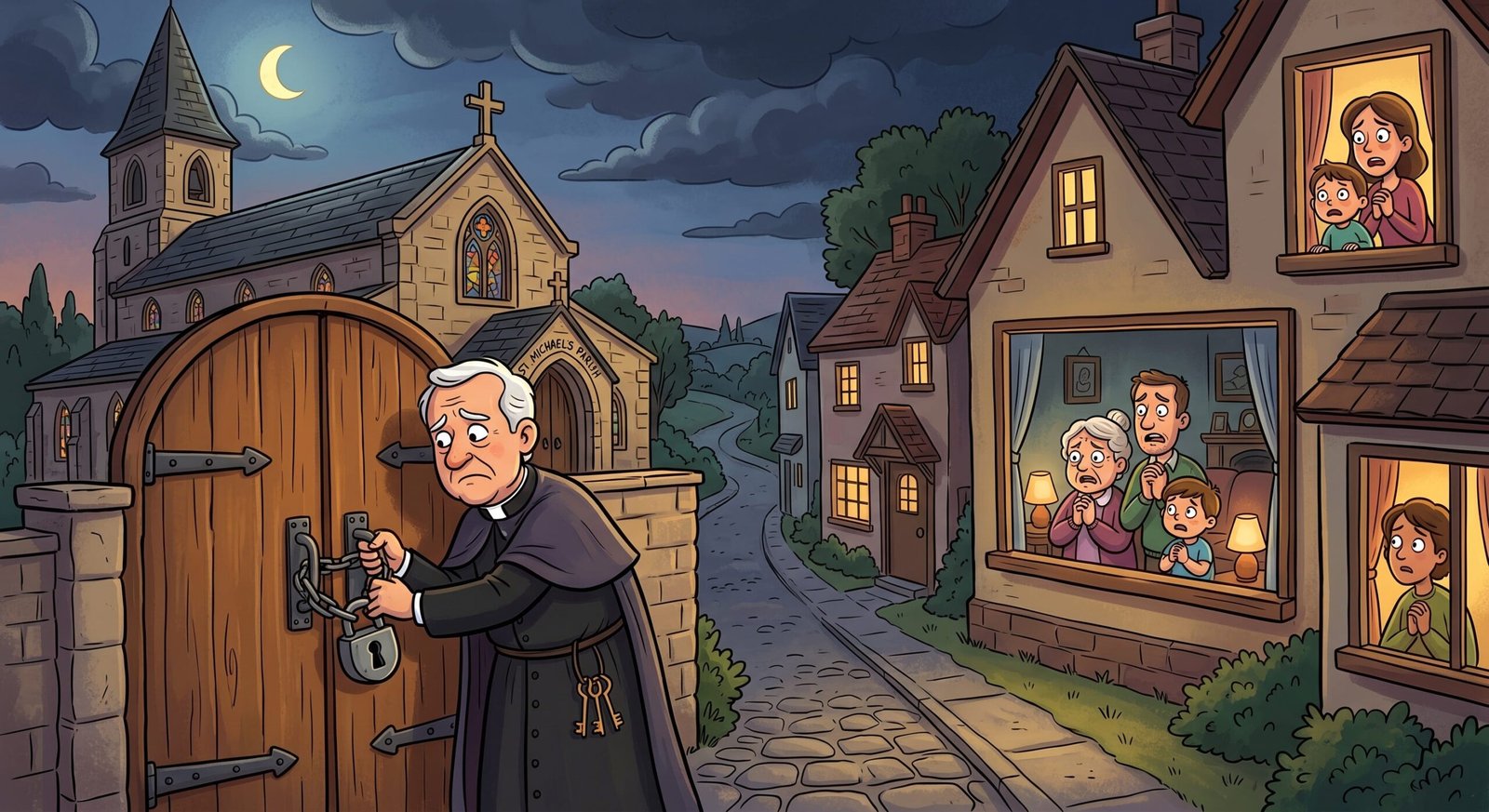
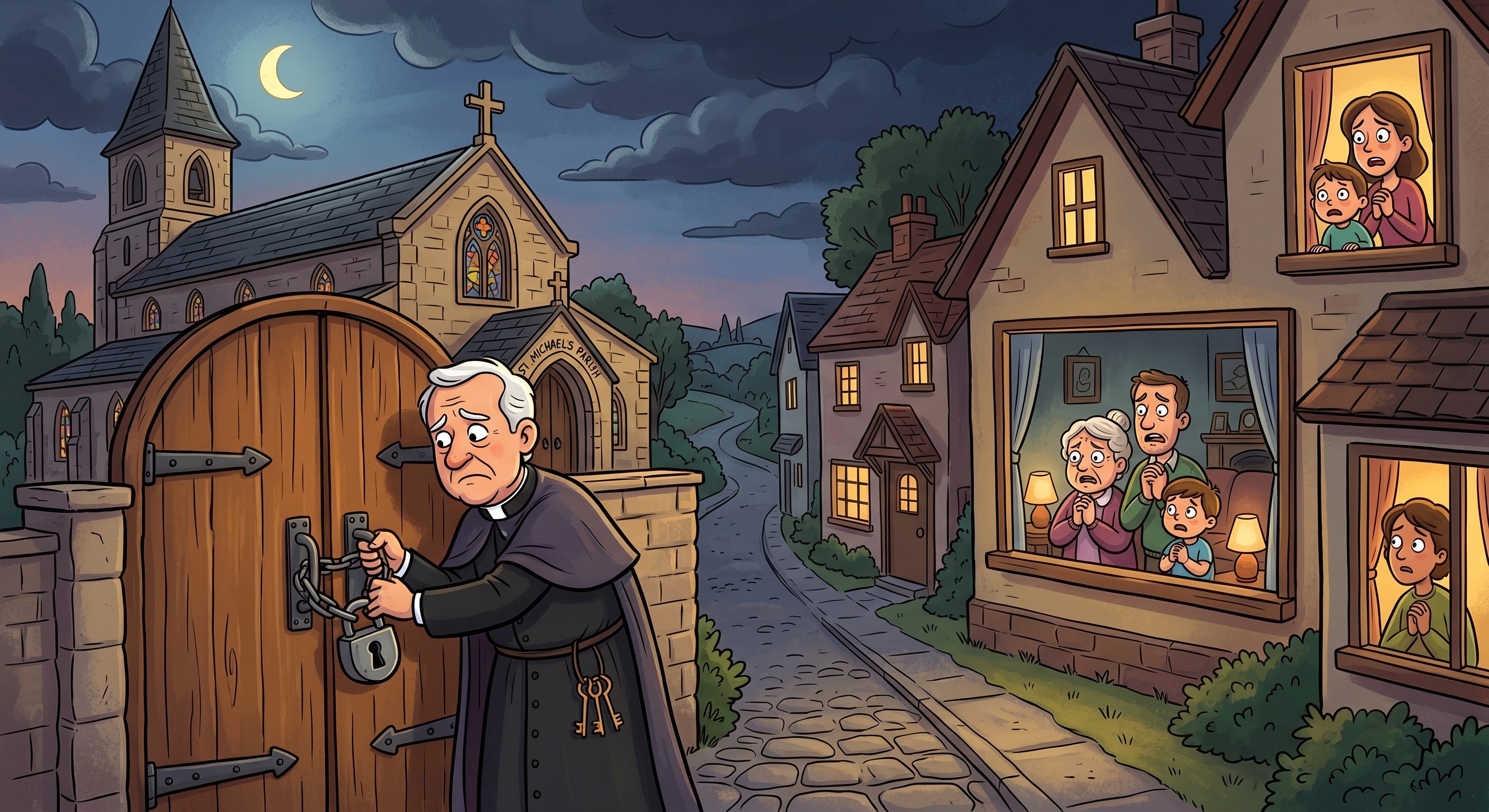
So here is the hard part, and I will say it without the padding, because the padding is how we arrived here. Thousands of churches looked at the locked door and decided they agreed with it. They went on camera and announced, with the serene confidence of people who had not lately read their own scriptures, that a livestream was just as good. That the body of Christ could be reassembled over fiber-optic cable. That two thousand years of saints who crawled into catacombs and met by candlelight and went to their deaths rather than skip the breaking of bread had simply lacked our superior streaming infrastructure.
This was not caution. Caution is a man in a mask cracking a window. This was a profession of faith, and the faith it professed was that the church is a content platform with a worship set bolted on the front. These congregations did not wait for a governor to declare the assembly nonessential. They preached it themselves, to their own people, from their own stages, and they called it love.
And the people believed them. That is the cruel part. Tell a congregation for two years that staying home is the same as showing up, that the screen is the sanctuary and the couch is the pew, and do not act surprised when a third of them never come back. We trained a generation to treat the gathering of the saints like a podcast they could finish later. A good number of them are still meaning to get to it.
We knew better than this. We have always known better. When plague tore through the Roman world in the third century, the pagans dragged their own dying into the streets and ran. The Christians stayed. They nursed the sick who were strangers to them, buried the dead who were no kin of theirs and caught the disease doing it, and the bishop of Alexandria wrote it all down in something close to astonishment. The church did not merely survive the plague. The church grew because of it, because when every other soul fled the room the Christians were the ones who walked in. That is who we were. That is who we are commanded to be. And in 2020 we discovered, to our great relief, that the whole business could be done from the sofa.
Let me be plain about what this essay is and what it is not. A sanctuary is not a charmed circle that turns away a virus, and a pastor owes his flock ordinary sense. Take precautions. Open the windows. Space the people out. Cancel a service in the worst week if you truly must, the way you cancel for a blizzard, and tell the people the honest reason why. That is prudence, and prudence is Christian to the bone. The careful, distanced gatherings of that season did not become the plague pits the orders assumed they would be. The genuine recklessness of those years came from a different and far smaller crowd, the one that found a religious reason to take no precaution at all, that waved off a mask as the mark of the beast and treated a virus as a quiz on the strength of one’s faith. They were wrong. They were a real danger. They are not who I am writing about. I am writing about the others. The ones who asked only to gather, carefully and six feet apart, at the very hour their people needed it most, and who were told that to do so was a crime.
My own congregation never fully shut its doors, and I will not pretend that was some great act of courage on our part. We rent our space, and the church we rent from held the key. There is a small sermon buried in that fact alone. Some congregations were locked out by a landlord and had no say in the matter. Others held their own keys, in their own hands, and turned them in the lock themselves, and announced that the turning was a form of love. In our church, you could meet online, or attend outdoors, and there was nobody stopping you from going inside.
The word is ekklesia. The called-out ones, gathered. The letter to the Hebrews tells us flatly not to forsake the assembling of ourselves together, and the writer attached no footnote excusing years that end in a respiratory pandemic. Pull the gathering out of the church and you are not left with a leaner, nimbler church. You are left with a religious television program and a donate button. Remember how the whole thing began. The first followers of the risen Christ were huddled behind a locked door for fear, and the hinge of the entire faith is that he came and stood among them and would not let them stay hidden. Two thousand years later the church bolted the door from the inside and mistook it for faithfulness.
It is coming back. Perhaps a new virus, perhaps a security panic, perhaps some hazard no one has yet named. It will not announce itself as a test of faith. It will arrive as fear, swaddled in the softest and most caring language the bureaucracy can produce, because fear wrapped in compassion is the only lever that has ever truly worked on Christians. And the congregations that already handed over the key in 2020, the ones that already taught their people the gathering was negotiable, will have nothing left in the hand to refuse with. You cannot defend a wall you already sold for scrap.
Eighteen years into this work, I have made my peace with a thing I resisted for a long time. The cases are important but they were never the point. A court can repair a statute by Friday afternoon. A freedom surrendered out of fear takes far longer to win back, because you have to outlast the fear before you even begin to look, and the fear is in no hurry. Some of what we gave away in 2020 will be a generation returning. Some of it will not return at all. So I am not losing sleep over whether the state will frighten us again. It will. The only question worth asking on an anniversary like this is the one we answered so badly the last time. When the order comes to lock the doors, will we pass the test?
ReligiousLiberty.TV turns 18 on June 1, 2026. The whole project rests on one stubborn conviction, that someone who refuses to look away can do what large institutions have declined to do and discuss the issues honestly, openly, and credibly. The law and the headlines were always the vehicle. The gospel was always the cargo. If you want this work to keep going, please like, share, and subscribe for free. You may also want to consider becoming a paid subscriber.
