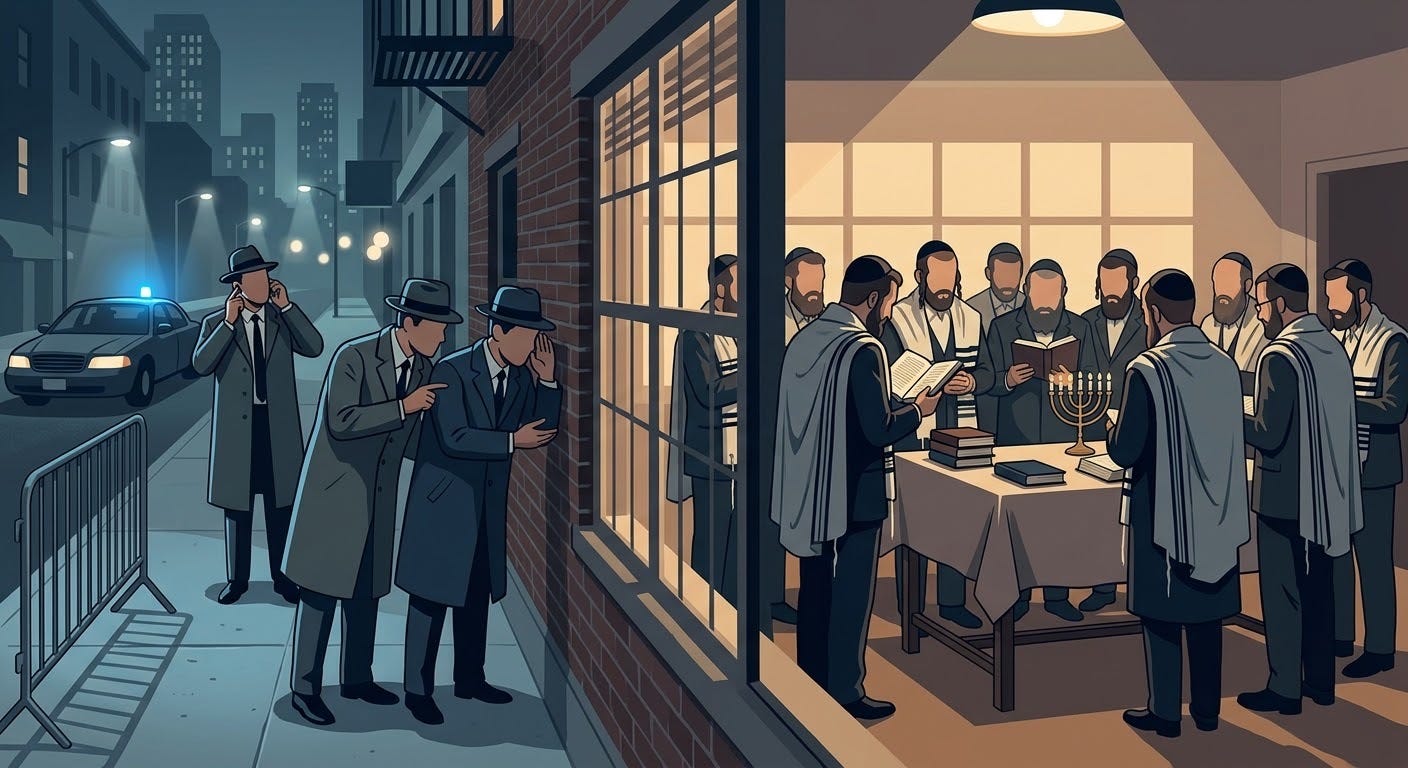
A dozen men gathered to pray in a private home in University Heights, Ohio. The city responded with a cease-and-desist letter.
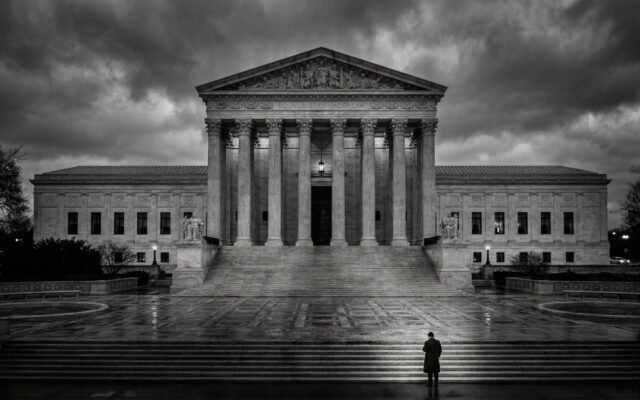
That sequence, simple on its face, now sits before the Supreme Court. The justices are expected to decide by the end of June whether to hear Grand v. City of University Heights. The petition asks a question that reaches well past one Cleveland suburb. Before a citizen may ask a federal court to protect his worship, must he first submit that worship to a municipal permitting board and lose?
Daniel Grand is an Orthodox Jew. His faith requires daily prayer with a minyan, a quorum of ten adult men. In January 2021 he invited about a dozen friends to pray at his home. Observant Jews cannot drive or use electronics on the Sabbath, so the usual municipal worries about traffic and noise had no purchase here. The men would arrive on foot and leave on foot.
A neighbor complained anyway. The city’s law director sent Grand a cease-and-desist letter and told him his home counted as a “place of religious assembly” under the zoning code. To continue, the city said, he would need a special use permit of the kind issued to a church or synagogue. That permit carried requirements built for an institution: acreage, parking and conditions no ordinary house could meet. A former mayor went further and encouraged neighbors to watch the home and report any sign of Jewish worship.
Grand applied for the permit, then withdrew the application. He had no wish to operate a house of worship as the ordinance defined one. He wanted to pray in his living room with nine other men. He sued in 2022 under the First Amendment, RLUIPA and the Ohio Constitution.
He never reached the merits. The district court dismissed his religious liberty claims as unripe, and in November 2025 the Sixth Circuit agreed. The reasoning is where the case earns Supreme Court attention. The lower courts held that Grand sued too early because he withdrew his permit application before the zoning board issued a final decision. No final denial, no ripe claim, no federal courthouse door.
The courts drew that finality rule from Williamson County Regional Planning Commission v. Hamilton Bank, a 1985 takings decision. Williamson County told property owners seeking compensation for a regulatory taking that they had to obtain a final local decision before heading to federal court. The Sixth Circuit took that requirement, designed for disputes over money and land value, and applied it to a claim about the free exercise of religion.
The transplant should trouble anyone who has followed this doctrine. In 2019 the Supreme Court took a blade to Williamson County itself. Knick v. Township of Scott overruled the part of the decision that forced takings plaintiffs into state court before federal court, calling it a catch-22 that left a constitutional right with no federal forum. The Court has already signaled that Williamson County asks too much of citizens trying to vindicate their rights. The Sixth Circuit extended its remaining machinery to a domain it was never built for.
The Department of Justice saw the problem and filed a brief supporting Grand at the appellate stage, arguing that the lower court erred by categorically applying a finality requirement to dismiss his RLUIPA claims. The federal courts are divided on whether and how that finality rule reaches religious exercise and land use claims. A split among the circuits on a recurring constitutional question is the classic reason the Supreme Court grants review. Ten friend-of-the-court briefs now urge the justices to take the case, from the Manhattan Institute to a coalition of Orthodox Jewish organizations.
The ripeness holding inverts how the First Amendment usually works. A citizen ordinarily may challenge a law in federal court the moment the government issues a credible threat to enforce it. Susan B. Anthony List v. Driehaus confirmed as much in 2014. Grand received a cease-and-desist letter, a warning that his prayer violated the code and a former mayor recruiting his neighbors as informants. If that record fails to show a live dispute, the phrase credible threat has lost its meaning. The Sixth Circuit’s rule rewards the government for menacing a citizen without ever issuing a formal denial, since the denial is the only thing that unlocks the courthouse.
The underlying merits are stronger still. RLUIPA forbids a government from treating a religious assembly on worse terms than a comparable secular one. The Supreme Court reinforced that principle for the Free Exercise Clause in Tandon v. Newsom, a 2021 decision that arose, fittingly, from in-home religious gatherings. Had Grand invited the same dozen men for a poker night or a birthday party, no permit officer would have appeared at his door. The code reserved its burden for prayer. That is the discrimination RLUIPA was written to stop.
The city’s current administration disputes the framing. It says it took no enforcement action against Grand and notes that homes in University Heights host worship today. The present mayor is herself Orthodox Jewish. Grand’s lawyers call the softened posture an about-face that arrived only after litigation began. The factual quarrel matters less than the legal one. A city should not be able to threaten a resident, drive him from his own prayer through a permitting maze, then claim the absence of a final order as a shield.
A grant would settle a question that follows every faith practiced in homes. Bible studies, prayer groups, Quran circles and house churches all depend on the freedom to gather without a government clerk’s blessing. The Sixth Circuit’s logic hands local officials a template. Threaten, delay, withhold the final decision and keep the dispute out of federal court indefinitely. The Supreme Court built Knick to close one half of that trap. Grand offers the chance to close the other.
The right at stake is older than the zoning code that threatened it. Government exists to guard conscience. The moment a city begins to license conscience, it has crossed the line that protects church and state alike. The power to certify a living room as a house of worship is the power to forbid the worship inside it. A free people watches that boundary because crossing it injures both sides of it. The Supreme Court should hear Grand v. City of University Heights and remind every city hall that the door to a federal court opens before a citizen is forced to beg a permit board for the right to pray.
Case Link: https://www.supremecourt.gov/search.aspx?filename=/docket/docketfiles/html/public/25-965.html