By Michael Peabody, Esq.
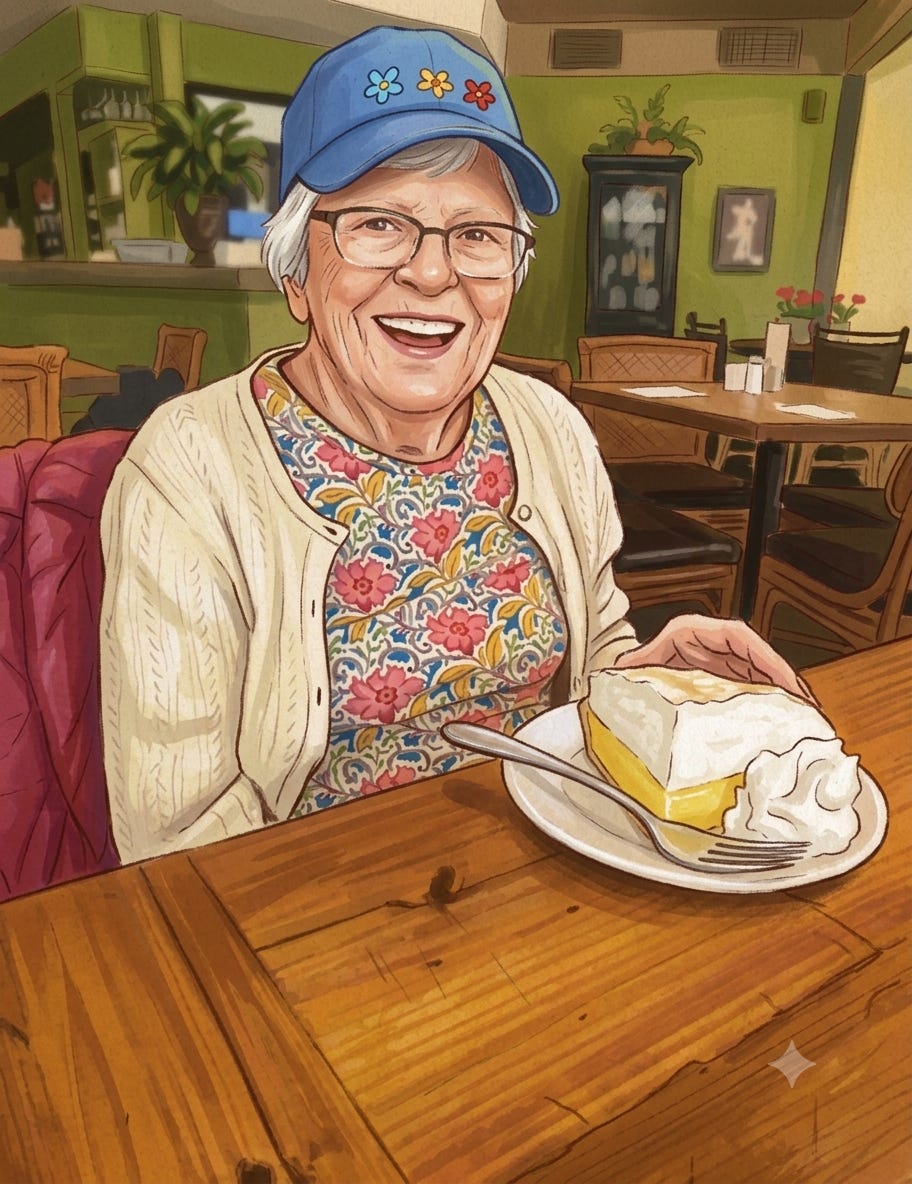
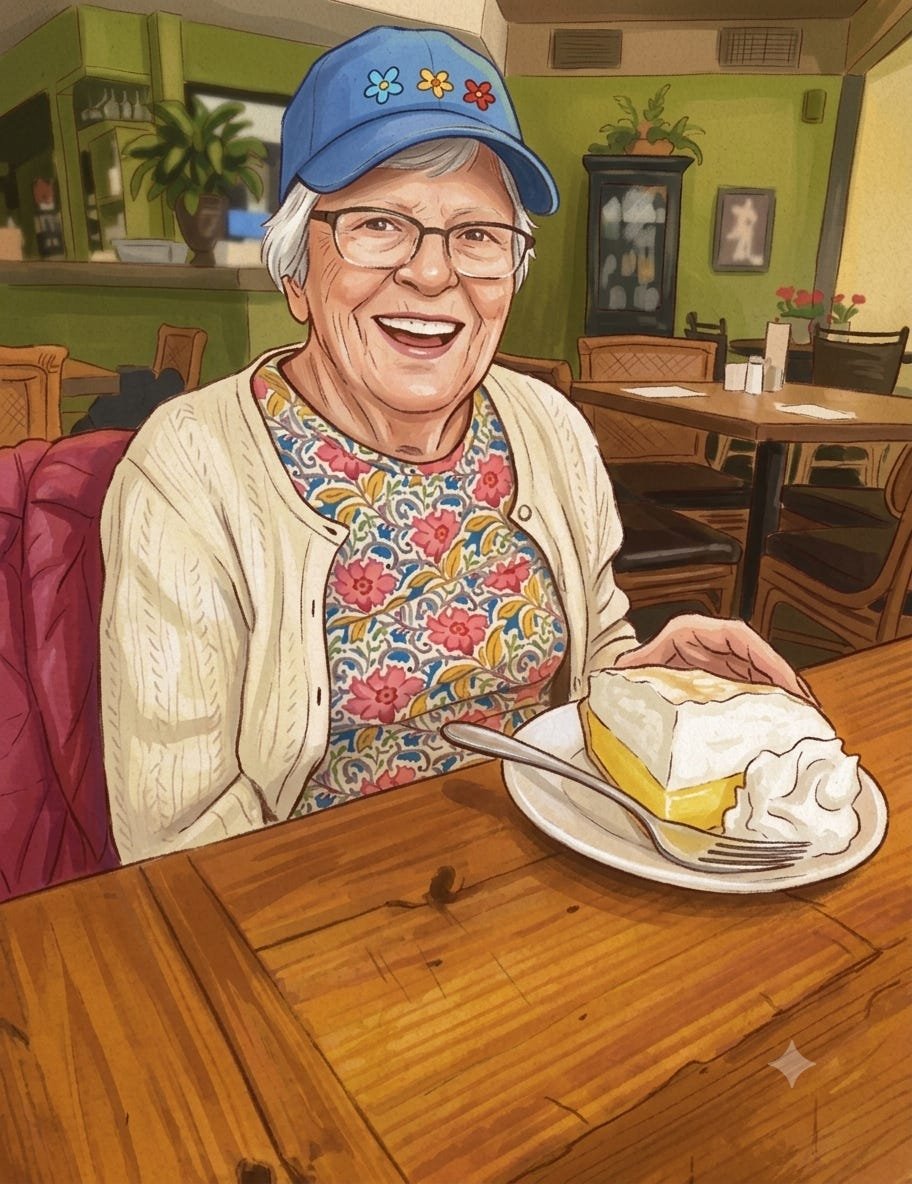
Betsy Phillips derived from photo at Village News on the occasion of her 108th birthday.
There is a gentle, roll-away quality to the hills of Fallbrook, California. It is a place where the air smells of turned earth and avocado groves, and where people go to find a quiet corner of the world to grow old. But if you happened to drop by the Fallbrook Seventh-day Adventist Church on any given Saturday over the last few decades, you would have found someone who didn’t look at old age as a retreat, but rather as an unfinished piece of business.
Her name was Betsy Phillips.
Now, for a long time, Betsy flatly refused to tell anyone her age. She figured that the minute you put a number on your life, people start expecting you to act like it. But truth has a way of catching up with us all. On May 13, 2026, she reached her 109th birthday. Just three days later, on May 16, 2026, Betsy quietly slipped away, leaving behind a century’s worth of footprints and a legacy that will outlast the California hills.
To understand Betsy, you have to go back to the beginning, before the world went to war for the first time. She was born Betsy Everett in Kansas City, Missouri, on May 13, 1917. The world was fracturing; Uncle Sam had entered World War I just one month earlier, in April 1917. Tragedy brushed against her cradle early. When she was just a seven-month-old baby, her mother died of a ruptured appendix mistaken for indigestion. Her father, a British-born civil engineer who built the bridges that tied mid-century America together, found himself alone with a baby and a five-year-old boy.
So, little Betsy was sent down to the Ozark country of Fayetteville, Arkansas, to be raised by her grandparents and her maiden aunt, Belle. Aunt Belle was a woman of deep, unshakeable faith, and it was on that twenty-acre Arkansas farm, chasing a collie named Peggy and watching the horse-and-buggy give way to the Model T Ford, that Betsy learned how to pray.
When she was fourteen, she watched a handsome young student instructor working his way through the chemistry lab at Southwestern Junior College in Keene, Texas. His name was John Phillips. He was a man, she used to say, and she was just a kid. But she was smitten. It took ten years, a teaching career that took her from Houston to Louisville, and a bit of divine intervention, but in 1941, they were married.
Six months later, Pearl Harbor changed everything. John went off to the Army, eventually rising to the rank of Captain in logistics, while Betsy followed him from base to base, working as a secretary for the Red Cross and the Eighth Army. After the war, they lived in a ruined Frankfurt, Germany, helping to rebuild a broken nation. It was there that their first son, John Jr., was born.
Back in the States, their family grew to include two more children, Dennis and Caroline. John’s career skyrocketed. He became the brilliant mind behind combining railroad cars with trucking—the very birthplace of modern intermodal shipping. He negotiated face-to-face with Teamster boss Jimmy Hoffa, a man who respected John’s absolute integrity so much that he asked John to sit with him while a jury deliberated his fate.
Through it all, Betsy was the anchor. She packed the boxes, moved the family across the country, and kept her eyes on the horizon. When John retired in 1978, they chose Fallbrook because it was green, beautiful, and far away from the Ohio snow. John passed away in 2000, but Betsy kept right on marching.
She became legendary for her fitness, doing stretching exercises an hour a day and leading the pack on neighborhood walks well into her hundreds. She was one of the top birdwatchers in the West, able to spot and name a bird in the blink of an eye. She was passionate about the environment and deeply engaged in politics, never shy about debating the issues of the day.
But there was another side to Betsy, a quiet, resolute stewardship. She served as the trustee of the Hedrick Family Trust, established by John’s cousins, John T. and Cecil Hedrick. The Hedricks had a fierce devotion to the grand American experiment of soul liberty—the idea that no government, no king, and no magistrate has the right to come between a human being and their Creator.
When the trust faced complex legal and tax battles in the federal courts during the early 1990s, Betsy stepped in as the administrator. She fought for the estate’s integrity all the way to the Ninth Circuit Court of Appeals and won, ensuring that the Hedricks’ final wishes were honored. Because of her faithful stewardship, that trust has funded Founders First Freedom, a nonsectarian organization dedicated to defending the fundamental right of religious liberty for all people.
On an evening back when she turned one hundred, Dan Houghton asked Betsy what advice she had for the rest of us traveling down the road behind her. She didn’t hesitate. She smiled that poised, charismatic smile of hers and said, “Keep your eyes on Jesus. You can’t go wrong with that one.”
Betsy Phillips lived 109 years and 3 days. She saw the world change in ways her grandparents could never have dreamed. But she never lost her footing, she never lost her faith, and she never stopped looking forward to the morning.
Michael Peabody serves as president of Founders’ First Freedom.
Much of the information in this story is from an interview that Dan Houghton conducted of Betsy Philips on the occasion of her 100th birthday and it is available on YouTube here. I would encourage you to watch it in its entirety: https://youtu.be/nBQb0bwskHc
