
TLDR (Too Long / Didn’t Read Summary)
Jeffrey Epstein discussed a plan that reporting described as “seeding the human race with his DNA” by impregnating women at his New Mexico ranch, including an account that he imagined at least 20 women at a time. Harvard later reported it received $9.1 million in gifts from Epstein between 1998 and 2008, including a $6.5 million gift in 2003 that established the Program for Evolutionary Dynamics, and that he visited the program’s offices more than 40 times from 2010 to 2018. MIT reported a review found 10 Epstein donations totaling $850,000 between 2002 and 2017 and examined multiple campus visits. Epstein’s reproductive pitch echoes a longer eugenics history: Kellogg’s 1914 Race Betterment Foundation promoting eugenics, the Eugenics Record Office at Cold Spring Harbor (1910 to 1939), Buck v. Bell (May 2, 1927), and Nazi forced sterilization under the July 14, 1933 law described by USHM
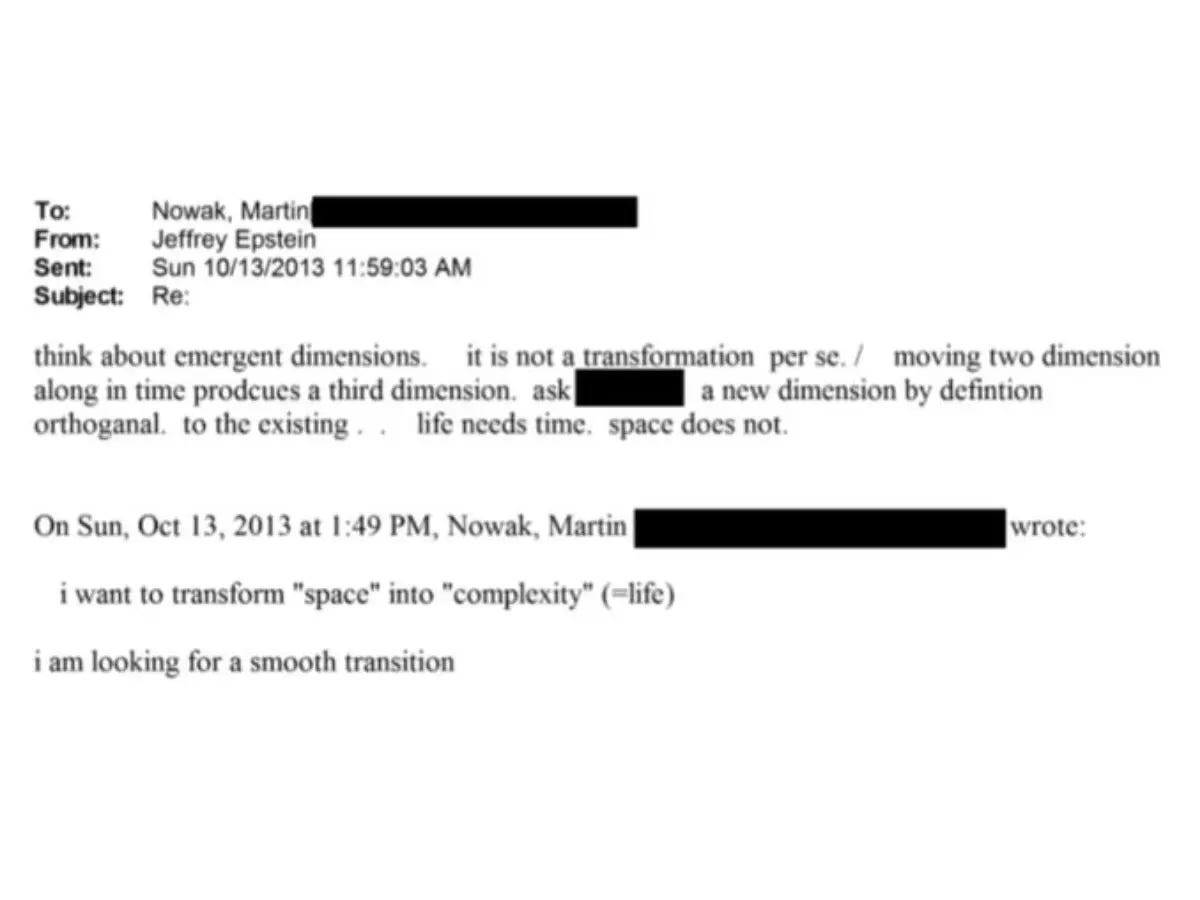
(A searchable version of the Epstein files is available at https://www.justice.gov/epstein)
Jeffrey Epstein did not only seek proximity to famous scientists. He talked about a reproductive plan that reporting described in plain terms: he wanted to “seed the human race with his DNA” by impregnating women at his New Mexico ranch, including an account that he imagined “at least 20” women at a time. (Gothamist)
That stated goal sits inside a modernized eugenics frame. The Guardian, summarizing The New York Times’s reporting, described Epstein as wanting an “improved super-race of humans” using genetic engineering and artificial intelligence. (The Guardian)
Harvard later documented how Epstein’s money connected him to a real institutional footprint. Harvard President Lawrence S. Bacow’s post on May 1, 2020 said Harvard received $9.1 million in gifts from Epstein between 1998 and 2008. It also said the largest gift was $6.5 million in 2003 that established Harvard’s Program for Evolutionary Dynamics. (Harvard University)
Harvard’s post also stated that reviewers “understand that Epstein visited” the Program for Evolutionary Dynamics offices “more than 40 times between 2010 and 2018,” and that the visits were mainly opportunities to speak with prominent faculty in the Cambridge area. (Harvard University)
MIT published a separate account of Epstein-linked donations and access. MIT News, summarizing a review by Goodwin Procter released Jan. 10, 2020, said MIT received 10 Epstein donations totaling $850,000 between 2002 and 2017, and that the review also examined multiple campus visits by Epstein. (MIT News)
Those institutional records do not say Epstein funded a formal eugenics lab. They do show that he used money and relationships to remain close to researchers and research culture in fields that touch heredity, selection, and human traits. (Harvard University)
A direct public acknowledgment from a leading geneticist shows how normal that access could look from inside academia. In an Aug. 5, 2019 STAT interview, Harvard geneticist George Church said, “I certainly apologize for my poor awareness and judgment.” (MIT News)
To understand why Epstein’s “baby ranch” talk landed with such alarm, it helps to place it on a longer timeline. In the early 1900s, U.S. eugenics blended elite philanthropy, pop messaging, and policy design. One peer-reviewed historical article in the American Journal of Public Health states that John Harvey Kellogg created the Race Betterment Foundation in 1914 “to publicize and promote eugenics,” and that profits from Kellogg’s company were initially fed into it. (PMC)
Another pillar was record-keeping and lobbying. The U.S. National Park Service notes that Cold Spring Harbor Laboratory hosted the Eugenics Record Office between 1910 and 1939 and that staff used flawed and racist claims to support policy goals including immigration restriction. (National Park Service) The Cold Spring Harbor Laboratory archives page also describes the Eugenics Record Office as an institutional collection and situates it in the laboratory’s history. (Cold Spring Harbor Laboratory)
American eugenics also moved through law. The U.S. Supreme Court decided Buck v. Bell on May 2, 1927, and the Justia page for the opinion includes Justice Oliver Wendell Holmes Jr.’s line: “Three generations of imbeciles are enough.” (Justia Law)
This American record mattered to Nazi policymakers because it offered precedents for state-run reproductive control. The U.S. Holocaust Memorial Museum’s Holocaust Encyclopedia explains that Nazi Germany embraced eugenics and used tools such as forced sterilization, including the July 14, 1933 “Law for the Prevention of Offspring with Hereditary Diseases,” which mandated forced sterilization for people identified with listed conditions. (Holocaust Encyclopedia)
USHMM also provides a document-focused window into transatlantic influence. Its Perspectives entry on a Laughlin letter explains that Laughlin’s work contributed to U.S. state sterilization laws and cites an estimate of more than 62,000 sterilizations performed in the United States by the 1960s. (Perspectives) USHMM’s older educational PDF on the topic states that forced sterilizations in Hitler’s Germany began in January 1934 and gives an estimate of 300,000 to 400,000 people sterilized under the law. (United States Holocaust Memorial Museum)
That history is not a rhetorical flourish. It is a record of how heredity claims became administrative routines, then statutes, then mass state action. Epstein’s reported plan differed in mechanism. He was not a legislator, and he did not need courts to write opinions. The shared feature is the premise: reproduction as a lever for building a preferred population, guided by the choices of a powerful actor. (Gothamist)
What to watch next is document-driven. Harvard and MIT already published formal summaries of their Epstein ties. Additional reporting continues as more files and records surface, including renewed attention to Epstein’s New Mexico ranch and how it fit into his broader network. (The Guardian)
Commentary
If you want a plain-language way to think about Epstein’s eugenics talk, focus on access. He used donations and social proximity to place himself near scientists and institutions that confer credibility. That credibility can make extreme ideas sound like a dinner topic rather than a warning sign. (Harvard University)
The early 1900s show what happens when heredity claims get treated as public policy. Kellogg helped popularize eugenics through organized promotion. The Eugenics Record Office treated families as data points and pushed policy goals. Buck v. Bell then gave forced sterilization constitutional cover. (PMC)
Hitler’s government scaled these ideas into a dictatorship-backed program. USHMM documents the July 14, 1933 sterilization law and the forced sterilizations that followed. That is the end of the road for a system that treats reproduction as state-managed “improvement.” (Holocaust Encyclopedia)
For institutions today, the hard question is not only “Did we take money?” It is “Did we give a donor ongoing access to people and prestige after the donor’s conduct was known?” Harvard and MIT published timelines that show how access can persist, even when leaders later say it should not have. (Harvard University)
If you found this useful, like it, share it, and subscribe to the ReligiousLiberty.TV blog for breaking updates and case-focused reporting. Subscribe here: religiouslibertytv.substack.com

AI Disclaimer
This article used AI tools for drafting and organization. Every factual statement is tied to the citations below.
Legal Disclaimer
This does not constitute legal advice. You should talk to a licensed attorney about your specific situation.
Works Cited (MLA)
“Eugenics Record Office.” Cold Spring Harbor Laboratory Archives and Special Collections.
“Handicapped.” United States Holocaust Memorial Museum (PDF).
Tags: Jeffrey Epstein eugenics, Zorro Ranch baby ranch, Harvard Epstein donations, American eugenics history, Nazi forced sterilization

