
By Michael Peabody –
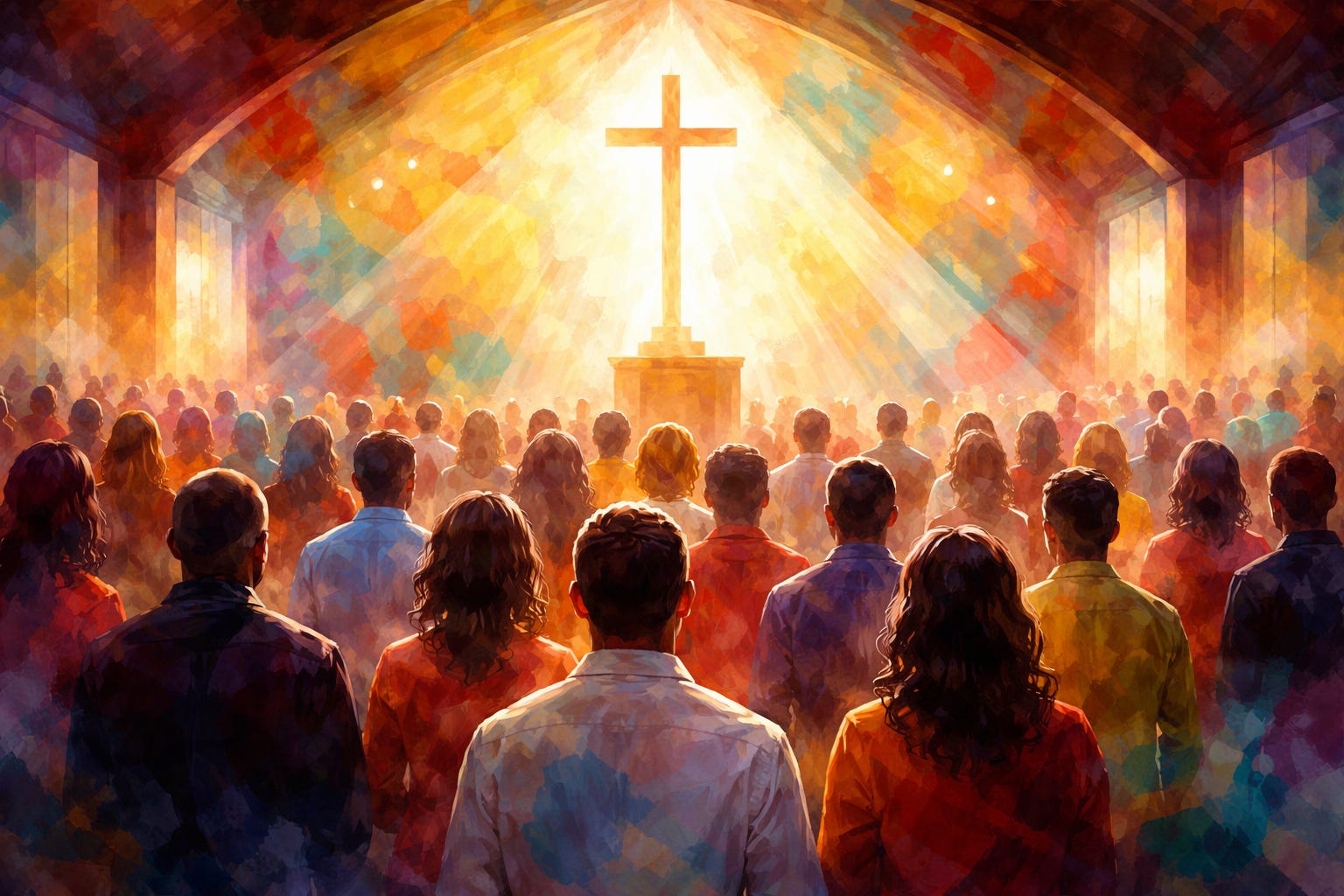
On a Sabbath morning, the story often starts before anyone opens a Bible. It starts in the hallway. People arrive carrying the week on their faces. Someone looks tired from a night shift. Someone else looks nervous because they are new, and because the language in the lobby is not the language at home. A greeter smiles anyway, points them toward a class, and stays close enough to help again.
In churches like this, diversity is not a slogan. It is a shared weekly reality. It can feel tender. It can also feel fragile.
The Demographic Reality in the United States
Pew Research Center’s profile of Seventh-day Adventists in the United States reported that no single racial or ethnic group forms a majority. Pew’s breakdown was 37% White, 32% Black, 15% Hispanic, 8% Asian, and 8% another race or mixed race. (Pew Research Center, November 3, 2015.) (pewresearch.org)
Pew also compared racial and ethnic diversity across major U.S. religious groups and found Seventh-day Adventists ranked as the most diverse among the groups it analyzed. (Pew Research Center, July 27, 2015.) (pewresearch.org)
That pattern is not typical for most Protestant groupings in the United States. A February 26, 2025 Pew demographic summary reported that evangelical Protestants were 70% White and mainline Protestants were 79% White. It also reported that the historically Black Protestant tradition remains predominantly Black. (Pew Research Center, February 26, 2025.) (pewresearch.org)
These are not moral verdicts. They are descriptive facts. Still, the facts help explain why Adventism often feels different on the ground. Many churches do not have to work as hard at cross-cultural life because their membership does not require it. Adventism, in many places, does.
Connecting “Diversity” to “the Remnant”
For many Adventists, diversity is not just an American curiosity. It fits a theological frame.
The North American Division’s statement of belief about “The Remnant and Its Mission” describes a remnant called out in “the last days” to “keep the commandments of God and the faith of Jesus,” and to announce the judgment hour, proclaim salvation through Christ, and herald Christ’s second advent. (nadadventist.org)
Revelation gives the picture believers often place beside that claim. Revelation 7:9 describes “a great multitude” from “every nation, tribe, people and language.” (biblegateway.com)
When Adventists talk about a remnant, they are not only talking about distinct beliefs. Many are also talking about a people gathered from many peoples. If the message is for all nations, a church that includes many nations in one congregation can feel like an early glimpse of that biblical picture.
Yet a remnant claim also increases accountability. A church that talks about unity across difference has to practice it under pressure.
Self-Segregation Inside a Diverse Denomination
One of the paradoxes of Adventism is that a diverse denomination can still drift into separation.
Local self-segregation often happens without anyone announcing it. People choose congregations where they can worship without translating every sentence. People choose music that feels familiar. People choose preaching patterns they trust. People choose a social space where they do not have to explain their background.
Some of that is understandable. Many immigrants carry loss, stress, and fear. A church can become the one place where they are not alone. The problem begins when “this helps me breathe” turns into “this is where I stay, and I do not cross the street.” Over time, a city can end up with multiple Adventist congregations that share basic doctrine but live very separate community lives.
When that happens, Adventism’s demographic diversity remains true, and its relational diversity weakens. The church can look diverse in the aggregate and still fail to build shared life across congregations, boards, and leadership pathways to the point where some congregations forget that others exist.
The Public Policy Pressure That Comes With Diversity
Diversity does not stay inside the sanctuary. It shapes how a church relates to public policy and civic life.
Immigration is one clear example. In a diverse congregation, immigration is rarely theoretical. It shows up as mixed-status families. It shows up as members who avoid official systems because they fear exposure. It shows up as the need for translation in schools, health care settings, and legal appointments. It shows up as a quiet question to a pastor after church: “Is it safe for me to be seen?”
The North American Division issued “An Appeal for Human Dignity and Decency” on January 31, 2025, calling for “human dignity and decency for our immigrant brothers and sisters.” (nadadventist.org)
This is where the church’s diversity creates pressures that less diverse churches may not feel in the same way. When members live different risks, leaders face hard choices about advocacy, tone, and timing. Some members want stronger public engagement. Some prefer quiet pastoral work. Some fear that public statements will be misunderstood. Some fear that silence will be taken as indifference. Others want to be sure that the church is in clear alignment with the law.
Diversity also affects how members approach debates about identity-based policies and programs, including DEI. In a diverse Adventist congregation, some members view DEI efforts as needed tools for fairness and access. Others approach DEI with caution and critique, including members who are conservative on public policy grounds and who worry about compelled speech, ideological requirements, or unintended effects on hiring and education. Those differences can sit side by side in the same pew, and they can influence how members want the church to speak in public.
The Political Split, and the Line Fellowship Must Not Cross
Adventists are also politically mixed, which adds another layer of complexity.
Pew’s Adventist profile reported that U.S. Adventists span the ideological spectrum: 37% conservative, 31% moderate, and 22% liberal. Pew also reported partisan identification or leaning: 35% Republican or lean Republican, 45% Democratic or lean Democratic, and 19% independent or no leaning. (Pew Research Center, November 3, 2015.) (pewresearch.org)
This mix means politics can enter church life quickly. It can enter through conversations about immigration, DEI, public health, education policy, religious liberty strategy, foreign policy, or race. It can enter through social media posts that members assume everyone will interpret the same way. It can enter through jokes that land as insults. It can enter through anecdotes in sermons.
Here is the boundary the church has to protect: political leaning should never be a test of fellowship.
People vote for different reasons. Those reasons can be moral, practical, local, and personal. Two faithful Adventists can share core beliefs, study Scripture seriously, pray honestly, and still disagree about how to weigh competing goods and competing harms in a voting booth. They may land anywhere from left to right. They may vote reluctantly. They may vote with mixed feelings. They may vote based on one issue they cannot ignore. They may vote based on a cluster of issues that affect their community.
Some Adventists hold conservative public policy views on border enforcement, asylum rules, employer verification, or the role of government in social programs. Some also hold conservative public policy views on DEI and related initiatives, including skepticism about mandated training, quotas, or ideological language. Others see those same questions differently, based on their experiences, their priorities, and their assessment of what protects neighbors most. The point is not to declare one political posture as the faithful one. The point is to refuse to turn politics into a badge of spiritual rank.
Nobody is more “Adventist” than another because of politics. Party identity is not a sacrament. It cannot become a proxy for faithfulness.
What Jesus Said the World Would Notice
A diverse church can survive only if it centers its identity somewhere deeper than culture and party.
Jesus gave a plain marker for how outsiders would identify His followers: “By this everyone will know that you are my disciples, if you love one another.” (John 13:35, NIV.) (biblegateway.com)
That is emotionally rich because it is personal. It is also logically rich because it is measurable in daily life. Love shows up in concrete ways:
It shows up in speech. Do members talk about each other with charity when they disagree, or do they assign motives and smear each other.
It shows up in leadership. Does the leadership pipeline reflect the body, or does it stay narrow while the pews are wide.
It shows up in burden-sharing. Do members with stable status protect those with higher risk, and do members with cultural comfort make space for those still learning how things work here.
It shows up in repair. When harm happens, does the church name it, address it, and change patterns, or does it pretend the harm was not real.
A church that is not diverse can sometimes confuse sameness with unity. A diverse church cannot rely on sameness. It must rely on Christ, or it will break into smaller tribes that feel safer.
Keeping Christ at the Center in a Turbulent World
The world’s turmoil does not remain outside church walls. It travels through screens and headlines. It arrives through stress, fear, and anger. When a church is diverse and politically mixed, the pressure can rise fast.
Survival, in this context, is not institutional endurance. It is spiritual fidelity. It is the decision to keep Christ as the central guide for church life. That shows up in what pastors preach, what elders model, and what members forgive. It shows up in whether people choose to stay in relationship when it would be easier to retreat into a familiar corner.
If Adventists want the remnant claim to remain credible, they cannot rely only on demographic facts. They have to practice the kind of love that makes demographic facts believable.
They have to keep doing it when it is inconvenient.
They have to keep doing it when public policy debates feel personal.
They have to keep doing it when political seasons tempt people to label each other as threats.
The diversity is already here. The political spread is measurable. The question is what the church will do with it next.
TLDR (Too Long / Didn’t Read Summary)
Pew Research Center reports U.S. Seventh-day Adventists have no racial or ethnic majority: 37% White, 32% Black, 15% Hispanic, 8% Asian, and 8% another race or mixed race. Pew’s July 27, 2015 analysis ranked Adventists as the most racially and ethnically diverse major U.S. religious group it measured. By contrast, Pew’s February 26, 2025 demographic summary reports evangelical Protestants are 70% White and mainline Protestants are 79% White, showing that many Protestant groupings remain majority White. Adventists often connect diversity to the remnant mission described in denominational belief statements and to Revelation 7:9. Yet Adventism can still practice self-segregation through language, culture, and comfort-based congregation choices. Diversity also shapes public policy pressures around immigration and identity-related policy debates, including DEI, which can create sharper internal disagreement because members carry different lived risks and priorities. Pew reports Adventists are politically mixed, which is why political leaning should never be a test of fellowship. Jesus’ marker remains John 13:35: love.
Commentary (analysis in plain language)
A church that spans nations and parties needs rules for speech. Without those rules, members import the tone of politics into the tone of fellowship. Contempt follows. Once contempt becomes normal, trust collapses.
A diverse church also needs fair pathways to leadership. It is easy to celebrate diversity in the pews. It is harder to share authority, attention, and resources across the whole body. People can tell the difference between being welcomed and being included.
Public policy debates are sharper in diverse congregations because members carry different risks and priorities. Immigration can affect housing, employment, and family stability. DEI debates can touch conscience, freedom of belief, institutional fairness, and lived experiences of exclusion. Leaders cannot speak as if these are only abstract questions when the people most affected are sitting in front of them.
The only stable center is Christ. He did not tell His disciples that outsiders would know them by matching political views. He said outsiders would know them by love. That calls for restraint, honest listening, fair leadership practices, and a willingness to repair relationships instead of discarding them.
Like, share, and subscribe
If you want more reporting on religious liberty and related church and public policy developments, like this article, share it, and subscribe to the ReligiousLiberty.TV blog at religiouslibertytv.substack.com:

Subscribing gives you access to breaking updates and case-focused information published on the blog.
Legal Disclaimer
This does not constitute legal advice. Readers are encouraged to talk to licensed attorneys about their particular situations and their jurisdiction.
Works Cited (MLA)
Pew Research Center. “A Closer Look at Seventh-day Adventists in America.” Pew Research Center, November 3, 2015. https://www.pewresearch.org/short-reads/2015/11/03/a-closer-look-at-seventh-day-adventists-in-america/. (pewresearch.org)
Pew Research Center. “The Most and Least Racially Diverse U.S. Religious Groups.” Pew Research Center, July 27, 2015. https://www.pewresearch.org/short-reads/2015/07/27/the-most-and-least-racially-diverse-u-s-religious-groups/. (pewresearch.org)
Pew Research Center. “Age, Race, Education and Other Demographic Traits of U.S. Religious Groups.” Pew Research Center, February 26, 2025. https://www.pewresearch.org/religion/2025/02/26/age-race-education-and-other-demographic-traits-of-us-religious-groups/. (pewresearch.org)
North American Division of Seventh-day Adventists. “13. The Remnant and Its Mission.” NAD Adventist, https://www.nadadventist.org/beliefs/the-remnant-mission/. Accessed February 11, 2026. (nadadventist.org)
North American Division of Seventh-day Adventists. “An Appeal for Human Dignity and Decency.” NAD Adventist, January 31, 2025. https://www.nadadventist.org/news/north-american-division-seventh-day-adventist-church-appeal-human-dignity-and-decency/. (nadadventist.org)
BibleGateway. “Revelation 7:9 (NIV).” BibleGateway, https://www.biblegateway.com/passage/?search=Revelation+7%3A9&version=NIV. Accessed February 11, 2026. (biblegateway.com)
BibleGateway. “John 13:35 (NIV).” BibleGateway, https://www.biblegateway.com/passage/?search=John+13%3A35&version=NIV. Accessed February 11, 2026. (biblegateway.com)