
TLDR (Too Long / Didn’t Read Summary)
South Dakota Governor Larry Rhoden introduced Senate Bill 113 (SB 113) on January 23, 2026. This legislation classifies the disruption of religious worship as a felony offense. The move comes as a direct response to recent events in Minnesota involving the “intimidation of Christians” during worship services. Prime sponsors Senator Mehlhaff and Representative Odenbach argue that the bill prevents “communist agitation” and warns out-of-state protesters to stay away. The bill seeks to impose stricter consequences on individuals who interfere with religious assemblies. Supporters include Speaker of the House Jon Hansen and Reverend Will Graham. The legislation prioritizes the physical security and constitutional rights of worshippers across the state.
Case Info Legislation: Senate Bill 113 (SB 113) Date: January 23, 2026 Source: State of South Dakota News
South Dakota Pursues Felony Charges for Worship Disruption
Senate Bill 113 makes disrupting religious worship a felony in South Dakota. Governor Larry Rhoden announced the legislation to deter protesters and protect congregations from the type of interference recently witnessed in Minnesota.
Why is this legislation appearing now?
State officials drafted SB 113 immediately after reports of “intimidation” against Christians in Minnesota. Governor Rhoden and legislative sponsors aim to preemptively block similar activism in South Dakota by establishing severe legal penalties before any local incidents occur.
What does Senate Bill 113 strictly prohibit?
The bill elevates the crime of disrupting a religious service to a felony. Current details from the Governor’s office indicate the law targets:
-
Physical interference with religious assemblies.
-
Actions that create fear among worshippers.
-
Organized agitation intended to halt or disturb services.
Governor Rhoden stated the bill safeguards the “bedrock of our nation” and moves beyond rhetoric to concrete action.
What specific events triggered this legal response?
Representative Odenbach cited the intimidation of worshippers in Minnesota as the primary catalyst. While the specific Minnesota event details remain unlisted in the press release, South Dakota officials viewed the footage or reports as a warning sign.
-
Senator Mehlhaff: Warned “out-of-state agitators” that they “should plan to stay a while” if they break this law.
-
Representative Odenbach: Stated the law ensures justice for those coming to “do communist agitation.”
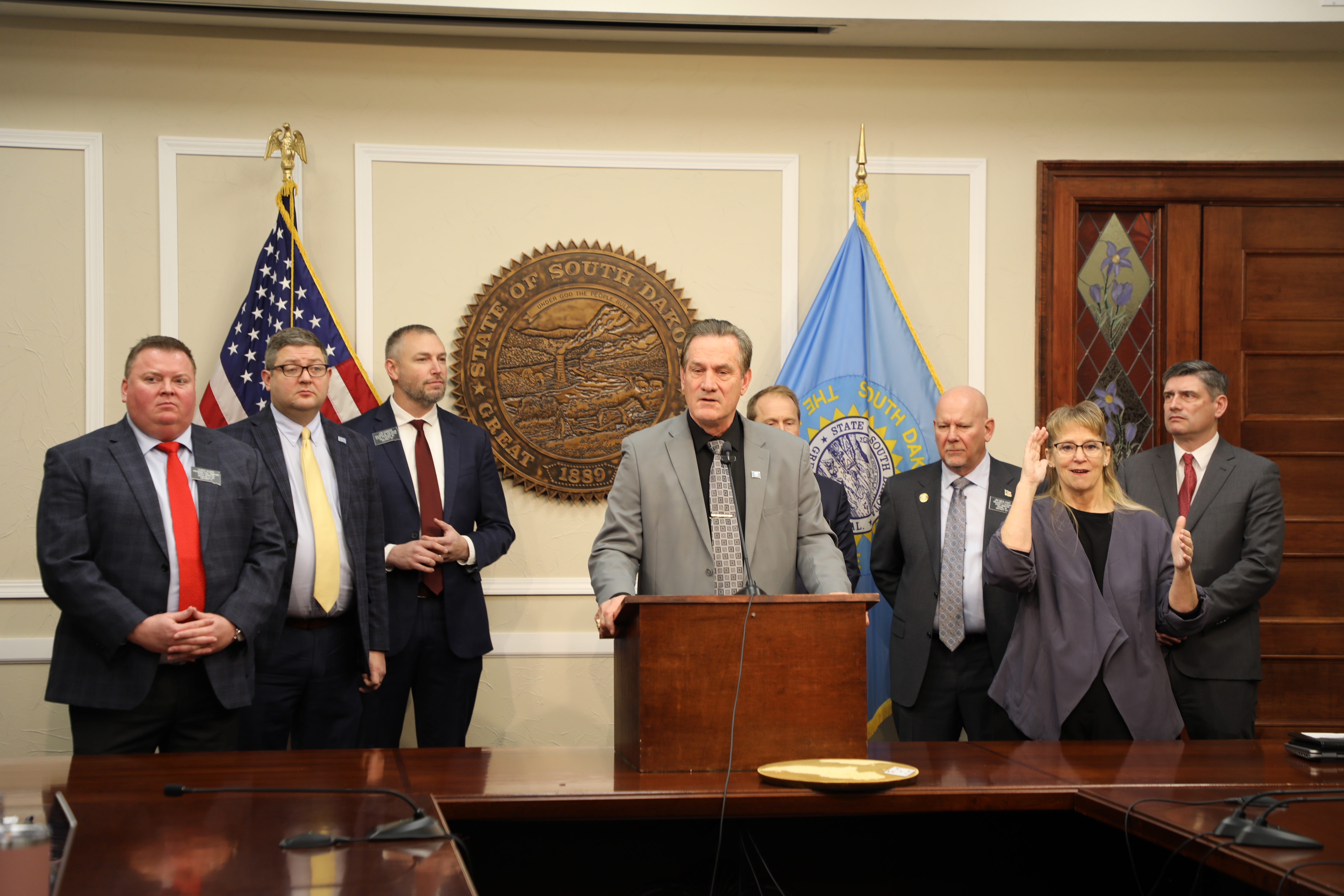
Who supports the new legislation? A coalition of state leadership and religious figures backed the announcement at a Pierre press conference.
-
Governor Larry Rhoden: Led the initiative.
-
Senator Mehlhaff & Rep. Odenbach: Prime sponsors.
-
Speaker Jon Hansen & Senate President Pro Tempore Chris Karr: Legislative backers.
-
Reverend Will Graham: Provided religious community representation.
What happens next for SB 113?
The bill now moves to the legislative floor for debate. With high-level support from the Governor and legislative leadership, the bill will likely undergo committee review in the coming weeks. Opponents have not yet issued formal statements regarding potential First Amendment challenges.
Commentary
The introduction of SB 113 raises fundamental constitutional questions regarding the tension between the Free Exercise Clause and the Free Speech Clause. The Supreme Court has long held that the government cannot regulate speech based on its content, yet it can impose reasonable “time, place, and manner” restrictions. A law criminalizing the “disruption” of worship fits within these restrictions if it targets the conduct of disturbance rather than the message of the protester. If a statute is vague, however, it risks being struck down for chilling protected speech.
Legislators must define “disruption” with extreme precision. A statute that criminalizes merely annoying or offensive speech outside a church might fail strict scrutiny. Conversely, a statute that focuses on noise levels that physically prevent a service from proceeding, or physical blockades of entry points, usually survives judicial review. The government has a compelling interest in protecting the safety and rights of worshippers to assemble, but this interest does not grant a blank check to silence dissent in the public square surrounding a house of worship.
The rhetoric surrounding “communist agitation” suggests a specific ideological target, which could complicate the bill’s defense in court. If defense attorneys can prove the law is applied selectively to silence specific political viewpoints while allowing others, the law could violate the Equal Protection Clause. Examining the legislative intent—specifically the comments made by sponsors about “agitators”—will be central to any future legal challenge.
Ultimately, the validity of a felony charge for disruption hinges on the severity of the penalty versus the severity of the act. Elevating a disturbance to a felony is a serious escalation of state power. Courts will look at whether this punishment is proportionate or if it acts as an unconstitutional deterrent to lawful assembly and protest. The balance is delicate. Security is necessary for freedom, yet liberty requires the tolerance of peaceful, albeit unwelcome, expression.
Citations “Gov. Rhoden Announces Bill to Defend Religious Freedom.” South Dakota State News, 23 Jan. 2026, [https://news.sd.gov/news?id=news_kb_article_view&sys_id=340cbcf61b22b650df4edb1de54bcb49].
Subscribe to ReligiousLiberty.TV Stay informed on the progress of SB 113 and other legal battles affecting your rights. Like, share, and subscribe to ReligiousLiberty.TV to get access to breaking news and case information.
Disclaimers This article was assisted by AI. This does not constitute legal advice. Readers are encouraged to talk to licensed attorneys about their particular situations.
Tags South Dakota Legislation, Religious Freedom, First Amendment, SB 113, Larry Rhoden