
Gabriel Olivier says Brandon, Mississippi, law unfairly targets his religious speech but insists he is not trying to erase his criminal record
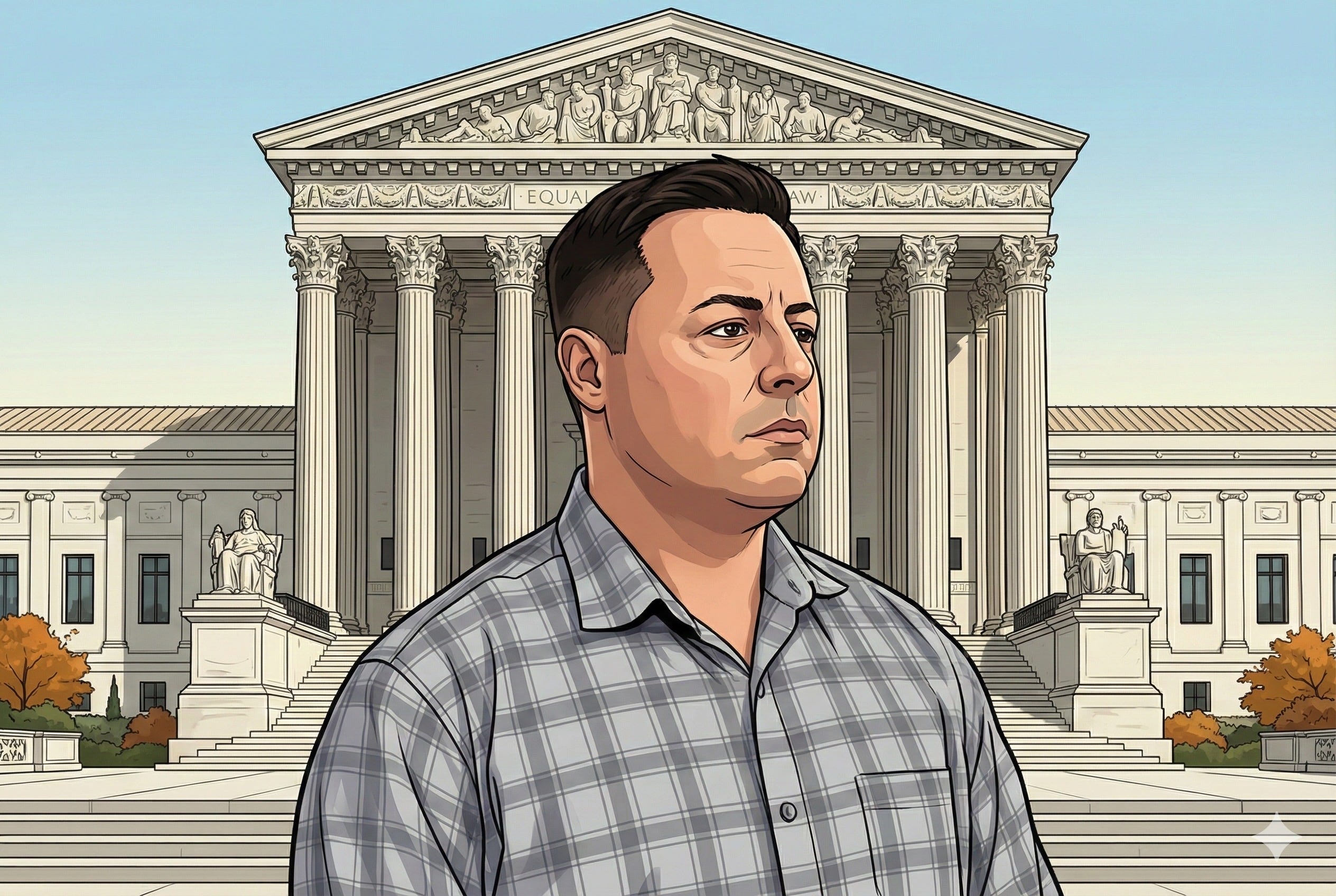
Gabriel Olivier, a Christian street preacher, was arrested and convicted for preaching in a public park in Brandon, Mississippi. Now he is asking the U.S. Supreme Court to let him challenge the city law that led to his arrest. He is not asking the Court to erase his past conviction. Instead, he wants to stop the city from using the same law against him again in the future.
On December 3, 2025, the Court heard arguments in Gabriel Olivier v. City of Brandon, Mississippi, No. 24-993. The Justices are deciding whether a civil rights lawsuit like Olivier’s is allowed under a rule from a 1994 case called Heck v. Humphrey. That rule says if a lawsuit would mean a past conviction was wrong, the person must get that conviction overturned first. Olivier says his lawsuit does not do that.
Olivier’s lawyer told the Justices that he is only asking for protection going forward. She said he is not seeking money, not asking to remove the conviction, and is no longer on probation. She argued that Heck should not stop someone in his position from asking a court to prevent future harm.
Some Justices were concerned that if Olivier wins, it could suggest his past conviction was invalid. Justice Kagan said that even if Olivier is not asking to overturn it, a court ruling in his favor would show the law was unconstitutional. That could make it look like the conviction should not have happened.
Other Justices, including Justice Sotomayor, said Heck was meant to stop people from going around the criminal appeal process, not to block lawsuits that are only about the future. She said the Court has allowed similar claims before when people were not trying to erase past convictions.
The federal government supported Olivier. A lawyer from the Department of Justice said people who are no longer in custody should be allowed to bring forward-looking civil rights claims like Olivier’s. She pointed to a past Supreme Court decision called Wooley v. Maynard, which allowed a similar type of lawsuit.
The Court also looked at whether the timing of Olivier’s sentence matters. He was already done with probation when the lower court ruled against him. The Justices asked whether it matters if someone is still on probation when they file a lawsuit like this. Olivier’s lawyer said it should not matter, as long as the relief being asked for does not change the past.
If the Court rules for Olivier, it would not cancel his conviction. It would only allow his case to move forward so he can try to block future enforcement of the law. Others in similar situations would still need to go through different steps if they wanted to clear their records or seek damages.
A decision is expected by June 2026.
TLDR (Too Long / Didn’t Read Summary)
Gabriel Olivier was arrested in Brandon, Mississippi, for preaching in a public park. He served his sentence and is now suing to stop the city from enforcing the same law against him in the future. On December 3, 2025, the U.S. Supreme Court heard arguments in his case. The issue is whether he can sue under a civil rights law without first overturning his conviction. Olivier says he is only asking for future protection, not changes to his record. A ruling is expected in 2026.
Case Caption and Date:
Gabriel Olivier v. City of Brandon, Mississippi, No. 24-993 (argued Dec. 3, 2025)
Oral Argument Transcript – Supreme Court of the United States
Plain Language Commentary
This case is about whether someone who has already served their sentence can still sue to stop a law from being used against them again. Olivier is not trying to change what happened in the past. He just wants a court to say the law cannot be enforced against him going forward.
A rule from an old case called Heck v. Humphrey says people usually have to overturn a conviction before suing over it. But Olivier is not suing over the conviction itself. He is saying the law he was convicted under is unconstitutional and wants protection from future punishment.
Some Justices asked if ruling in Olivier’s favor would mean his past conviction was wrong. Others said the case should be allowed to move forward because it is about preventing future harm, not fixing the past.
The Court could say that people who are no longer in jail or on probation can bring these types of lawsuits. That would help others who want to challenge laws without going through the long process of trying to erase their record first.
Watch for a decision in mid-2026.
Like this article?
Please share and subscribe to the ReligiousLiberty.TV blog at religiouslibertytv.substack.com for updates on religious freedom and constitutional rights. Subscribers get early access to court decisions and legal analysis.
AI Disclaimer:
This article was written with assistance from artificial intelligence and reviewed for legal accuracy. It is not legal advice. Please speak with a licensed attorney for guidance in your specific case.
Legal Disclaimer:
This report is for informational purposes only and does not provide legal advice. Contact a qualified attorney for help with your situation.
SEO Tags:
Gabriel Olivier lawsuit, Supreme Court religious freedom, Heck v. Humphrey explained, Section 1983 lawsuits, First Amendment free speech
Holding: The Supreme Court is deciding whether a civil rights lawsuit challenging a city ordinance is permitted under Heck v. Humphrey when the plaintiff seeks only forward-looking injunctive relief and does not seek to overturn a past conviction.
Holding: A rule stating that if a lawsuit would mean a past conviction was wrong, the person must get that conviction overturned first before proceeding with a civil rights claim.
