As Lent and Ramadan begin side by side, millions pause, pray and reorder their daily lives in pursuit of something deeper
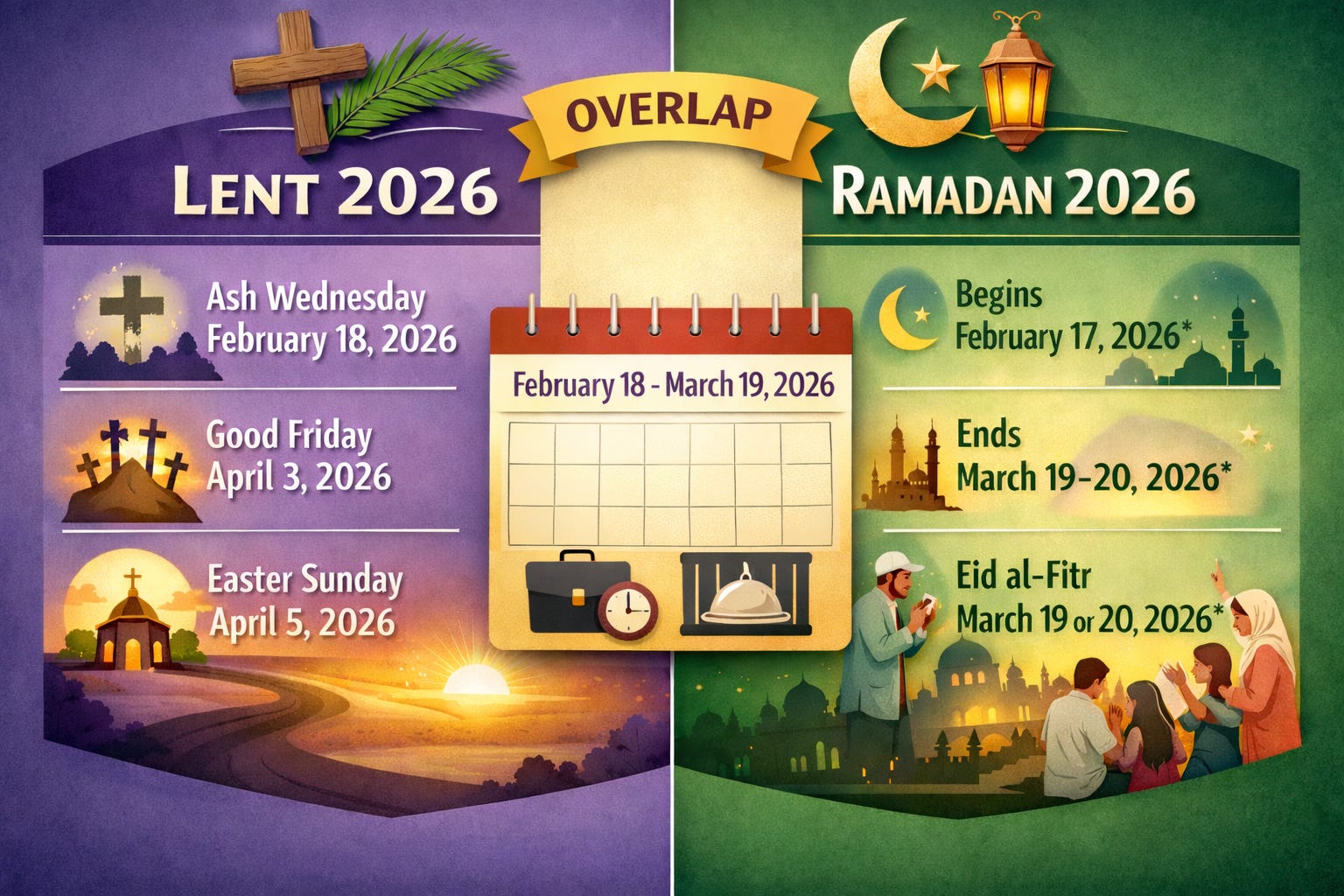
Before dawn breaks on February 18, 2026, a light flicks on in a quiet kitchen. A Muslim family eats in near silence, aware that the next sip of water must last until sunset. A few hours later, in churches across the country, Christians stand in line to receive ashes pressed onto their foreheads, a blunt reminder that life is brief and pride is brittle.
On that single day, two ancient commands intersect. Fast. Remember. Return.
The calendar does not care about theology, yet in 2026 it binds together two traditions that often move on separate tracks. Ash Wednesday and the first full day of Ramadan share the same date. For several weeks, Christians and Muslims will wake earlier, eat less, speak more carefully and pray more deliberately.
Fasting is not fashionable. It offends the modern instinct that every desire deserves satisfaction. It stands in quiet opposition to the gospel of indulgence preached by advertising and algorithms. In Lent and in Ramadan, the body is told no so that the soul might learn yes.
For Christians, Lent stretches forty days toward Easter, echoing Christ’s wilderness fast. It is a season of repentance, charity and restraint. For Muslims, Ramadan commemorates the month in which the Quran was first revealed to the Prophet Muhammad. From dawn to sunset, food and drink are set aside. The fast is not merely about hunger. It is about consciousness of God, about remembering that sustenance is gift, not entitlement.
Strip away the labels and you find a shared grammar. Discipline. Humility. Generosity.
Hunger sharpens honesty. When the body complains, the spirit answers. You begin to see how much of your life revolves around comfort. You notice the reflex to fill silence with noise, to fill emptiness with consumption. Fasting interrupts that reflex. It asks you to confront yourself without anesthetic.
There is nothing sentimental about this. It is demanding. It exposes impatience and pride. It also exposes need.
In both traditions, fasting bends toward mercy. Christians are urged to give alms, to loosen their grip on money and ego. Muslims are commanded to give zakat and to increase charity, remembering the poor who live daily with what the fasting person tastes temporarily. The hungry are not an abstraction during these weeks. They are a mirror.
In 2026, this discipline unfolds in shared public space. In offices, one colleague declines lunch while another prepares for evening worship. In classrooms, students count down to Eid while others speak of Good Friday. Two communities, distinct in creed, align in practice.
It is easy to reduce religion to slogans or suspicion. It is harder to sit with a friend who is fasting and ask what it means. The overlap this year offers that opportunity. You may be invited to an iftar meal at sunset, or to a Lenten service heavy with silence. You may simply notice that someone near you is carrying a quiet commitment you had not considered.
You do not have to share a theology to respect discipline. You do not have to agree on revelation to recognize sincerity.
When the sun sets each evening in Ramadan, families gather to break the fast with gratitude. When Easter dawn arrives on April 5, 2026, Christians will proclaim resurrection after weeks of restraint. The paths diverge again. The calendars move on.
Yet for a span of late winter, millions will have practiced a countercultural act. They will have said no to appetite and yes to accountability. They will have remembered that the human being is more than a collection of cravings.
In a time that prizes immediacy, that memory matters.