Santorum’s Martyr Complex (SLATE)

EXCERPT: Is Rick Santorum suffering for his faith? One of his advisers suggested to the Washington Examiner‘s Byron York that he is, and that Mitt Romney is getting absolution. ”Why is Mormonism off limits?” York quotes the adviser as asking. “We’re having to spend days answering questions about Rick’s faith, which he has been open about. Romney will turn on a dime when you talk about religion. We’re getting asked about specific tenets of Rick’s faith, and when Romney says, ‘I want to focus on the economy,’ [the press says,] ‘OK, we’ll focus on the economy.’ ”

In this Lenten season we are called upon to be generous of spirit, so let’s start there. The Santorum campaign is under siege. Mitt Romney and his backers are dropping millions of dollars in ads on his head. He’s being called to account for everything he’s said for his entire career in an atmosphere that doesn’t allow for reasoned discussion. The press accounts of some of his recent comments, like his remark about Obama’s phony theology, have cast him in the worst possible light before letting him clarify.

Read the full article

Modern Torture Techniques Emerged from Inquisition reports “The Atlantic”

In the January/February 2012 issue of The Atlantic, Cullen Murphy writes about the history of torture and relates it to current events.

Excerpt:  ”The new science of interrogation is not, in fact, so new at all: “extraordinary rendition” and “enhanced interrogation” and “waterboarding” all spring from the practices of the medieval Roman Catholic Church. The distance, in both technique and ideology, between the Inquisition’s interrogation regime and 21st-century America’s is uncomfortably short–and provides a chilling harbinger of what can happen when moral certainty gets yoked to the machinery of torture.”

Read the full article at http://www.theatlantic.com/magazine/archive/2012/01/torturer-8217-s-apprentice/8838/

Germany, EU demand Iran to free pastor Nadarkhani | MF Monitor

EXCERPT: Germany, one of the few countries with diplomatic ties with Iran, has asked Iran to stay the execution of a pastor who refused to re-convert to Islam.

http://www.microfinancemonitor.com/2011/09/30/germany-eu-demand-iran-to-free-pastor-nadarkhani/

Iran Upholds Christian Pastor’s Apostasy Conviction: Execution as Early as Wednesday | American Center for Law and Justice ACLJ

EXCERPT: Just days after Iran released two Americans accused of spying in Iran, an Iranian court has upheld the apostasy conviction and execution sentence of Christian Pastor Youcef Nadarkhani. The 11th branch of Iran’s Gilan Provincial Court has determined that Pastor Nadarkhani has Islamic ancestry and therefore must recant his faith in Jesus Christ. Iran’s supreme court had previously ruled that the trial court must determine if Pastor Youcef had been a Muslim before converting to Christianity.

Read more at:

http://aclj.org/iran/iran-upholds-christian-pastor-apostasy-conviction-execution-wednesday

Refuge Camp in Africa “The Most Desperate Place on Earth” (CNN)

EXCERPT:  ”It makes me want to scream, but instead I nearly cry.”  CNN’s Anderson Cooper reports -

Dadaab, Kenya (CNN) – Right now, this may be the most desperate place on Earth.

“A drought, not seen in 60 years, compounded with near complete lawlessness and utter disregard for human life has made it so.

“It is hard to imagine, but dust and starvation are nearly everywhere you look, and the world’s largest refugee camp is thick with misery on this night. The smell is a combination of the acrid sweetness associated with malnourishment, anxious sweat and diesel fuel.

“The fuel is used to keep away the swarming flies. It stinks more than it repels.”

Read more and see a video at CNN:

http://www.cnn.com/2011/HEALTH/08/09/largest.refugee.camp/index.html


To Help, Visit the Adventist Development and Relief Agency:

Religious Groups Object to Covering Birth Control (Fox News)

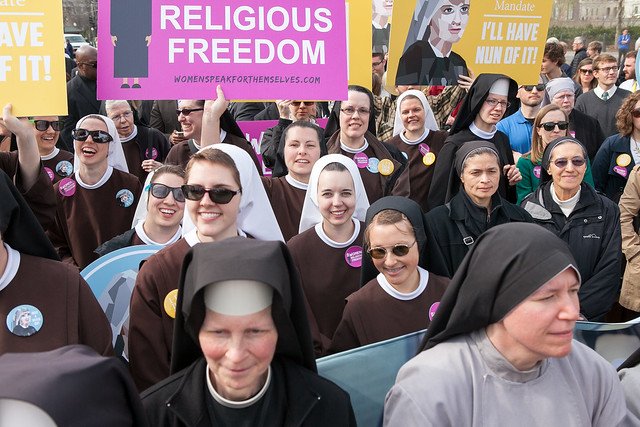
EXCERPT: They defied the bishops to support President Barack Obama’s health care overhaul. Now Catholic hospitals are dismayed the law may force them to cover birth control free of charge to their employees.

A provision in the law expanded preventive health-care benefits for women, and the administration said last week that must include birth control with no copays. The Catholic Health Association says a proposed conscience exemption is so narrowly written it would apply only to houses of worship. Some other religious-based organizations agree.

Read the full article

A Madman and His Manifesto (NYT)

EXCERPT: It passed with only scant notice, as with so many of the rude extremes of American life in a kinetic media age. The bodies of those Norwegian children slaughtered by a terrorist had yet to be fully recovered, let alone buried, when Glenn Beck compared the victims to Nazis.

The summer camp where children of the Norwegian Labor Party went for soccer, swimming, political debates and lectures “sounds a little like, you know, the Hitler Youth,” Beck said in his national radio broadcast.

Read the full article

Circumcision Ban: Violating Religious Freedom? (Odyssey Networks)

A coalition including Jewish and Muslim groups have launched a lawsuit challenging a proposed ban on circumcision that is due to go before San Francisco voters in the Fall. The coalition asserts that a ban on circumcision, a ritual practice in both religious traditions, represents a violation of the right to religious expression, and that, legally, the city is not authorized to bar a medical practice. Proponents of the ban assert that women are protected from forced genital mutilation, and men are no less deserving of that protection. The proposal would ban all circumcisions on males under the age of 18; there is no religious exemption.

It doesn’t look like this will become law, but the arguments on both sides are interesting.

Buying Power: Human Trafficking and the Local Marketplace

 I’m not willing to pick cocoa beans or cotton for a dollar a day, so who is? Trafficked boys on the Ivory Coast and factory children in Asia whose fingers are small enough to work intricate and dangerous machines fill this gap.


Human Trafficking - Decisions to make - iStockPhoto.com pictureSpending four dollars on a candy bar seems irrational. There are so many great tasting candy bars for 90 cents, why would I spend three more dollars for this Alter Eco specialty chocolate? In the end, they’re both equally bad for me and I won’t remember the difference tomorrow. Plus, I’ll be able to buy a cup of coffee at Starbucks with the leftover change. Being a business major, I began wondering if these “socially conscious” products like Alter Eco chocolate, Threads for Thought clothing, and other specialty made products were all cutting edge ways for people to make money with the front of caring about the sustainability for the world and people. It seemed to me that it was a great marketing scheme, and that these people in the companies focused on promoting a cheaper product for a greater cost to consumers because they put the emphasis on the individuals making them. The government already has regulations, like labor laws, in place so maybe all this hype about building “sustainable communities” is just a fad or another way for small companies to make it against these transnational corporate giants.

To make things clear, I really am all about supporting the local coffee shop or book store instead of always flocking to big corporations; but when Amazon has the same product for less, it has been my impression that I would be a careless buyer to go somewhere else. This is a question that has been introduced to us with globalization. Growing up in a consumerist society, I’ve repeatedly been taught to find the best product with the lowest cost, it’s Business 101. Gobbling up my 90 cent chocolate, I started worrying about how many insects the FDA allowed per candy bar, realizing that maybe that was the downside to cheaper chocolate. My business professors teach that the bottom line is what matters the most, but I have grown up in a family immersed in mission work and advocating global consciousness. I have started wondering what is most important in order to simultaneously be successful and yet not cross my personal ethics. Is there a way to be both? Is money the only way to success? Surely there was a way to balance both sides instead of veering off in just one direction.

With these thoughts mulling through my head and chocolate lingering in my mouth, I walked into the Freedom Summit conference hear about all the forms modern day slavery takes, and how globalization has created prime breeding grounds for the vulnerability of the masses. The speakers included Condoleezza Rice—former Secretary of State and National Security Advisor, Bradley Myles—CEO of Polaris Project, and David Batstone—a Professor of Ethics at USF and founder of Not for Sale Campaign. In the hardest days as Secretary of State under the Bush Administration, Condoleezza turned to the Founding Fathers biographies and came to the conclusion that with every large struggle, “what seemed impossible one day, seemed inevitable the next.” She introduced us to the idea that anti human trafficking is the social justice movement of our century and what is happening behind the backs of the general public is far worse than slavery in the past. There are more slaves today than in any other time in history, and we are all doing our part to help propel it forward.

Much of this shocked me—while not being completely ignorant to the struggles of people globally, I still had the rude awakening that every person is participating in this victimization process, where the marginalized people of society always become the victimized, from sex slavery to forced labor. As middle-class consumers, we want to support our families and ourselves while still having our 401ks and Baskin Robbins family night. The great disappointment to us is not having the fudge sauce on our two scoops because they ran out; but where does the chocolate Baskin Robbins buys come from? Consumerism doesn’t leave much room for humanity. It turns people into self-centered buying machines. Instead of being praised for finding the best deal, maybe we should be praised for being globally aware.

Nathan George, founder of Trade as One, switched from working at a lucrative software company to starting his fair trade company and discussed the business side of slavery. Common sense shows that resellers want the best price, and distributors want to make money, so somebody needs to make up for the gap at the bottom line. I’m not willing to pick cocoa beans or cotton for a dollar a day, so who is? Trafficked boys on the Ivory Coast and factory children in Asia whose fingers are small enough to work intricate and dangerous machines fill this gap. At the other end of the sheltered world, people want more chocolate and twenty t-shirts from Costco, therefore creating a demand for this work. All traffickers need to do is provide children to employers who solely care about money, and the cycle keeps going.

Most human traffickers tend to be ex drug traffickers who have realized that unlike cocaine, people are a resalable commodity. This creates a higher earning power for the trafficker and minimal risks because in developing countries, people cannot search after every child. With a high reward and low risks, it is a perfect business set up; that is, if you just look at numbers. The chocolate didn’t taste as sweet in my mouth as I heard about how I was eating slave-produced products and wearing a shirt made by 10 year old hands.

Realizing that my demand is directly correlated with the amount of their exploitation was not satisfying. Instead of being a savvy shopper by looking for the yellow smiley faces on weekly deals, maybe the valued knowledge actually comes in knowing the product’s supply chain. The advertising for a product tasting the best or being the cheapest shouldn’t trump what is happening on the underside of their business. I don’t see a change coming in my chocolate addiction, but the 30 minutes more of work to buy the slave-free chocolate won’t strain my body as much as theirs. This conference probed me to think about the validity of these brands that I was a skeptic of. One of the careful statements that Nathan George, founder of Trade as One, made during the conference was that we as consumers may be overwhelmed at the prices of actually buying socially responsible items, but the first step is to reduce what we consume in order to balance it out. Do I really need to have a candy bar and Starbucks? Aren’t both of those luxury items anyways? By living responsibly, I’m giving others a higher chance of simply living.

This is easier stated than done. With opportunities for “deals” surrounding us daily, it’s hard to not fall into a pattern that we, as free people, are used to. One of the biggest reminders and strongest points I repeat daily is that I have done nothing to secure the position I have in life of being in a free country, just like these modern day slaves have done nothing to have their entire lives indebted to us because of the harsh demands we put on them with our high consumerist behavior. These socially conscious products contain more than just a new age aura or a better selling point; they represent a desire for the priority of humanity instead of selfish search for profit. The balance that fits in my life is one that requires awareness of what I consume, learning to live on less, and realizing that I can be socially active this the model and with my voting power. What changes can you make in your life to leave room for others?


Kate Case, a Global Studies major at La Sierra University, is a campaign strategy intern for California Against Slavery, a non-profit, non-partisan human rights organization working to get an anti-human trafficking initiative on the 2012 ballot for California. Case is the founder of the blog, The Priority of Humanity (http://www.priorityofhumanity.com), which is a compilation of books, documentaries, and other resources related to human trafficking. The blog also has information on current and pending legislation on the issue. This fall, she will be interning with Seventh-day Adventist Public Affairs and Religious Liberty Department in Washington, DC where her duties  will include research and advocacy.

Article18: Cuba — Three Protestant Pastors Interrogated; Roman Catholic Church in Havana Helps Free 126 Prisoners of Conscience

By Martin Surridge – Article18 is back, now that I’ve returned from my vacation in sunny California and coincidentally, this week’s entry, as well as the last few articles, focus on some of the more warmer countries around the world–warm in climate that is, not so much in temperament. Like the classic American cars that drive up and down Havana’s hot streets, communist Cuba is a country from another era–Cold War isolationism, a American trade embargo that began fifty years ago, and a pair of aging dictator-brothers who have ruled the nation and restricted its freedom for decades. But while Cuba may be living in the past in many respects, its religious freedoms are a curious blend of old-fashioned totalitarian crackdown and modern globalist acquiescence.

This is Article18–RLTV’s weekly blog specifically dedicated to religious liberty issues in other countries around the world. Each week, we focus on a different nation, and the struggles facing one of its religious communities. This week:Cuba, a nation that is struggling to adapt to a changing world, where Protestant pastors have been interrogated by law enforcement and the Roman Catholic church is improving relations with the Cuban government and helping to increase religious liberty on the island.

Jorge Pubillones was born and raised a Christian in Cuba and now works for a paratransit service in Cobb County, Georgia. He left Cuba in 1964 with his family and relocated to New York City, and then Miami, after his family felt that the revolution threatened to “destroy life as [they] knew it.” He explained that the expulsion of priests and takeover of private businesses played a significant role in their decision as did the imprisonment of one of their pastors.

I spoke to Jorge Pubillones and asked him about the importance of religious liberty in Cuba and what the future might hold for the Caribbean nation, especially in light of recent decision that the United States has made, placing Cuba on a watch list of religious liberty violators, along with countries like Afghanistan and Somalia.

“The world [should] take notice of what is going on in Cuba,” Pubillones shared. “Personally, my dad had friends that were tortured until they died for refusing to compromise their beliefs. I totally agree with the decision.”

One of the reasons that Cuba was placed on the watch list was because of actions similar to what happened to three Protestant pastors in May. The three ministers, who are affiliated with a church network in Cuba called the Apostolic Movement, were questioned and interrogated by Cuban officials, trying to stop them from holding church services in their homes. The Apostolic Movement has been under pressure from the communist government for several years and that part of the scrutiny the group faces is “because its members continue to report religious liberty violations in Cuba to international human rights groups and the media.”

Pubillones explained that in Cuba, “religious freedom has to be the biggest issue because once you allow it everything else follows. When a person has the right to choose what to believe he/she is empowered to make other life changing choices.”

It’s a view that the Roman Catholic church in Havana seems to agree with. While Christianity is certainly not outlawed as it used to be in other communist nations, the Catholic church in Cuba has frequently struggled to find its place in Cuba, often facing repression and periods of forced labor at the hands of Castro’s totalitarian regime.

According to the Omaha World Herald, “Cardinal Jaime Lucas Ortega y Alamino said his mediation between the Cuban government and political prisoners’ families has led to the release of 126 prisoners of conscience in the past year. He said that would not have been possible before Raul Castro’s elevation as the successor to his brother Fidel as Cuba’s leader.”

Cardinal Ortega pointed to other “signs of increasing religious liberty [including] the ability to distribute religious publications, the ability of students and clergy to study abroad and the opening last year of a new Cuban seminary.” Even the Jewish communities in Cuba, which were once subject to a difficult life under Castro’s government, have blossomed in comparison to their pre-1992 status. Many Jews in Havana, according to newvoices.org, are now able to practice their religion “free of fear or hate,” which once would have been hard to believe.

There are high hopes that the actions of Roman Catholic church, along with the recent ascension of Raul Castro and Cuba’s gradual emergence from global isolationism will be accompanied by an increase in religious liberty for its citizens. In March, President Obama even reduced “limits on religious travel to the island nation” as part of a continued effort to bring Cuba back into the international community. There might be good news in the future for Cuba after all.

“When a person chooses to let God be in charge and that decision is permitted to be pursued openly and freely, lives and governments are changed,” Pubillones said. “The hope, as with all of us is to trust in God and know that He is in control. Continue to pray that lives will be changed and people that have no hope will realize that there is hope in God. When change will happen I do not know. Why this regime has lasted so long I can only wonder. The Lord is in control, we have to trust him.”

Article18 is a weekly blog written by Martin Surridge, Associate Editor of Religious Liberty TV. Article18 logo and other artwork created by Bradley Kenyon.

*     *     *     *     *     *     *     *     *     *     *

Don’t forget to check out other recent Article18 entries.

Article18: Mexico — Confirmed Presence of Major Islamic Terrorist Group Near U.S. Border; Former Killer Preaches to Violent Gangsters

Article18: Laos — Four Christian Women Raped and Executed by Laotian Military Along Vietnam Border

Article18: India — Christan Pastor Bludgeoned in Front of His Children; Government Blames “Predatory” Evangelistic Efforts

Article18: Afghanistan — Quran Burning Protest Leaves Dozens Dead; Freed Christian Convert Flees Country

Article18: France — Controversial Veil Ban for Muslim Women Continues to Divide Nation

Next Page »