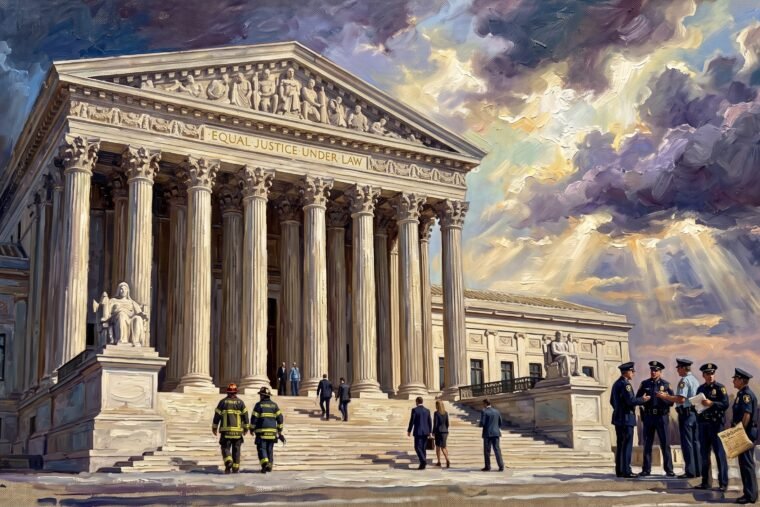
The U.S. Supreme Court made the Right Decision When It Upheld the Ministerial Exception

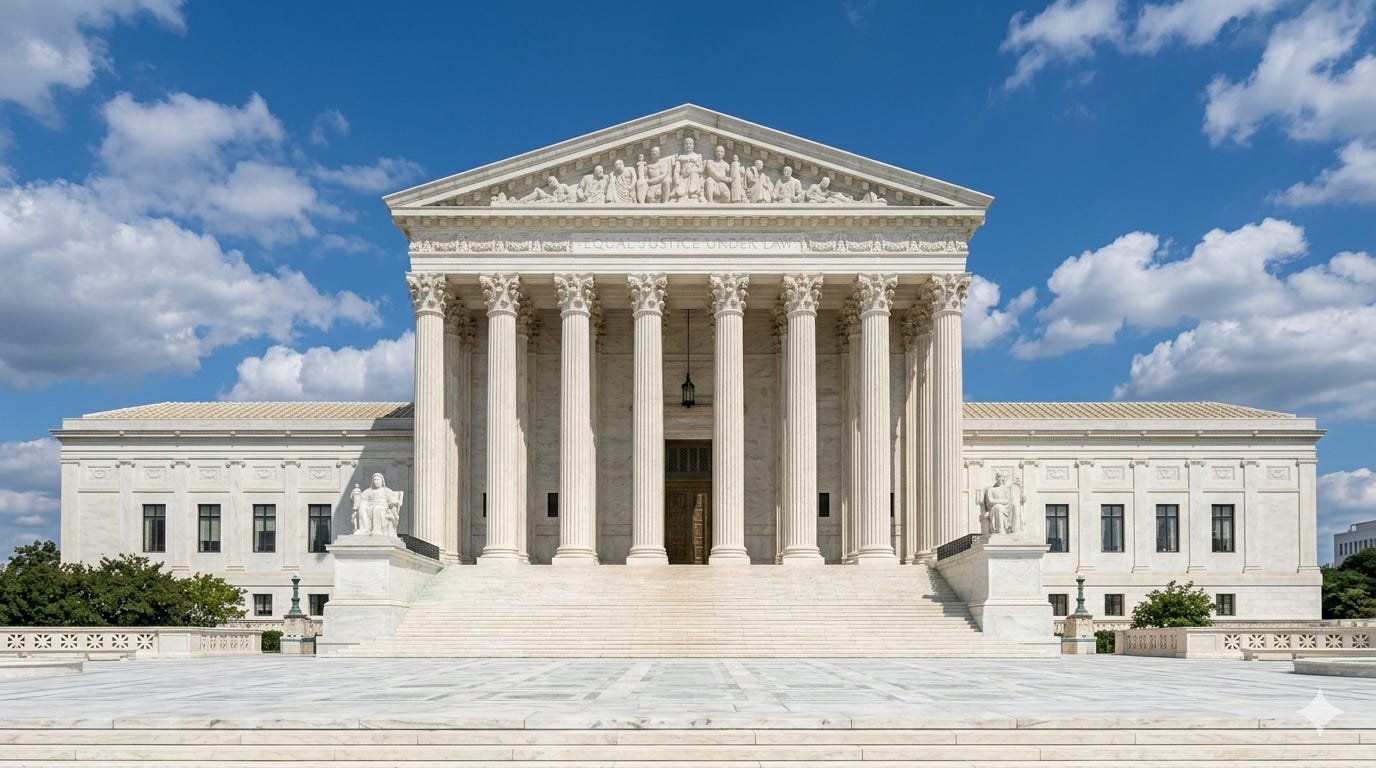
Since the U.S. Supreme Court issued its unanimous decision in Hosanna-Tabor v. EEOC on January 11, 2012, there has been a lot of discussion regarding whether the court did the right thing when it upheld the ministerial exception and denied jurisdiction in a case involving the termination of a ministerial employee. For reasons outlined below, I believe the Court made the right, albeit difficult, decision.

This was the case of the parochial school teacher who in addition to teaching on secular subjects also performed religious functions, Chery Perich, who was fired for threatening to file a lawsuit under the Americans with Disaiblities Act when she was not given her job back after returning from medical leave.  The religious employer argued that it was against its religious beliefs for a minister to sue the church, and that these things had to be handled within the church structure.

The issue presented before the Court was whether the anti-retaliation prohibition of the Americans with Disabilities Act (ADA) could be constitutionally applied to a religious association’s retaliatory firing of a parochial school teacher who taught secular subjects and also performed religious functions and was designated a commissioned minister.

The Supreme Court found that the Establishment and Free Exercise Clauses of the First Amendment bar ministers from bringing lawsuits against their churches in which the ministers claim violation of employment discrimination laws. In this case, the Court found that Perich was a minister within the meaning of the ministerial exception, and therefore the First Amendment required dismissal of her employment discrimination suit against her religious employer.

The ministerial exception gives religious institutions certain rights to control employment matters without interference from the secular courts. It does not, as the Court decision points out, affect criminal, tort, or contract law. So churches cannot use it to shield themselves from liability for criminal acts, negligent behavior leading to accidents, or breach of contract.  But it does protect churches from being hauled into court for religious decisions that have been made.

Some have tried to advance the theory that Perich had not fully pursued the administrative remedies available to her in the parochial system, but that would not have changed the outcome which hinged on the threshold issue of whether the ministerial exception applied to her. If the exception applied, the Court lacked jurisdiction.

Another misconception is that the Hosanna-Tabor decision somehow establishes the ministerial exception and adds something new. In reality, Congress specifically built an exception for religious organizations into Title VII of the Civil Rights Act of 1964. Title VII was enacted by Congress to prohibit employment discrimination on the basis of race, color, religion, sex, or national origin. (42 U.S. C. §§ 2000e-2(a)). Under the statutory exception, religious employers could prefer members of their own faith in making their hiring decisions.

The actual ministerial exception was born in 1972, when, in McClure v. Salvation Army, the U.S. Court of Appeals for the Fifth Circuit refused to hear a female minister’s gender discrimination claim. The court found that applying the provisions of Title VII to the employment relationship existing between a church and its ministers would therefore “cause the State to intrude upon matters of church administration and government” which would “result in an encroachment by the State into an area of religious freedom.”

The way it works is that courts in most Circuits rely upon a role-based or “primary duties test” to determine whether an employee is a minister within the exception, and whether or he she can bring suit under Title VII. Several circuits have adopted an approach that religious institutions should be able to choose who will perform certain spiritual functions. The first approach focuses on the employment relationship, while the second focuses on the right of churches to exercise their beliefs more freely.

Perich was, in many ways, the perfect “poster child” to challenge the ministerial exception. The case clearly involved a non-religious issue and for all the world, it looked like the church was looking for a way to fire her in a way that would be against public policy as applied to secular organizations and still avoid being hauled into court for violating the Americans with Disabilities Act.

In fact, the EEOC, the ACLU, and Americans United for Separation of Church and State (“AU”) rallied to Perich’s side. In its brief, AU argued that the ministerial exception did not entitle religious entities to discriminate or retaliate for reasons unrelated to religion, and that courts should determine whether an asserted religious justification for an action is pretextual.

In short, a church would therefore need to pass a two-prong test – first, it would have to demonstrate that its discriminatory rule was related to its religious beliefs; second, it would need to demonstrate that its action was not “pretextual.”

The AU brief gave some examples of what it meant to litigate on issues of discrimination that were not particularly related to a church’s doctrine. For instance, a Catholic Church could not be forced to hire a female priest, but an otherwise egalitarian church would not be permitted to fire a Sunday-school teacher when the pastor had a purely personal belief that “women should not work outside the home.”  The examples continued for several pages, permitting organizations to make discriminatory doctrinal rulings but not permitting local churches from acting in contrast to non-discriminatory denominational policies or practice.

Applying an Employment Division v. Smith style argument, AU argued that generally applicable employment laws should apply to churches unless there is a need to safeguard a constitutional right. Why they would appeal to this analysis is particularly curious. The Smith decision created a major problem for free exercise of religion by subjecting religious minorities to the rule of the majority even if it goes against the minority’s religious beliefs. (One can hope that the Court, in the near future, might see the wisdom of applying the Hosanna-Tabor analysis to individual religious liberty rights and re-establishing the Free Exercise Clause that was compromised in Smith.)

The AU brief is helpful in that it provides a concrete example of the depth to which the government and courts would need evaluate in order to determine whether church employment decisions were permissible or not.

Under the approach proposed by AU, church decisions would be open to scrutiny as to whether they were doctrinal or not, and the investigators would then need to go into the minds of the decision makers to see whether such decisions were made in good faith and not merely to achieve a favorable outcome for the institution.

As people often say, bad cases often make bad law and the Supreme Court had just such an opportunity to throw away the ministerial exception in this highly sympathetic case and effectively destroy the wall of separation of church and state by allowing the state entry into the inner workings of the church. Fortunately the Court saw the bigger issues involved and made the right decision.

However by ruling the way it did, the Supreme Court protected the right of a religious organization to select its clergy without government interference and avoided placing church doctrine under government interpretation. Civil magistrates will not be in a position where they are forced to determine which religious view, that of the clergy member or the church, is correct.

Church leaders are free to choose ministers who they believe will carry their message forward.

While most religious organizations sincerely strive to provide fair and equitable treatment to all employees, this does not mean that some religious organizations will not abuse the “ministerial exception” to make poor personnel decisions that could lead to costly litigation if they were secular organizations. But organizational decision makes should realize that they will ultimately answer to a Higher Power even if these cases may not be pursued in the civil courts.

—-

For more information on the ministerial exception and its history, I would recommend the Charleston Law Review article by Todd Cole, “The Ministerial Exception:  Resolving the Conflict between Title VII and the First Amendment.” The article is available online at http://www.charlestonlawreview.org/archive/vol4num4/Cole.pdf


Campaigning for Candidates from the Pulpit is a Bad Idea


The “Johnson Amendment” prohibits most church pastors from making declarations “in support of or in opposition to candidates for public office.” Is this limitation on freedom of speech constitutional?

One thing is clear – the electioneering ban is not rooted in Jeffersonian views of separation of church and state or the First Amendment which are silent on issues involving the interplay between tax-exempt organizations, including churches and charities, and the Internal Revenue Code. Under section 501(c)(3) of that code, churches and other charitable organizations are exempt from income tax and entitled to receive tax-deductible contributions from donors.

Instead, it is based on an agreement that non-profits make with the IRS. In order to obtain 501(c)(3) status, applying organizations must represent that they will not participate in any political campaign on behalf of, or against, any candidate for political office. A contributor to a church that does not sign up for 501(c)(3) status can still deduct those contributions from his or her income but if that contributor is audited, he or she has the burden of establishing that the church meets the qualifications of a section 501(c)(3) organization.

On October 2, 2011, as part of “Freedom Sunday” which is promoted by the Alliance Defense Fund, 539 ministers throughout the United States defied the IRS rule and identified where candidates stood on the issues and “where followers of Jesus Christ should stand.” ADF claims that before 1954 when the Johnson Amendment was passed, preachers could promote candidates from the pulpit and that the effect since then has been to “silence and chill the pastors.”

So far, it does not appear that the IRS has taken action to revoke the 501(c)(3) status of these churches. In fact, such cases are exceedingly rare. The U.S. Supreme Court has yet to address this issue head-on although a lower court, the District Court for the District of Columbia in Branch Ministries v. Rossotti (http://www.irs.gov/pub/irs-utl/branch_ministries.pdf) did find that the IRS could revoke the tax-exempt status of a religious organization that bought and published a newspaper ad in the New York Times and the Washington Post that specifically and clearly argued against a political candidate. The ad said, “Bill Clinton is promoting policies that are in rebellion to God’s laws.” The ad concluded, “How then can we vote for Bill Clinton?” At the bottom, the church was named along with an invitation for readers to make a “tax-deductible donation” to pay for the advertisement.

A church that loses its tax exempt status will operate like any other corporation for purposes of tax liability. They would be able to speak out freely but some contributors may be less inclined to donate if they cannot take the tax deduction.

If 501(c)(3) organizations were suddenly able to engage in partisan politicking, and donors were able to give on a tax-deductible basis, donors could ostensibly deduct currently non-deductible political donations simply by funneling these monies through churches. Churches would not only pass the collection plate for their religious mission, but churches would also be able to use these tax-deductible donations on behalf of particular candidates.

Large churches could bankroll entire political campaigns and receive favorable treatment from those who support them. Politicians could visit with church pastors and lobby them for their campaign support. The lines of mutual respect between church and state could be erased as churches become nothing more than overt political mouthpieces during campaign season.

Because of the tax advantages, it is not inconceivable that churches would become a primary venue for gathering votes as political goals were interwoven with spiritual teachings. A politician who ignored this new reality would be at a distinct disadvantage.

In response, many congregations might, as a matter of policy, refuse to allow the politicking from their pulpits but may perceive that they lose the favor of politicians who receive their support elsewhere.  In churches that permitted politicking, congregants of different political persuasions than their clergy might feel alienated and leave.

As it now stands, churches and charities are welcome to speak truth to power on the issues that matter – from opposing human trafficking, to lobbying for workplace accommodation for religious employees, to pursuing morality and justice. Religious organizations just cannot support or oppose particular candidates or political parties. This is a good thing.

Ruling on Ministers: What the Supreme Court said & didn’t say | Oregon Faith Report

Excerpt:   The U.S. Supreme Court in Hosanna-Tabor Evangelical Lutheran Church and School v. EEOC, held that the “ministerial exception” bars a school teacher from bringing employment discrimination claims against her religious employer. The Court’s ruling clearly grants religious institutions the freedom to employ (and terminate) employees who act as ministers of their faith. Yet the Court’s decision does not clearly delineate how a religious organization (or their employees) determines who is and who is not a “minister.”

http://oregonfaithreport.com/2012/01/ruling-on-ministers-what-the-supreme-court-said-and-did-not-say/

Modern Torture Techniques Emerged from Inquisition reports “The Atlantic”

In the January/February 2012 issue of The Atlantic, Cullen Murphy writes about the history of torture and relates it to current events.

Excerpt:  ”The new science of interrogation is not, in fact, so new at all: “extraordinary rendition” and “enhanced interrogation” and “waterboarding” all spring from the practices of the medieval Roman Catholic Church. The distance, in both technique and ideology, between the Inquisition’s interrogation regime and 21st-century America’s is uncomfortably short–and provides a chilling harbinger of what can happen when moral certainty gets yoked to the machinery of torture.”

Read the full article at http://www.theatlantic.com/magazine/archive/2012/01/torturer-8217-s-apprentice/8838/

Has Obama Waged a War on Religion? (NPR)

NPR’s Barbara Bradley Hagerty addresses this question.  Here is an excerpt followed by a link to the article:

Americans’ religious liberties are under attack — or at least that’s what some conservatives say.

Newt Gingrich warns the U.S. is becoming a secular country, which would be a “nightmare.” Rick Santorum says there’s a clash between “man’s laws and God’s laws.” And in a campaign ad, Rick Perry decried what he called “Obama’s war on religion,” saying there is “something wrong in this country when gays can serve openly in the military but our kids can’t openly … pray in school.”

Of course, children can pray in school, but Perry is echoing a larger argument: that religious freedom is at risk. The story is much more complicated than either side makes out.

Read more and listen to the radio broadcast at http://www.npr.org/2012/01/08/144835720/has-obama-waged-a-war-on-religion

New York City ‘Workplace Religious Freedom Act’ Clarifies Religious Accommodation Requirements for Employers

On August 30, 2011, New York City Mayor Michael Bloomberg signed the “Workplace Religious Freedom Act”  (Int. 632-A) into law clarifying what requirements employers are required to meet to demonstrate that they have done all that is necessary to make a reasonable attempt to accommodate the bona fide religious needs of employees.

Under pre-existing law, employers were required to provide accommodation so long as it did not cause an “undue hardship” for the employer. However, since “undue hardship” was not clearly defined, it was generally viewed as a requirement that the “de minimis cost or burden” standard be applied.

The new City law amends sections 8-102 and 8-107 of the New York City Human Rights Law (“NYCHRL”) to defines what “undue hardship” means:

“Undue hardship” shall mean “an accommodation requiring significant expense or difficulty (including a significant interference with the safe or efficient operation of the workplace or a violation of a bona fide seniority system).” Factors to be considered in determining whether the accommodation constitutes an undue economic hardship shall include, but not be limited to:

  • The identifiable cost of the accommodation, including the costs of loss of productivity and the cost of retaining or hiring of employees or transferring of employees from one facility to another, in relation to the size and operating cost of the employer.
  • The number of individuals who will need the particular accommodation to a sincerely held religious observance or practice, and
  • For an employer with multiple facilities, the degree to which the geographic separateness or administrative or fiscal relationship of the facilities will make the accommodation more difficult or expensive.

The Act also provides that employers in New York City can establish that a religious accommodation will result in an “undue hardship” by showing that it will result in the employee’s inability to perform the essential functions of his or her position.

Potential remedies for violating the law include reinstatement, back pay, compensatory damages, attorney’s fees, and employers could be subject to a civil penalty of $125,000.

From a practical standpoint, employers should consult with human resources experts to ensure compliance by making sure that anti-discrimination policies are up to date, and job descriptions should be tailored to accurately describe portions of the job duties that involve attendance, availability, and dress / grooming requirements.

This law is of particular significance to Muslims and Sikhs who have faced an increase in discrimination since the events of 9/11, and will apply to both public and private sector employers.

###


Should Congress Continue to Fund the United States Commission on International Religious Freedom?

(This article was written as a contribution to a Liberty Magazine Round Table discussion. Read the other responses and contribute your thoughts at http://www.libertymagazine.org/index.php?id=1665 )

By Michael D. Peabody -

In August 2011, the Pew Research Institute released a study, Rising Restrictions on Religion, which found that more than a third of the population of the world lives in nations where government restrictions or social hostilities involving religion are increasing. Only 1% live in countries where things are getting better.

In 1998 when Congress, as part of the International Religious Freedom Act (IRFA), approved the creation of the United States Commission on International Religious Freedom (USCIRF), Congress believed that it was important that the USCIRF operate as an independent governmental body to monitor executive branch activities related to religious freedom and to make recommendations for Presidential action when it found abuses.

Under the IRFA, the Commission has communicated with embassies around the world to find out the state of freedom, and has produced reports outlining the state of freedom around the world. This includes identifying “countries of particular concern” (CPC) that have engaged in torture, prolonged imprisonment, or “other flagrant denial[s] of the right to life, liberty, or the security of persons.” Once a country is tagged as a CPC, per the IRFA, the government must, subject to the right to waiver, engage anything from bilateral agreements to sanctions in order to encourage improvements. There are eight CPCs at the present time.

The Secretary of State can then make recommendations as to how to address these issues. The White House has yet to issue any new actions or sanctions against a CPC solely for violations of religious freedom, and instead has placed religious freedom issues, if they are mentioned at all, under the umbrella of existing sanctions. The result is that religious freedom issues have gotten lost in the shuffle. In short, under the IRFA, the United States is supposed to indicate that a portion of, or the entirety of sanctions being imposed depending on the situation, is due to religious freedom violations.

In the past, the United States was relatively isolationist when dealing with religious freedom issues in other countries, leaving those issues to non-governmental organizations (NGOs). The U.S. instead worked to preserve its own interests around the world. As an indirect result, many otherwise restrictive nations were forced into situations of regime change resulting in increased religious freedom within their borders. For instance, after an extended Cold War essentially bankrupted the repressive Soviet Union, its citizens enjoyed a period of unparalleled religious freedom. Today, the State Department has to tackle a wide range of pressing issues involving direct threats to the United States including terrorism, threats of a nuclear Iran, chaos in the Middle East, warfare on multiple fronts, and many other issues.

As a result, the government is not always in a diplomatic position to address religious freedom issues separately. As I write this, the United States is experiencing unprecedented tension with Pakistan regarding the War on Terror and the possibility of significant armed conflict seems nearly imminent. Pakistan is also a CPC, and in the midst of this if USCIRF were to operate “properly” the President should also be levying sanctions against Pakistan for the way it treats its own citizens when in reality the flow of U.S. dollars to Pakistan may be the only thing preventing all-out war.

The USCIRF should be continued – it has an important function as a monitor of international religious freedom, but as long as the State Department is also engaged in its fundamental duty of protecting the interests of the United States above those of any other nation, it will not be able to fulfill its complete charter of recommending direct action against hostile countries without facing a great deal of suspicion of either diplomatic or religious mission. While many hostile nations promote a particular religious worldview with impunity, and act under color of that faith as they carry out persecution, the USCIRF must be careful in contrast not to be seen as fulfilling a mission designed to extend American Christianity. If it is perceived across borders and language barriers as a low key Medieval Crusade, it will lose its effectiveness and be a hindrance to international diplomacy.

Religions cross borders, cultures, and languages, and thus the promotion of freedom of religion is generally perceived as a mission of peace, not a mission of war. Because the parameters of religion differ from national borders, unless a hostile nation changes its internal character, religious freedom abuses will continue either officially or unofficially.

In a perfect world, the tasks of the USCIRF would probably be best handled by the United Nations, but that body seems unlikely to move in a productive direction along these lines anytime soon. The reality is, as uncomfortable as it might seem, aside from the Holy See, there is no independent recognized country in the world that can carry an olive branch of religious peace without an overt direct threat of violence or sanctions. It would therefore appear incumbent on non-governmental organizations (NGOs) and religious organizations to assert religious freedom using whatever peaceful and cooperative methods that are available.

This does not mean that USCIRF should be allowed to wither on the vine – its role as a monitor of religious freedom is invaluable and it establishes this sense in the minds of Americans and shows the global community that this nation holds onto and respects these inalienable values regardless of whether they can be imposed on other nations. The USCIRF is one mechanism by which the United States can remain at the forefront of promoting the ideals of freedoms of speech, conscience, religion, and belief.

Vatican again urges radical reform of global marketplace – The Irish Times

Excerpt:  TRADE ISSUES: FOR THE second time in the last month, the Holy See has argued that international trade markets need to be radically reformed.

The point was made by secretary of state Cardinal Tarcisio Bertone who, at a Vatican meeting of European Bishops’ Conferences on the New Evangelisation yesterday said: “The [global] crisis illustrates clearly the untenability of a market that has become totally self-referential . . .

“This present difficult situation prompts a whole series of new questions about the responsibilities and the ethics of the marketplace; it urgently asks a fundamental question about the destiny, dignity and spiritual vocation of man . . . ”

http://www.irishtimes.com/newspaper/world/2011/1123/1224307999115.html

John F. Kennedy’s Speech Affirming Separation of Church and State

In the months leading up to the election, on September 12, 1960, presidential candidate John F. Kennedy spoke to the Greater Houston Ministerial Association on the issue of his religion. In the weeks leading up to the speech, many Protestants had questioned whether Kennedy’s religious beliefs would preclude him from being objective in the White House. Kennedy’s response that he believed in separation of church and state was an eloquent response to the questions.   Fifty years later, they remain relevant. Here is a transcript of what he said:

Rev. Meza, Rev. Reck, I’m grateful for your generous invitation to speak my views.

While the so-called religious issue is necessarily and properly the chief topic here tonight, I want to emphasize from the outset that we have far more critical issues to face in the 1960 election: the spread of Communist influence, until it now festers 90 miles off the coast of Florida; the humiliating treatment of our president and vice president by those who no longer respect our power; the hungry children I saw in West Virginia; the old people who cannot pay their doctor bills; the families forced to give up their farms; an America with too many slums, with too few schools, and too late to the moon and outer space.

These are the real issues which should decide this campaign. And they are not religious issues — for war and hunger and ignorance and despair know no religious barriers.

But because I am a Catholic, and no Catholic has ever been elected president, the real issues in this campaign have been obscured — perhaps deliberately, in some quarters less responsible than this. So it is apparently necessary for me to state once again not what kind of church I believe in — for that should be important only to me — but what kind of America I believe in.

I believe in an America where the separation of church and state is absolute, where no Catholic prelate would tell the president (should he be Catholic) how to act, and no Protestant minister would tell his parishioners for whom to vote; where no church or church school is granted any public funds or political preference; and where no man is denied public office merely because his religion differs from the president who might appoint him or the people who might elect him.

I believe in an America that is officially neither Catholic, Protestant nor Jewish; where no public official either requests or accepts instructions on public policy from the Pope, the National Council of Churches or any other ecclesiastical source; where no religious body seeks to impose its will directly or indirectly upon the general populace or the public acts of its officials; and where religious liberty is so indivisible that an act against one church is treated as an act against all.

For while this year it may be a Catholic against whom the finger of suspicion is pointed, in other years it has been, and may someday be again, a Jew— or a Quaker or a Unitarian or a Baptist. It was Virginia’s harassment of Baptist preachers, for example, that helped lead to Jefferson’s statute of religious freedom. Today I may be the victim, but tomorrow it may be you — until the whole fabric of our harmonious society is ripped at a time of great national peril.

Finally, I believe in an America where religious intolerance will someday end; where all men and all churches are treated as equal; where every man has the same right to attend or not attend the church of his choice; where there is no Catholic vote, no anti-Catholic vote, no bloc voting of any kind; and where Catholics, Protestants and Jews, at both the lay and pastoral level, will refrain from those attitudes of disdain and division which have so often marred their works in the past, and promote instead the American ideal of brotherhood.

That is the kind of America in which I believe. And it represents the kind of presidency in which I believe — a great office that must neither be humbled by making it the instrument of any one religious group, nor tarnished by arbitrarily withholding its occupancy from the members of any one religious group. I believe in a president whose religious views are his own private affair, neither imposed by him upon the nation, or imposed by the nation upon him as a condition to holding that office.

I would not look with favor upon a president working to subvert the First Amendment’s guarantees of religious liberty. Nor would our system of checks and balances permit him to do so. And neither do I look with favor upon those who would work to subvert Article VI of the Constitution by requiring a religious test — even by indirection — for it. If they disagree with that safeguard, they should be out openly working to repeal it.

I want a chief executive whose public acts are responsible to all groups and obligated to none; who can attend any ceremony, service or dinner his office may appropriately require of him; and whose fulfillment of his presidential oath is not limited or conditioned by any religious oath, ritual or obligation.

This is the kind of America I believe in, and this is the kind I fought for in the South Pacific, and the kind my brother died for in Europe. No one suggested then that we may have a “divided loyalty,” that we did “not believe in liberty,” or that we belonged to a disloyal group that threatened the “freedoms for which our forefathers died.”

And in fact ,this is the kind of America for which our forefathers died, when they fled here to escape religious test oaths that denied office to members of less favored churches; when they fought for the Constitution, the Bill of Rights and the Virginia Statute of Religious Freedom; and when they fought at the shrine I visited today, the Alamo. For side by side with Bowie and Crockett died McCafferty and Bailey and Carey. But no one knows whether they were Catholic or not, for there was no religious test at the Alamo.

I ask you tonight to follow in that tradition, to judge me on the basis of my record of 14 years in Congress, on my declared stands against an ambassador to the Vatican, against unconstitutional aid to parochial schools, and against any boycott of the public schools (which I have attended myself)— instead of judging me on the basis of these pamphlets and publications we all have seen that carefully select quotations out of context from the statements of Catholic church leaders, usually in other countries, frequently in other centuries, and always omitting, of course, the statement of the American Bishops in 1948, which strongly endorsed church-state separation, and which more nearly reflects the views of almost every American Catholic.

I do not consider these other quotations binding upon my public acts. Why should you? But let me say, with respect to other countries, that I am wholly opposed to the state being used by any religious group, Catholic or Protestant, to compel, prohibit, or persecute the free exercise of any other religion. And I hope that you and I condemn with equal fervor those nations which deny their presidency to Protestants, and those which deny it to Catholics. And rather than cite the misdeeds of those who differ, I would cite the record of the Catholic Church in such nations as Ireland and France, and the independence of such statesmen as Adenauer and De Gaulle.

But let me stress again that these are my views. For contrary to common newspaper usage, I am not the Catholic candidate for president. I am the Democratic Party’s candidate for president, who happens also to be a Catholic. I do not speak for my church on public matters, and the church does not speak for me.

Whatever issue may come before me as president — on birth control, divorce, censorship, gambling or any other subject — I will make my decision in accordance with these views, in accordance with what my conscience tells me to be the national interest, and without regard to outside religious pressures or dictates. And no power or threat of punishment could cause me to decide otherwise.

But if the time should ever come — and I do not concede any conflict to be even remotely possible — when my office would require me to either violate my conscience or violate the national interest, then I would resign the office; and I hope any conscientious public servant would do the same.

But I do not intend to apologize for these views to my critics of either Catholic or Protestant faith, nor do I intend to disavow either my views or my church in order to win this election.

If I should lose on the real issues, I shall return to my seat in the Senate, satisfied that I had tried my best and was fairly judged. But if this election is decided on the basis that 40 million Americans lost their chance of being president on the day they were baptized, then it is the whole nation that will be the loser — in the eyes of Catholics and non-Catholics around the world, in the eyes of history, and in the eyes of our own people.

But if, on the other hand, I should win the election, then I shall devote every effort of mind and spirit to fulfilling the oath of the presidency — practically identical, I might add, to the oath I have taken for 14 years in the Congress. For without reservation, I can “solemnly swear that I will faithfully execute the office of president of the United States, and will to the best of my ability preserve, protect, and defend the Constitution, so help me God.


ANALYSIS: Bishops Claim Religious Liberty Under Assault

This week, at its annual conference in Baltimore, the US Conference of Catholic Bishops asserted that “religious liberty” is under assault.

The conference pulled together issues from the federal level and various states. For instance, in Illinois, after 40 years of cooperation, government officials stopped working with Catholic Charities on adoptions and foster-care placements because the agency refused to recognize a new civil union law. Bishops are suing the state, claiming that denying funds because of the religious beliefs of the church is impermissible. In New York, the Catholic church has complained that the religious exemption to gay-marriage laws is too weak.

On health care, the Catholic Church has argued that there should be a broader exemption to the federal mandate that private insurers pay for contraception. The church is also fighting the Health and Human Services Department’s recent denial of renewal of financial aid for their anti-human trafficking work. The ACLU had filed suit opposing government funds to anti-human trafficking groups that “impose religiously based restrictions on reproductive health services,” claiming that many of the women who are victims of rape and forced prostitution are in need of reproductive health services.

This is coming on the heels of recent attempts by the church to pressure Catholic politicians to vote in line with church teachings.
Each year, Catholic charities across the nation receive hundreds of millions of dollars in federal funding, which have increased over the years, and the battle for “religious liberty” is about who gets to control the way that the tax dollars are spent.

In the past, Catholic public policy discussion covered a broad range of issues ranging from immigration and workers’ rights to nuclear proliferation. Today, the focus has narrowed to the issues of abortion and gay rights.

The conference has formed a new “religious liberty” committee, the Ad Hoc Committee for Religious Liberty and is hiring another attorney and lobbyist to address “religious liberty and marriage issues” on Capitol Hill. The Committee is also planning to lobby against a Congressional repeal of the Defense of Marriage Act and the military’s repeal of “Don’t Ask, Don’t Tell.”

Sadly, as part of this change in focus, the term “religious liberty” is being redefined away from protecting the rights to speak, believe, and practice religion. Instead, “religious liberty” is apparently the right to receive government money without restrictions.

And we cannot ignore the fact that other Americans have sincere religious disagreement with the positions being promoted by the bishops. Are the rights of conscience of those who take a different stance on the disputed issues to be dismissed as illegitimate?

To be sure, these are not easy questions to answer. Certainly institutions should not be compelled to act against their religious mission. Yet, the state does not have an implicit obligation to fund them. The Church can assert its right speak in the the public square, but it should not assume power it does not have in order to force the rest of society to follow its lead.

In 1773, a Baptist minister in New England observed that where “church and state are separate, the effects are happy, and they do not at all interfere with each other: but where they have been confounded together, no tongue nor pen can fully describe the mischiefs that have ensued.”

That separation should not be torn down in the name of religious liberty. I hope that the US Conference of Catholic Bishops will keep this in mind as it begins its new chapter of advocacy in Congress, and recognize that they are not the arbiters of morality in the nation, but rather are one of many organizations representing the broad spectrum of belief and non-belief in the United States.

(Click here to read Archbishop William T. Lori’s speech at the US Conference of Catholic Bishops.)

###

Next Page »